Home Blog Page 98

Carlos Alcaraz wins epic French Open final against Jannik Sinner

0

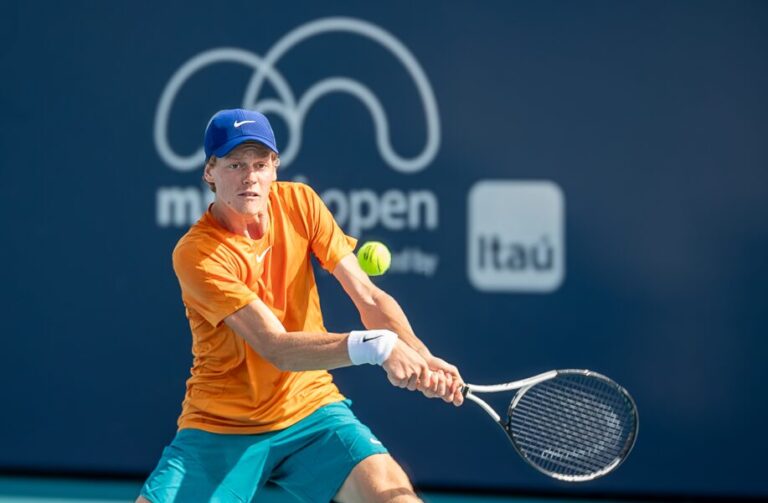
Carlos Alcaraz claimed his second consecutive French Open title in dramatic fashion on June 8, 2025, defeating Jannik Sinner in an epic five-set final on Court Philippe-Chatrier at Roland Garros in Paris. The 22-year-old Spaniard, seeded second and defending champion, rallied from two sets down to win 4-6, 6-7(4), 6-4, 7-6(3), 7-6(10-2) in five hours and 29 minutes—the longest men’s singles final in the tournament’s Open era history.

Sinner, the world No. 1 and top seed from Italy, controlled much of the early play. He took the first set with steady baseline aggression and won the second in a tiebreak after Alcaraz faltered on key points. The Italian looked poised to end the match in the fourth set, leading 5-3 and holding three championship points at 0-40 on Alcaraz’s serve. Alcaraz dug deep, saving all three with aggressive forehands and clutch serving, then broke back to force a deciding set.

The fifth set stayed on serve until 5-5, when both players held firm through tense games. In the super tiebreak—used at Roland Garros for deciding sets—Alcaraz dominated early, building a lead he never relinquished. He closed it out 10-2 with a powerful running forehand winner, sealing his fifth Grand Slam title overall and extending his head-to-head edge over Sinner to 8-4.

The match featured intense rallies, with both players trading blistering groundstrokes. Alcaraz’s athleticism and variety shone through as he shifted momentum, while Sinner’s composure and power kept him in control for long stretches. The crowd on Philippe-Chatrier, heavily behind the Spaniard, created an electric atmosphere that pushed both to their limits.

This victory marked a historic achievement for Alcaraz. He became the third man in the Open era to save at least one championship point and still win a Grand Slam final. His comeback from two sets down added another chapter to his reputation for thriving under pressure in majors. For Sinner, the loss came despite a strong run to the final, where he dropped just one set before the championship match.

Alcaraz’s win on clay highlighted his growing mastery of the surface. After taking his first Roland Garros title the previous year, he defended it against the top player in the rankings, solidifying his place among the sport’s elite. The result also set up their rivalry as the defining force in men’s tennis, with the two having contested several high-stakes finals in recent seasons.

The five-hour, 29-minute battle left fans and observers calling it one of the greatest finals ever played at Roland Garros. Alcaraz lifted the Coupe des Mousquetaires under the Paris sun, celebrating with his team and the Spanish contingent in the stands. Sinner, gracious in defeat, shook hands and received applause for his performance.

This final between the top two players, both born in the 2000s, signaled the arrival of a new era in the sport. Alcaraz walked off the court with another major trophy, proving once again his ability to produce his best when the stakes are highest.

Alcaraz and Sinner Bring Sincaraz Magic to 2026 Tennis Season

0

The 2026 tennis season begins with familiar faces poised to lead the way. Carlos Alcaraz and Jannik Sinner, known collectively as “Sincaraz,” head into the year as the dominant forces on the men’s side, having claimed nine of the last 10 Grand Slam titles between them. Aryna Sabalenka enters as the clear women’s favorite, carrying momentum from a strong off-season and her status as world number one.

The action starts Friday with the United Cup in Perth and Sydney. This mixed-teams event features top players such as women’s world number two Iga Swiatek leading Poland alongside Hubert Hurkacz, and men’s world number three Alexander Zverev heading Germany.

The United States brings Coco Gauff and Taylor Fritz, while Japan includes a returning Naomi Osaka in her first United Cup appearance. Teams compete across groups with quarterfinals, semifinals, and the final set for Sydney, building early competitive intensity before the Australian Open.

Sabalenka kicks off her campaign at the Brisbane International from January 4-11. As defending champion, she faces a strong field including Australian Open winner Madison Keys, fourth-ranked Amanda Anisimova, Elena Rybakina, Jessica Pegula, and Mirra Andreeva.

Sabalenka arrives with confidence after winning her second US Open title in 2025, along with titles in Brisbane, Madrid, and Miami. She views Melbourne as special, having secured two titles there and reached the final last year before falling to Keys in three sets. “Winning it twice gives me confidence, but every year brings a new challenge,” she said. “I’m excited to return and see what I can achieve.”

On the men’s side, Alcaraz and Sinner skip traditional warm-ups in Australia. Instead, they face off in an exhibition match in Incheon, South Korea, on January 10—their only competitive hit-out before the Australian Open begins January 18.

The duo teased the idea of teaming up in doubles someday, highlighting their mutual respect. Alcaraz ended 2025 as world number one after overtaking Sinner, who retained the ATP Finals title in Turin. Sinner reflected on his year: “I feel like a better player than last year. A lot of wins and not many losses. And in the losses I had, I tried to see the positive thing and tried to use it to evolve me as a player.”

Alcaraz posted a 71-9 record in 2025 with eight titles, including the French Open and US Open. Yet Melbourne remains his missing piece—he has never advanced past the quarterfinals, falling to Novak Djokovic in the last eight last year.

The 22-year-old now works with Samuel López as head coach following his split from Juan Carlos Ferrero, who guided him since age 15. López, previously Ferrero’s assistant and familiar with Alcaraz’s game from prior absences, provides continuity as the Spaniard targets the career Grand Slam.

Sinner defended his Australian Open crown in 2025 and added Wimbledon among six titles, despite a three-month doping suspension. Ranked second, he seeks a third straight Melbourne title and remains a major threat.

Djokovic, at 38, starts what might be his final season. He withdrew from the Adelaide International due to physical readiness concerns and begins at Melbourne Park, chasing a record 25th major and 11th Australian Open victory.

He reached the semifinals at all four Slams in 2025 but went no further, acknowledging the challenge from the younger generation. “It will be very difficult for me in the future to overcome the hurdle of Sinner or Alcaraz in a best-of-five in a Grand Slam,” he said.

Other men to watch include resurgent Felix Auger-Aliassime (fifth), Taylor Fritz (sixth), and Alex de Minaur (seventh), all in the United Cup. Daniil Medvedev and Nick Kyrgios appear in Brisbane.

On the women’s side, Swiatek, Gauff, and Rybakina stand ready to challenge Sabalenka. Swiatek teams with Hurkacz in Sydney, aiming to improve on recent United Cup finals losses to the US and Germany.

With Alcaraz and Sinner driving the men’s tour and Sabalenka leading the women, 2026 promises continued high-level rivalry from the opening events through the Australian Open and beyond.

Aryna Sabalenka Calls Out Tour Over Injuries and Mandatory Tournaments

0

World No. 1 Aryna Sabalenka pulled no punches on Thursday, calling the tennis calendar insane and accusing tour officials of prioritizing their own interests over player health.

The four-time Grand Slam champion made her remarks after a straightforward 6-3, 6-3 win over Sorana Cirstea at the Brisbane International, advancing her to the quarterfinals where she will face Madison Keys.

Sabalenka, who defended her Brisbane title last year and reached the WTA Finals final in November, said the packed schedule contributed to widespread injuries across the tour.

“The season is definitely insane, and that’s not good for all of us as you see so many players getting injured,” she told reporters. “The balls are quite heavy, so it’s a lot of struggle for all of us.”

She plans to skip select events in 2026 to manage her physical load, even if it means facing fines or points deductions from the WTA.

“The rules are quite tricky with mandatory events, but I’m skipping a couple of events in order to protect my body because I struggled a lot last season,” Sabalenka said. “This season we will try to manage it a little bit better, even though they are going to fine me by the end of the season.”

She added bluntly: “I think they just follow their interests. But they’re not focusing on protecting all of us.”

The WTA offered no immediate comment on her statements. In an earlier response to similar concerns last October, the tour stressed that athlete welfare remains a top priority.

Sabalenka’s frustration echoes complaints from other top players. On the men’s side, Carlos Alcaraz has spoken out against the relentless pace, though he continues to participate in high-profile exhibitions, including one against Jannik Sinner scheduled for Saturday in South Korea just days before the Australian Open.

Last year proved particularly grueling, with a spike in retirements and withdrawals at major events. Multiple matches at tournaments like the Shanghai Masters and China Open ended early due to injuries, highlighting the physical toll.

Sabalenka herself felt the strain in 2025 despite strong results. She played a limited number of WTA 500 events and, along with Iga Swiatek, faced ranking points penalties for not meeting participation requirements.

“You cannot skip 1000 events,” she noted, referring to the mandatory WTA 1000 tournaments. “It’s really tricky, and I think that’s insane what they do.”

Her decision to prioritize rest comes as the tour heads into another long year, starting with the Australian Open later this month. Sabalenka enters Melbourne as one of the favorites, having won the title there in recent seasons.

In Brisbane, she has looked sharp so far, dropping just seven games across two matches. Next up is Keys, who beat her in the 2025 Australian Open final.

Players across both tours continue to push for changes, arguing that the current setup leads to burnout and forces tough choices between competition and recovery.

Sabalenka’s outspoken stance adds pressure on governing bodies to address the issue, as the debate over schedule reform shows no signs of slowing down.

ATP Reduces Mandatory ATP 500 Events for Top 30 Players

0

The ATP has introduced several adjustments to its rules and calendar starting in 2026, aiming to give leading players more breathing room amid ongoing concerns about the demanding tour schedule.

Top 30 players, based on the rankings at the end of the previous season, will now need to enter only four ATP 500 events instead of five. This reduction comes after years of players voicing frustration over the packed calendar, which forces them to compete frequently while also pursuing high-paying exhibitions.

The organization also trimmed the number of tournaments counted toward year-end rankings from 19 to 18. Rankings will continue to include results from the four Grand Slams, the eight mandatory Masters 1000 events (with Monte-Carlo remaining optional), and the Nitto ATP Finals for those who qualify. The change limits the additional countable results to six others, often from lower-tier events.

In a move to support family life, players who withdraw from a Masters 1000 or ATP 500 tournament due to the birth or adoption of a child will keep any ranking points earned before pulling out. This exemption prevents them from facing penalties that could affect their standing or qualification for the season-ending Finals.

The cutoff date for qualifying for the Nitto ATP Finals has shifted earlier by one week. It now closes after the Paris Masters, which ends on November 8 in 2026.

On the technology side, video review systems—already in use at Masters 1000 events—will extend to all courts at ATP 500 tournaments this year. The rollout continues to ATP 250 events in 2027. Electronic line calling stays in effect across the entire tour, covering all surfaces, even as some players have questioned its accuracy on clay courts.

These steps follow a 2025 season that saw record prize money distribution, with bonus pools growing further in 2026. The ATP described the adjustments as adding flexibility for its stars without altering core commitments to the biggest events.

Players like Jannik Sinner and Carlos Alcaraz, who often play deep into tournaments, stand to benefit most from the lighter mandatory load. Lower-ranked players may see indirect effects through shifted scheduling priorities.

The changes reflect a balance between maintaining the tour’s competitive structure and addressing physical tolls highlighted by retirements and injuries in recent years. While not a full overhaul, the tweaks signal the ATP’s response to calls for a more sustainable professional circuit.

Wawrinka Plans Competitive Farewell Year After Announcing Retirement

0

Stan Wawrinka has made peace with his upcoming retirement, but the Swiss veteran plans to compete hard in his final season.

The three-time Grand Slam champion spoke ahead of the United Cup in Perth, where he leads Switzerland’s team. At 40 years old and ranked 157, Wawrinka confirmed 2026 will mark the end of his professional career. He announced the decision last month, calling it the “final chapter” after more than two decades on tour.

“Of course, I’m still passionate about the game, about the sport I love,” Wawrinka said. He acknowledged the emotions tied to stepping away. “What I received from it, the emotion playing in a different country, coming back here with a lot of fans, a lot of support, so I’m going to miss that part, that’s for sure.”

Wawrinka took time over recent months to weigh his options. “The last few months, I’ve had time to decide whether it will be my last year or not, and for me, it’s quite clear. I’m happy with the decision, I’m at peace with that.”

His achievements stand out in an era ruled by Roger Federer, Rafael Nadal, and Novak Djokovic. Wawrinka claimed the Australian Open in 2014 by beating Nadal in the final. He followed with the French Open title in 2015, defeating Djokovic, and the US Open in 2016, again topping the Serb. Those wins made him one of few players to upset the Big Three in major finals.

A former world No. 3, Wawrinka has 16 ATP titles, with his most recent coming in Geneva in 2017. Injuries, including knee surgeries, dropped him in the rankings in recent years. Still, he intends to train fully and chase results.

“I still want to play some good tennis, I still have goals. Hopefully I can come back in the top 100, finish on a good ranking,” he said. “I want to play the full year, the big tournaments, the main ones, and let’s see my ranking in the next few months.”

Wawrinka also earned Olympic doubles gold with Federer in Beijing 2008 and helped Switzerland win its first Davis Cup in 2014.

At the United Cup, a mixed-team event starting Friday in Perth, Wawrinka captains Switzerland alongside world No. 11 Belinda Bencic. The team faces France and Italy in group play. Early matches showed Wawrinka’s fight: he rallied for a three-hour win over France’s Arthur Rinderknech in his opener, helping secure a tie victory.

Fans and peers recognize Wawrinka’s powerful one-handed backhand and resilience. As he begins this farewell season, he focuses on competition rather than sentiment.

Wawrinka starts the year in Perth before heading to the Australian Open, site of his first major triumph. He aims to make the most of his remaining time on court, targeting strong performances across the schedule.

Alexander Zverev Admits Gap to Alcaraz and Sinner

0

Alexander Zverev opened his 2026 season at the United Cup in Sydney, where he spoke candidly about the gap separating him from Carlos Alcaraz and Jannik Sinner at the top of the men’s game.

The world No. 3 acknowledged the sizable lead held by the Spanish and Italian stars, who finished 2025 as No. 1 and No. 2. Zverev trails them by more than 6,000 ranking points after a season disrupted by injuries.

“Of course, number one and two are quite far ahead, which was not the case at the end of 2024, when I finished number two in the world behind Sinner,” Zverev said during a press conference in Sydney. “I feel like I have a lot of catching up to do, but so does the rest of the tour.”

Zverev, now 28, claimed just one title in 2025 — on home soil in Munich. He reached the Australian Open final, falling to Sinner, but failed to advance deep at the other majors or the ATP Finals.

Physical setbacks plagued him throughout the year, limiting his consistency. He also dealt with mental health challenges, stepping away for a month after a first-round exit at Wimbledon.

“I took some vacation, spent time with my friends, then went back to training. Changed the scenario a little bit,” Zverev explained. “In a way, losing first round Wimbledon — of course I don’t want to lose first round Wimbledon — but in a way it was helpful for me because I could just restart. That was a bit of a turning point.”

Despite the difficulties, Zverev views holding the No. 3 ranking as an achievement. “I had issues with my body, I had injuries throughout the entire season. So for me, finishing three in the world, I feel like looking back at it, it’s still something to be proud of,” he said. “Of course it wasn’t the season that I wanted to have. There weren’t the titles that I wanted to have, the big titles especially.”

As he leads Germany in the mixed-team United Cup, Zverev sees the event as key preparation for the Australian Open, where he aims to finally claim a maiden Grand Slam crown.

He contrasted his approach with that of Alcaraz and Sinner, who opted for a single exhibition match against each other in South Korea ahead of Melbourne.

“Some guys, like Jannik and Carlos, they’re just capable of showing up to the Australian Open, playing great tennis straightaway,” Zverev noted. “I feel like I’m more of a diesel engine sometimes where I need to get going first, then at some point I’ll start playing good tennis. I have to play a preparation tournament.”

Germany opened its United Cup campaign strongly, with Zverev contributing to a clean-sweep victory over the Netherlands. He followed that with a competitive showing against Poland in a rematch of the 2024 final.

Alcaraz and Sinner have dominated recent seasons, splitting the last several majors and establishing themselves as the clear frontrunners. Zverev’s comments highlight the challenge facing not just him, but the entire field in closing that divide.

With the Australian Open approaching, Zverev’s focus remains on building momentum through matches. His experience in team events, including Germany’s 2024 United Cup title, gives him confidence in high-pressure settings.

Fans will watch closely to see if the German can translate his United Cup form into a strong run in Melbourne, where he has come closest to breaking through for a major trophy.

Zverev’s honesty about the rankings gap and his own struggles offers a clear picture of the current men’s tennis hierarchy as the new season unfolds.

Daniil Medvedev Pushes for Earlier Australian Open Night Sessions

0

Daniil Medvedev has once again voiced his frustration with the Australian Open’s late-night scheduling, urging organizers to shift the start of evening sessions an hour earlier to curb matches that drag into the early morning hours. Speaking after his straight-sets victory at the Brisbane International, the Russian player highlighted how the current 7:00 p.m. kickoff on the main courts often leads to unfair conditions for players, fans, and staff alike.

Medvedev, a three-time finalist at Melbourne Park, made his comments on Monday following a 6-2, 6-3 win over Hungary’s Marton Fucsovics in the opening round. He pointed out that the tournament’s structure, which features two matches per night session on Rod Laver Arena and Margaret Court Arena, sets the stage for prolonged evenings when rallies turn epic or sets extend deep.

“It never will change, because TV’s controlling everything,” Medvedev said, acknowledging the influence of broadcasters in dictating start times. “I think there is always a reason why it starts at 7:00 p.m. and not 6:00 p.m.”

Despite his resignation to the status quo, Medvedev didn’t hold back on why an adjustment makes sense. He drew a parallel to his own viewing habits, noting how time zones affect enjoyment of other sports. “I like soccer, but here I don’t watch the Premier League because it’s at two in the morning,” he explained. “It’s pretty much the same—people who really love tennis would like to see it at six because then they are almost sure to watch both matches. OK, if it goes ridiculously long, instead of finishing at three, it would finish at two. It’s better for everyone.”

The 29-year-old’s plea isn’t new, but it carries weight given his personal history with marathon matches at the Australian Open. Just a year ago, in 2025, Medvedev suffered a defeat to American teenager Learner Tien in a contest that wrapped up at 2:55 a.m. The year before that, during his run to the 2024 final, he outlasted Finland’s Emil Ruusuvuori in a second-round battle that didn’t conclude until 3:39 a.m.

Those experiences, he said, underscore the physical and mental toll of playing into the dawn. “I don’t think it will ever change,” he added after his Brisbane win. “And again, I’m happy to play the night session if I need to, and I would not cry about it.”

Medvedev’s remarks echo a broader debate in tennis about scheduling and player welfare, particularly at Grand Slams where best-of-five-set formats can amplify delays. The Australian Open has long held a reputation for these nocturnal epics, with records dating back nearly two decades.

In 2008, local hero Lleyton Hewitt defeated Marcos Baghdatis in a match that ended at 4:34 a.m., still the latest finish in Grand Slam history. More recently, in 2023, Andy Murray’s grueling five-hour, 45-minute victory over Thanasi Kokkinakis concluded at 4:05 a.m., prompting the Briton to label the setup “a farce” and call for reforms.

Other players have joined the chorus over the years. Murray, a three-time major champion, argued post-match that such late finishes harm recovery and performance, especially in a tournament that spans two weeks under Australia’s summer heat. Novak Djokovic, another frequent night-session participant, has suggested limiting the number of matches per session or enforcing stricter time cutoffs.

Even tournament director Craig Tiley has acknowledged the issue, implementing minor tweaks like starting day sessions earlier in recent years, but the night program remains anchored at 7:00 p.m. to maximize global viewership and revenue.

Broadcasters, particularly in the U.S. and Europe, benefit from the timing, as it aligns with prime-time slots in key markets. ESPN, which holds U.S. rights, and other international partners prioritize accessibility for their audiences, often at the expense of on-site logistics in Melbourne.

Tiley has defended the schedule, noting in past press conferences that it balances commercial needs with competitive integrity. However, with player burnout a growing concern—evidenced by the ATP and WTA’s ongoing discussions on tour calendars—the push for change persists.

Medvedev believes his views resonate across the locker room. “I think all the players would agree,” he said in a separate interview last week, emphasizing that starting at 7:00 p.m. is “just asking for trouble” when five-setters are involved.

His own encounters with late nights extend beyond Australia; at the 2023 U.S. Open, he endured multiple post-midnight finishes before reaching the final. Yet, he remains pragmatic, focusing on what he can control as he gears up for the 2026 Australian Open, set to begin on January 18.

This season, Medvedev has shown solid form in the lead-up events. After his Brisbane opener, he advanced further in the tournament, building momentum after a mixed 2025 where injuries hampered his consistency.

Ranked No. 13 heading into 2026, he’s no longer the top seed he once was, but his tactical acumen and baseline resilience make him a perennial threat. In Brisbane, he displayed sharp serving and efficient groundstrokes, dispatching opponents with minimal drama—a contrast to the endurance tests he’s critiquing.

The Australian Open’s scheduling challenges aren’t unique to Medvedev. In 2025, several matches spilled over, including a third-round clash involving Felix Auger-Aliassime that pushed into the early hours.

Organizers responded by occasionally shifting start times on outer courts, but the show courts stayed rigid. For fans in the stands, late finishes mean disrupted travel and fatigue, while television audiences enjoy the drama without the inconvenience.

As the tournament approaches, Medvedev’s comments have sparked renewed discussion on social media and among pundits. Some argue that the allure of late-night tennis adds to the event’s mystique, drawing comparisons to other sports like cricket’s day-night Tests. Others side with players, prioritizing health over spectacle. The Professional Tennis Players Association (PTPA), co-founded by Djokovic, has flagged scheduling as a key issue in its advocacy efforts.

For now, Medvedev prepares for another Melbourne campaign, knowing the night sessions await. Whether his call prompts action remains doubtful, as he himself concedes. But by speaking out, he keeps the conversation alive, reminding stakeholders that while tennis thrives on endurance, there’s a line between competition and exhaustion.

As the first Grand Slam of the year looms, all eyes will be on whether Melbourne Park can find a middle ground—or if the wee hours will claim more victims.


Iga Swiatek Says Women’s Tennis Stands Alone, No Need for Battle of the Sexes

0

Iga Swiatek has dismissed the need for events like the recent “Battle of the Sexes” exhibition, arguing that women’s tennis no longer requires comparisons to the men’s game to prove its worth.

The world No. 2 made her comments ahead of the United Cup in Sydney, where she represents Poland in the mixed-team event that kicks off the 2026 season. Swiatek admitted she did not watch the December 28 match in Dubai between world No. 1 Aryna Sabalenka and Nick Kyrgios, which Kyrgios won 6-3, 6-3 under modified rules.

The Dubai exhibition featured a court reduced by nine percent on Sabalenka’s side and limited both players to one serve per point, changes intended to offset physical differences. Kyrgios, ranked No. 671 after limited play due to injuries, prevailed in straight sets amid a lighthearted atmosphere that included dancing and underarm serves.

Swiatek saw the event as pure entertainment rather than anything meaningful. “I haven’t watched because I don’t watch stuff like that,” she told reporters. “It attracted a lot of attention. It was entertainment, but I wouldn’t say that had anything to do with social change or any important topics.”

She pointed out sharp differences from the historic 1973 match, when Billie Jean King defeated Bobby Riggs in a contest that helped legitimize the fledgling women’s professional tour and push for equal prize money. “The name was just the same as the one from the Billie Jean King match in ’73. That’s it,” Swiatek said. “There were no more similarities because women’s tennis stands on its own right now.”

Swiatek, a six-time Grand Slam champion, emphasized the strength of the current women’s game. “We have so many great athletes and great stories to present,” she said. “We don’t necessarily need to compare to men’s tennis. Honestly, there doesn’t need to be any competition.”

Instead, she praised formats that bring the tours together without direct gender confrontations in singles. The United Cup, now in its fourth year, features ties with one men’s singles, one women’s singles, and a mixed doubles match. Teams from 18 nations compete in Perth and Sydney, with group winners and best runners-up advancing to the quarterfinals.

“Events like this one, the United Cup, bring tennis together,” Swiatek said. “WTA fans and ATP fans can watch this event with so much excitement. Seeing singles players who usually don’t have space to play mixed doubles together—I think this is what makes our sport much more interesting and better.”

Poland opens against Germany, with Swiatek scheduled to face Eva Lys in women’s singles and Hubert Hurkacz taking on Alexander Zverev in men’s singles.

Sabalenka, who defended her participation in Dubai as a way to keep tennis fresh and fun, expressed interest in a rematch. “I think I would definitely do it again,” she said earlier this week. “I love revenge and I don’t like to leave it the way it is.”

The Dubai match drew criticism from some quarters for borrowing the “Battle of the Sexes” title without the same stakes, with observers calling it more spectacle than statement on equality. Swiatek’s view aligns with those who see the women’s tour as fully established, drawing massive audiences and producing top-level competition on its own terms.

As the Australian Open approaches—the only major Swiatek has yet to win—the 24-year-old Pole shifts focus to her season opener. Her stance underscores a broader confidence in the WTA’s independent appeal, even as exhibition formats continue to test new ways to blend the men’s and women’s games.

‘Chaotic mess’ Kyrgios determined to enjoy himself after injuries

0

A philosophical Nick Kyrgios said Saturday he had been a “chaotic mess” throughout his career and now just wants to enjoy himself when he returns to the tour this week. The temperamental 2022 Wimbledon finalist, one of tennis’s most dynamic players when at the top of his game, makes his comeback at the season-opening Brisbane International.

The 30-year-old Australian has slipped to 671 in the world after an injury-ravaged three years which saw him play only six singles matches on the ATP Tour. Speaking ahead of his opening-round match, Kyrgios said he was feeling fit and had been playing as well as ever in the build-up. 

“I think after every injury I have had the last couple of years, and to see how quickly something can be snatched away from you, I have a day-by-day mindset,” the former world number 13 said.  “I don’t know if I’m a player that needs to prove himself any more than he has. I just want to get through this and be happy with my performance.

“Ultimately I just want to go out there and put on a show for the crowd and for the fans and the people, to be honest. “I have no agenda and I don’t care what my ranking is, don’t care what titles I win. I just want to go out there and give the people a good show.

“That’s ultimately I guess what I’ll go down as, as an entertainer and someone who just was a bit of a chaotic mess, but an entertainer at the end of the day.”  Kyrgios, who was granted a wildcard to play in Brisbane, begins his tour comeback against US world number 60 Aleksandar Kovacevic.

Although he has featured only very sporadically on the ATP Tour in recent years, Kyrgios beat women’s world number one Aryna Sabalenka last week in a “Battle of the Sexes” exhibition match in Dubai. Kyrgios could yet be offered a wildcard to play singles at the Australian Open this month.

“Considering how much travel I have had the last month and how much tennis I have played, this is as good as I could feel,” he added. “I think a lot of stress has kind of gone from my life and I feel a lot better.  “I guess my goal is to leave Brisbane with a sense of: that was a fun week, you gave everything you had and whether you came up short or not, you gave a good show to the people. 

“I’m just really looking forward to going out there and competing at the highest level again. It’s all a blessing at this point.” 

Sabalenka says revenge not on her mind for Australian Open

0

World number one Aryna Sabalenka said Saturday she isn’t out for revenge after losing her Australian Open crown in a shock loss to American Madison Keys last year. Sabalenka went into the final at Melbourne Park aiming to become the first woman since Martina Hingis to win three consecutive Australian Opens.

But she was undone by Keys, who won her maiden Slam in an inspired performance on Rod Laver Arena. The Belarusian said there was no difference coming to Australia as the champion or as the runner-up. “It doesn’t matter which tournament it is,” she said ahead of a warm-up event in Brisbane.

“If I’m defending champion, if I lost in the first round last year, the goal is always the same — to bring my best tennis and to improve my game. “Honestly, that’s it. I always just focus on myself, on developing my game, and making sure that I’m 100 percent there.”

Sabalenka had an unusual lead-in to the Australian Open starting this month, playing Nick Kyrgios in a much-criticised “Battle of the Sexes” in Dubai. But she said she was glad to be back in Australia, where she enjoys the conditions and has had great success.

“I definitely don’t like the heat, but the people, yeah,” she said. “I think the atmosphere — it’s always a full crowd (in Brisbane). “Everyone really engages a lot with tennis. Also in Melbourne, the support there is incredible.

“I’m always super motivated when I come to Australia,” she said, asked if last year’s defeat to Keys was added incentive this time. “Of course remembering last year’s final, I really want to do just a little bit better than I did last year,” she added with a smile. Sabalenka said she always chose to open her season in Brisbane because she was guaranteed testing matches.

This year’s draw features seven of the world’s top 10. “It’s a tough draw, a lot of great players,” she said. “It’s a lot of matches before hitting the Australian Open.” Sabalenka has a first-round bye and will play either Spain’s Cristina Bucsa or a qualifier in the second round.