

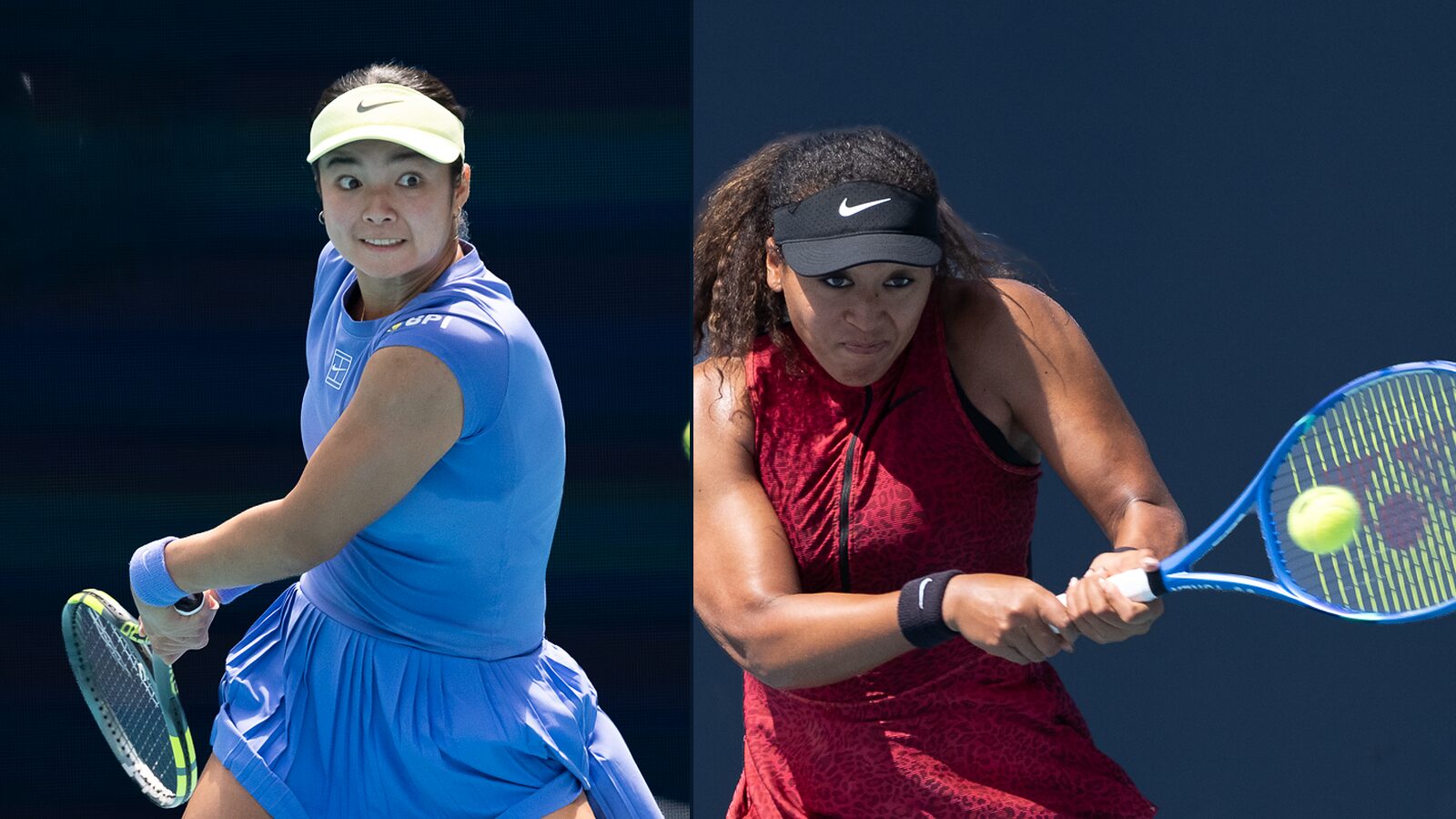
WASHINGTON — Alexandra Eala and Naomi Osaka meet for the first time Saturday in the semifinals of the Mubadala Citi DC Open, a matchup that sets the WTA’s most persistent counterpuncher against one of the heaviest first-strike hitters the sport has produced. The match is third on Stadium Court, behind the semifinal between top seed Jessica Pegula and fourth seed Diana Shnaider, which is scheduled for no earlier than 2 p.m. Eastern. A start in the late afternoon is the realistic expectation, though the exact time will depend on how long the two matches ahead of it run.
Eala reached the final four by beating second seed Elina Svitolina 6-3, 6-4 on Friday night, the same scoreline by which she beat the Ukrainian in the Berlin quarterfinals in June. The pattern of the match was familiar to anyone who watched the first one. Eala broke early, absorbed a stretch in which Svitolina moved ahead 3-1 in the second set, then reeled off three consecutive games to retake control and closed the match in 1 hour, 33 minutes.
It was Eala’s sixth win over a top-10 opponent in 2026, a season that has also produced victories over Iga Swiatek, Elena Rybakina, Coco Gauff and Jasmine Paolini. Her career record against players ranked inside the top 10 now stands at 8-4. The 21-year-old is into her third semifinal of the year and reached this one by removing three progressively harder opponents: Zheng Qinwen, defending champion Leylah Fernandez and now Svitolina.
Osaka took a longer route. The third seed dropped the opening set to Elisabetta Cocciaretto before recovering for a 4-6, 6-4, 6-3 win, breaking twice in the decider to reach the last four in Washington for the first time. She held a 9-1 edge in aces, a number that captures both the strength she leans on and the margin she needed. Osaka described the match afterward as feeling “more like a mental match than an actual tennis match,” and identified the specific problem: Cocciaretto stood inside the baseline on her second serve and applied pressure there.
That is the tactical center of Saturday’s match. Osaka wins points in two or three shots, using the serve to open the court and the flat forehand to end the rally before it becomes one. When the first serve lands, there is very little a returner can do about it. When it does not, the second serve becomes the negotiation, and Eala is a left-hander who returns from deep, takes the ball early on the backhand side, and is comfortable extending exchanges past the point where Osaka would prefer they end.
Eala’s counter-argument is movement. She has spent the season proving she can turn defense into offense against players who hit harder than she does, which describes almost everyone she has beaten this year. Her ability to redirect pace up the line, particularly with the left-handed forehand into a right-hander’s backhand, has been the shot that unlocked her top-10 wins. Against Osaka she will need to make first serves difficult to attack and force enough second serves to get into the rally patterns where she holds the edge.
Osaka’s form argues against reading this as an upset waiting to happen. She has won 10 of her last 12 matches and arrives with the serve working, and she has not held a tour-level trophy since the 2021 Australian Open. A first title in more than five years is now two wins away.
The ranking stakes are real but should not be overstated before the fact. Eala is at a career-high No. 28, and she came into the North American hard-court swing with almost nothing to defend, which means results here are close to a net gain rather than a points swap. The semifinal is worth 195 points at WTA 500 level, a place in the final 325 and the title 500. The official rankings do not update until Monday, and any figure circulating before then is a projection rather than a position.
The more immediate consequence is seeding. Eala sits inside the US Open seeding cut but in the lower band, which in a 128-player draw is the difference between meeting a top-16 seed in the third round and not. A deep run in Washington is the most efficient path she has to move across that line before the New York draw is made, with the Canadian Open and Cincinnati still to come.
The winner plays Pegula or Shnaider in Sunday’s final, scheduled for no earlier than 2:30 p.m. Eastern.