

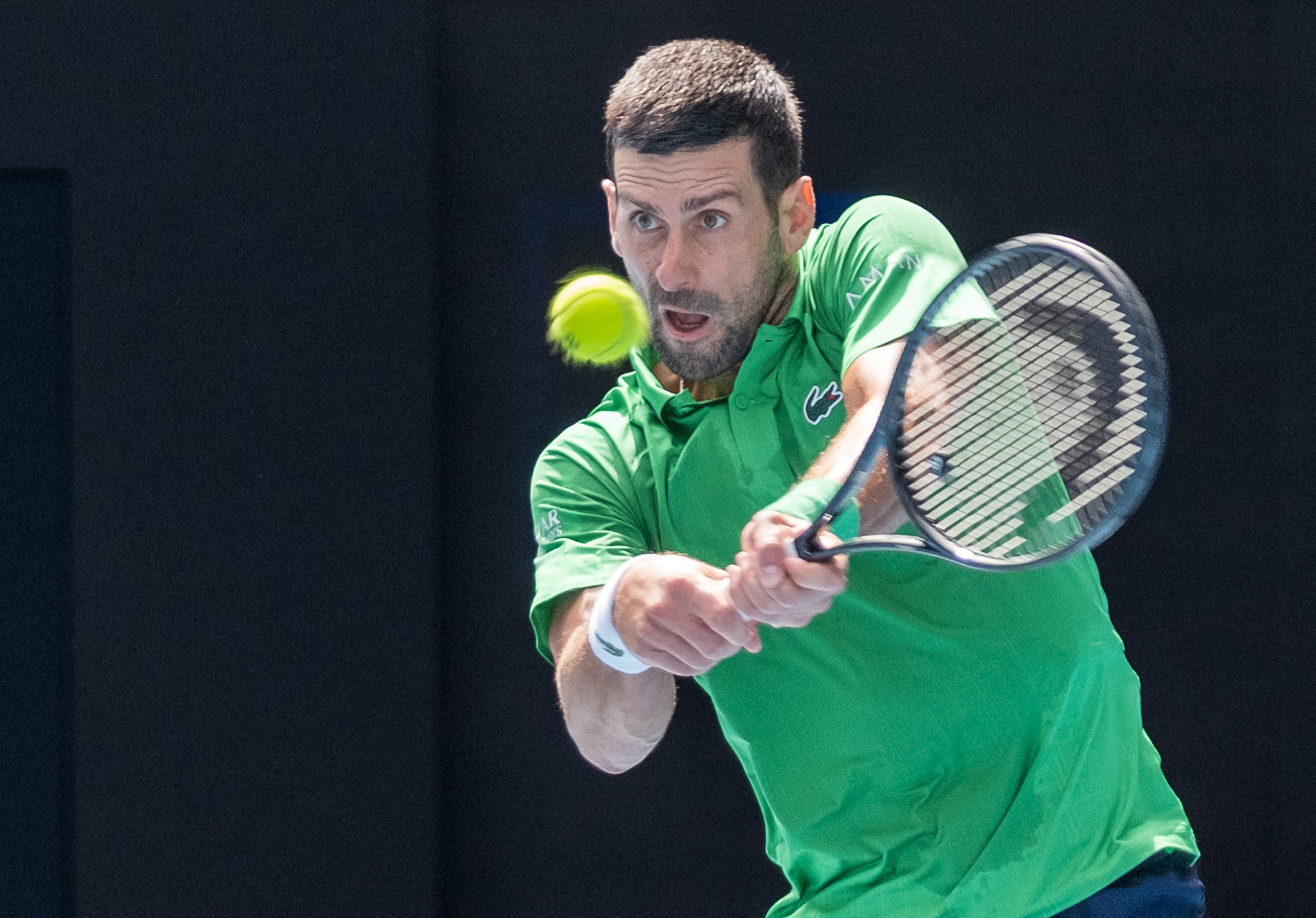
The opening Novak Djokovic has been handed in Cincinnati was created by a knee and a wrist, and it is worth less than the number sitting three weeks behind it. If the 24-time Grand Slam champion wins the US Open, he will not simply have a 25th major. He will hold a record no man has come near in 54 years.
Jannik Sinner withdrew from the Cincinnati Open on Sunday with a right knee injury, five days after Carlos Alcaraz came out with the wrist problem that has kept him off court since April. The last Masters 1000 before New York will be played without either of the two men who have divided the sport’s biggest prizes between them for two seasons, and Djokovic — a three-time champion in Ohio — is suddenly among the shortest prices for a title he has not contested since 2023.
The record that has stood since 1972
Ken Rosewall won the 1972 Australian Open at 37 years, two months and one day, beating fellow Australian Mal Anderson 7-6, 6-3, 7-5 for the eighth and last major title of his career. It remains the oldest Grand Slam men’s singles title of the Open era, and in 54 years the mark has been seriously approached once: Roger Federer held championship points against Djokovic himself in the 2019 Wimbledon final at 37, and lost.
Djokovic is 39. On the scheduled final day at Flushing Meadows he would be 39 years and 114 days old, which would not edge past Rosewall so much as move the record more than two years down the calendar. That is the scale of what a fortnight in New York would represent, and it is a wholly separate question from whether he wins a Masters 1000 in Ohio.
What actually changed this week
Cincinnati qualifying begins Tuesday, with the main draw running Aug. 13-23 at the Lindner Family Tennis Center in Mason, Ohio. It is Djokovic’s third non-major appearance of 2026 and his first in Mason since he won the title there in 2023, Canada having been skipped entirely to protect the runway to New York. He has won this event three times, in 2018, 2020 and 2023, and lost his first five finals there before any of it.
The absence of both men above him is genuine, and so is the caveat attached to it. Neither Sinner nor Alcaraz will have played a competitive hard-court match this summer either. Whatever these two weeks reveal about Djokovic’s form, they reveal nothing about the two players most likely to stand between him and the trophy in New York.
The case for
The physical argument is the strongest one. Djokovic now builds his season almost entirely around the four majors, and skipping Montreal means he arrives in Ohio fresher than at any point of the summer. Cincinnati’s conditions are the closest on the calendar to Flushing Meadows, which makes this the most useful preparation available to a player whose difficulty over the last three years has been holding a level across five sets rather than finding it in the first place.
There is a historical pattern worth noting, if not leaning on too hard. Since the Masters 1000 series was established in 1990, no man has won the US Open without playing Canada or Cincinnati in the same summer. Sinner and Alcaraz have now both stepped outside that pattern. Djokovic has not.
The case against
He has not won a major since the 2023 US Open, and 2026 has produced the now-familiar shape: a final at the Australian Open lost to Alcaraz, a third round at Roland Garros, and a Wimbledon semifinal lost to Sinner. Almost no 39-year-old in the history of the sport has produced results of that quality. None of them is a title.
The distance between winning Cincinnati and winning the US Open is also wider than a fortnight of good form suggests. Best-of-three over ten days in a thinned field is a different physical problem from best-of-five over fourteen days against a draw that will contain Sinner and probably Alcaraz. The workload question does not end there, either: Djokovic is also entered in the US Open mixed doubles alongside Aryna Sabalenka, played across the two days immediately before the singles main draw begins.
What Cincinnati is actually worth
The concrete return is seeding. US Open seeds are set from the rankings published Aug. 24, the Monday after Cincinnati finishes, which makes this the last event capable of moving anyone’s position in the New York draw. For a player seeded outside the top four, a deep run in Ohio is the difference between meeting one of the top two in a quarterfinal and meeting them in the fourth round — which, for a 39-year-old counting sets rather than matches, is not a small distinction.
Djokovic has spent two years being asked about the end and has kept answering that there is at least one more in him. The next three weeks are the clearest test of that claim he has had since 2023. The record waiting at the end of it has outlasted every great who has chased it.
Follow the build-up in our Cincinnati Open guide and our running Cincinnati withdrawals tracker.