

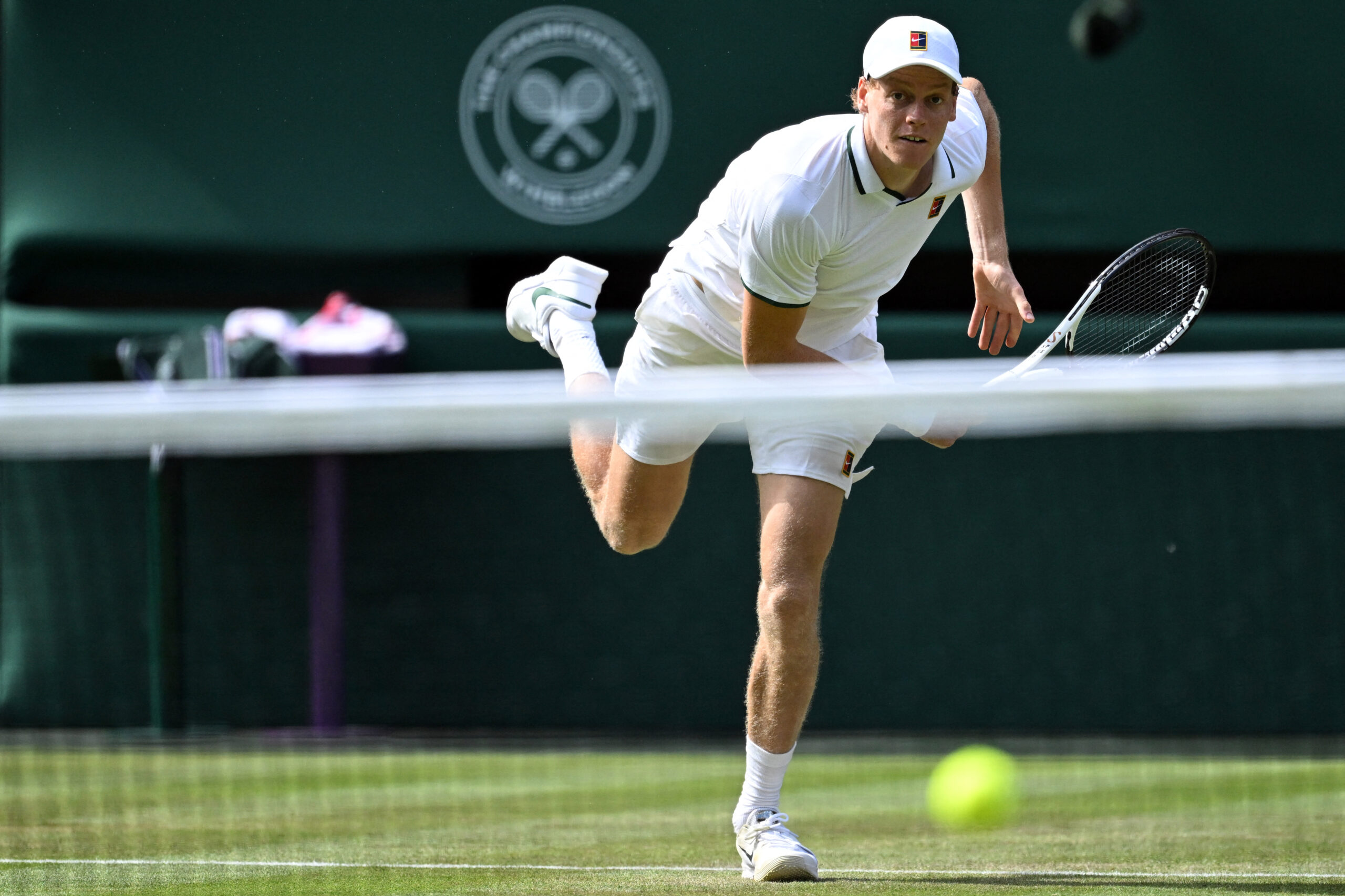
Wimbledon rewards the server more than any other Grand Slam, and Day 3 showed what that does to a scoreline. Three of the tournament’s biggest names — Jannik Sinner, Aryna Sabalenka and Coco Gauff — all reached the third round, and all three had to win a tiebreak to get there.
Why grass tightens the margins. On grass, the ball stays low and skids through, keeping it out of the returner’s strike zone and rewarding whoever strikes first. Rallies are shorter, service games hold more easily, and break points grow scarce. When neither player can break, the set rides on serve until a tiebreak settles it. The surface does not manufacture upsets so much as coin-flip sets, decided by a handful of points.
The Day 3 evidence. Sinner beat Nuno Borges 7-6(4), 7-6(2), 6-4 without ever facing the kind of pressure a cleaner match would have spared him. He did not earn a break point in the opening set, which went to a tiebreak, and finished with 22 aces and roughly 40 percent of his serves unreturned. He was unbothered by the gaps in his game, describing “all shots I can do slightly better” as the work still ahead.
Sabalenka needed a similar escape. After rolling through the first set 6-1 against McCartney Kessler, she was dragged into a second-set tiebreak, saved set points and converted only her third match point to win 7-6(9). “That was a true battle,” she said.
Gauff’s match turned entirely on the breaker. Trailing Solana Sierra 7-4 in the deciding tiebreak, she reeled off six straight points and closed with an ace to advance 3-6, 6-3, 7-6.
Not just Wednesday. The pattern set in earlier in the week. Alexander Zverev needed three tiebreaks to get past Alexander Blockx, and Matteo Berrettini and Stan Wawrinka traded four of them across a match of more than four hours. Even Serena Williams, in her singles return, won a second-set tiebreak before falling to Maya Joint.
What it means from here. The deeper the draw runs, the harder the margins compress. Bigger servers survive, showcourt conditions quicken under the roof and lights, and the returner’s task only gets more difficult. Tiebreak volume at Wimbledon tends to climb through the second week rather than fall — which is why the players who hold their nerve in a breaker, more than those who break serve, are usually the ones left standing.