

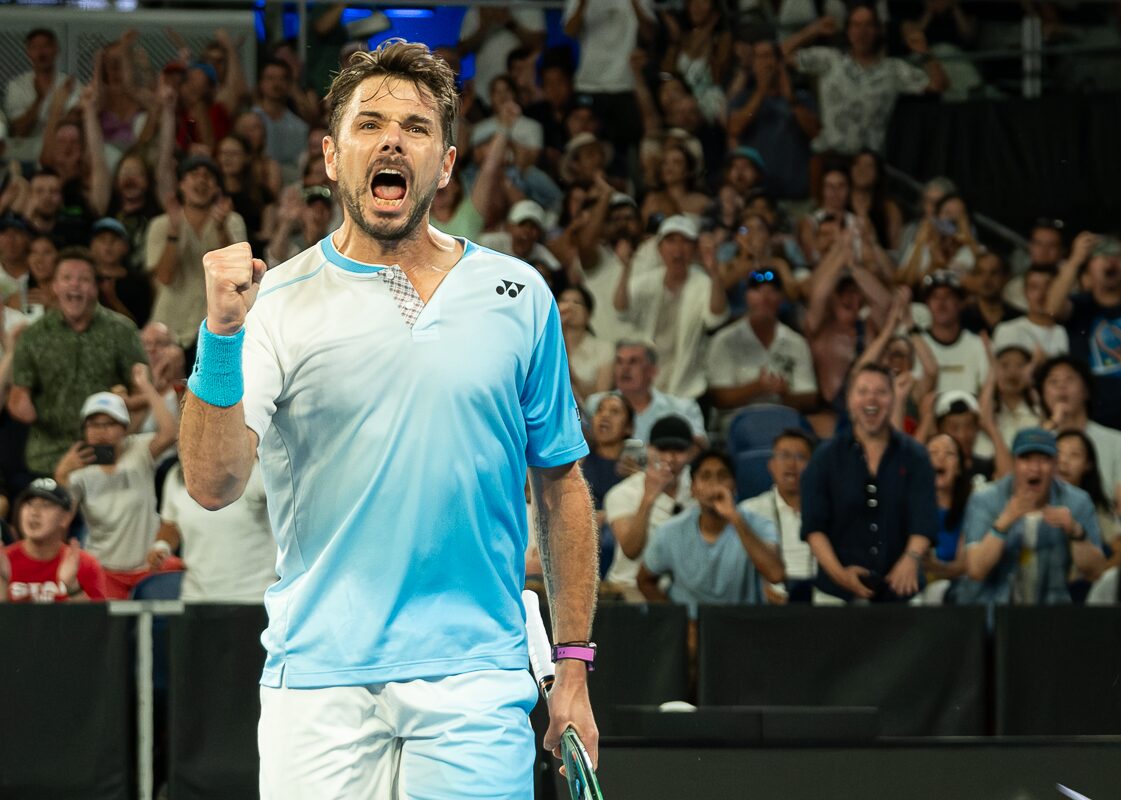
The Wawrinka US Open wild card that did not exist on Sunday existed by Wednesday, and the rulebook governing the four majors explains why it could not have come a day later. Stan Wawrinka, the 2016 champion, was left off the original list of eight main-draw wild cards announced last week.
The USTA said this week that Wawrinka would replace Patrick Kypson, who had been awarded the spot and then withdrew with an injury. “I’m incredibly excited to accept the wild card for the 2026 US Open,” Wawrinka said in a USTA release. He opens against Matteo Berrettini, the man who beat him in the first round at Wimbledon in July.
Why he could not qualify his way in. Wawrinka did not enter the qualifying competition, and the choice was not incidental. The Grand Slam rulebook bars any player who has competed in a tournament’s qualifying event from being named a wild card into that same main draw.
A player in Wawrinka’s position therefore has to choose between the two routes before either is settled. Grigor Dimitrov entered qualifying. Wawrinka did not, and said a month ago that he had requested a wild card and hoped to play in New York a final time. Had he signed in for qualifying and lost, no reversal would have been available to him at any point afterward.
Why the timing mattered more than the pressure. The rulebook requires wild cards to be named at the moment the draw is made, and it does not permit a tournament to substitute a new wild card for one who withdraws after that point. A vacancy created after the draw goes to the next eligible player on the entry list, or, once qualifying has started, to a lucky loser. Kypson’s withdrawal was announced on Wednesday. The singles draw was made on Thursday afternoon. The reversal that followed a week of public criticism was possible because the injury landed inside a window roughly a day wide, and outside it the USTA would have had no discretion to exercise at all.
What the rulebook does and does not constrain. The document is unusually permissive about wild cards in every other respect. It defines them as players placed in the draw at the sole discretion of the individual tournament, sets no cap on how many a single player may accept across the majors in a career, and reserves eight of the 128 main-draw places for them, alongside 104 direct acceptances and 16 qualifiers.
What it does not do is create any category of exemption for former champions. The journalist Ben Rothenberg argued during the week that a golf-style exemption for past winners inside a ranking band would be straightforward to write and has not been. Nothing in the current rulebook obliges a tournament to consider a player’s history at the event.
The field it produced. Wawrinka, who is retiring at the end of the season, is ranked outside the top 120 and would not have been far from direct entry in a lighter year. Martin Damm, originally named a wild card, entered directly after a withdrawal, and his invitation was reassigned to Darwin Blanch.
Gaël Monfils, also retiring this season, is in the draw on the French federation’s reciprocal wild card and turns 40 on Sept. 1, two days into the main draw. Two of the last men from the generation that played behind Roger Federer, Rafael Nadal and Novak Djokovic reached their final US Open by invitation, and only one of them had it settled more than a week out.
Main-draw play begins Sunday.