

The US Open singles draws were made at Flushing Meadows on Thursday, and the women’s bracket answered a question that had been open for a fortnight. Four players arrived in New York able to leave it as world No. 1. The draw did not narrow that list. It did something stranger. It took the outcome out of the hands of three of them.
The mechanism is simple enough. By the WTA’s own calculation, Elena Rybakina secures the top ranking by reaching the semifinals, regardless of every other result in the tournament. Aryna Sabalenka can only retain it by winning the title and having Rybakina lose before the last four. Jessica Pegula and Coco Gauff face the same condition, with the added requirement that neither has won a major before. All three need the same thing to happen. None of them can make it happen.
Opposite halves. Sabalenka was placed in the top half alongside Pegula and Wimbledon champion Linda Noskova. Rybakina went into the bottom half with Gauff, Mirra Andreeva and Iga Swiatek. Sabalenka and Rybakina therefore cannot meet before the final, and Pegula cannot meet her before the final either. By the time either American or the defending champion is on the same court as Rybakina, Rybakina will already have reached the semifinal that settles the matter.
Gauff’s position is the most awkward of the three. She is in Rybakina’s half, which sounds like an advantage and is not. The earliest the two could play is the semifinal, and a semifinal between them is a match in which the ranking has already been decided before the first ball. Gauff can beat Rybakina in New York and still not become No. 1 by doing it.
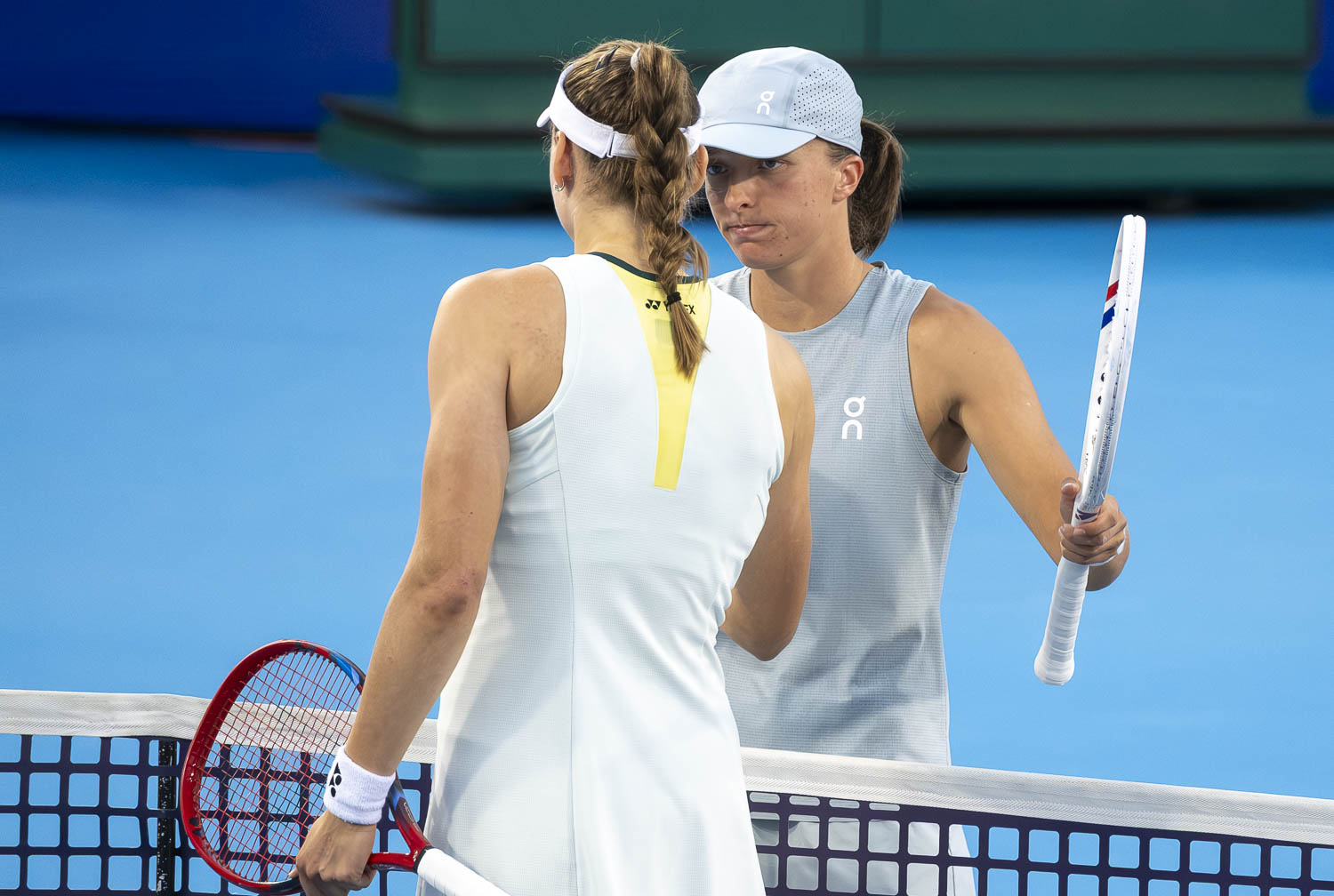
The decisive match belongs to someone else. If Rybakina is going to be stopped short of the semifinals, it has to happen in her quarter, and the highest seed in that quarter is Iga Swiatek, the projected quarter-final opponent. Swiatek is not in the ranking race. She is eighth seed, a former No. 1 with no route back to the top this fortnight, and she is now the player most likely to determine who holds the position on the Monday after the final.
That pairing carries recent history. Rybakina retired hurt during her quarter-final against Swiatek at the Cincinnati Open ten days ago, the second time this summer the Pole ended her tournament. Rybakina’s fitness has been the open question of her New York preparation, and the draw has routed her back toward the same opponent at the same stage.
The opening rounds offer little resistance. Rybakina, seeded second, begins against Thea Frodin, an American ranked outside the world’s top 500. Sabalenka opens against Camila Osorio of Colombia and would meet Diana Shnaider, who beat her at Roland Garros, in the fourth round. Pegula starts against Elena-Gabriela Ruse with Venus Williams a possible second-round opponent, and Gauff, fresh from her Cincinnati title, opens against Zeynep Sonmez.
What is at stake for the holder. Sabalenka will complete the tournament having spent 99 consecutive weeks at No. 1 and 107 in total, and would pass 100 consecutive weeks when the post-tournament rankings are published if she is still there. She is the two-time defending champion in New York and top seed at a Grand Slam for the eighth time in succession. She is also, for the next fortnight, a spectator on the only question that decides whether the run continues.
Main-draw play begins on Sunday. The quarter-finals are scheduled for the second week, which means the ranking will in all likelihood be settled two rounds before anyone lifts a trophy.