

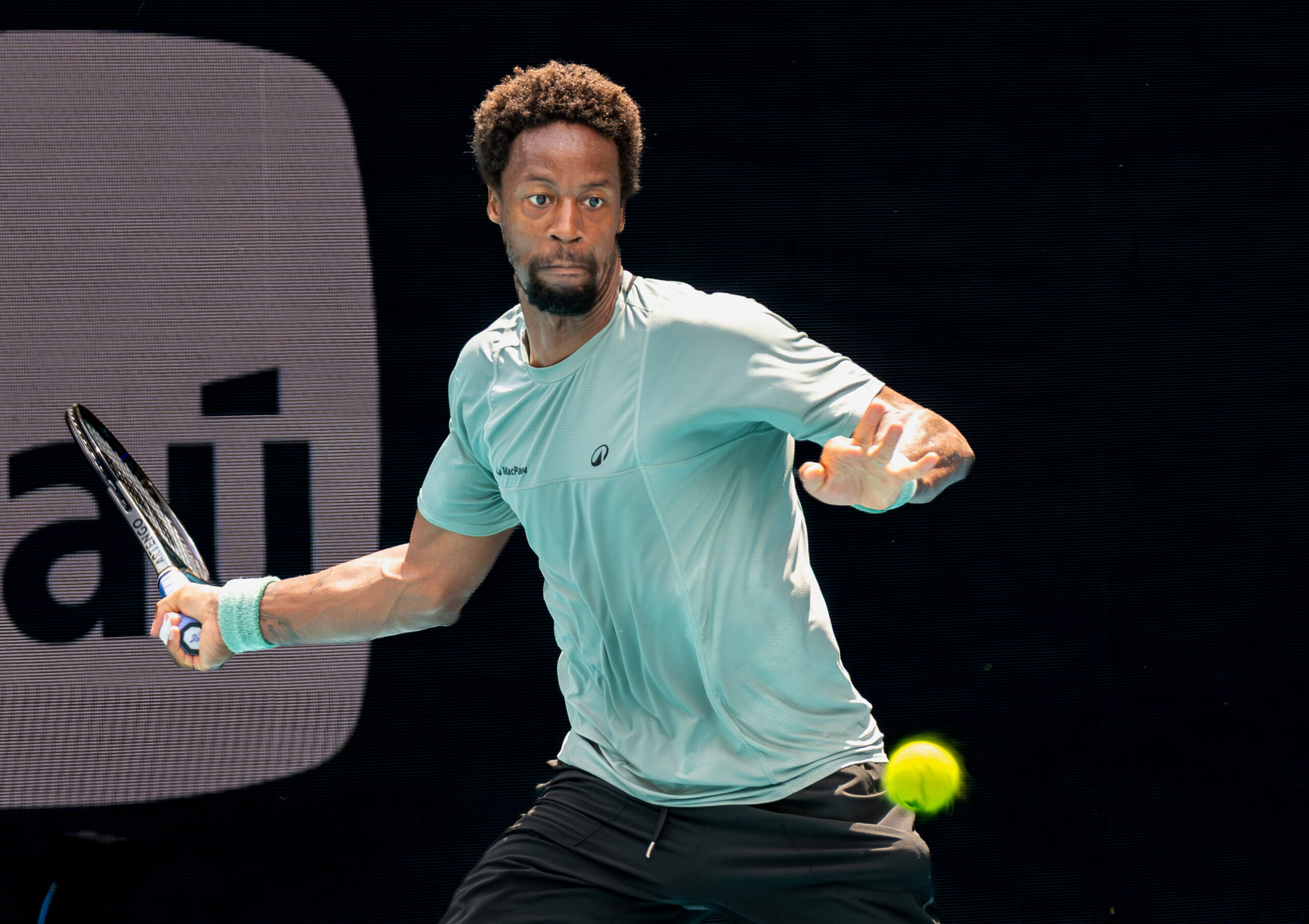
Updated Aug. 25, 2026: The second invitation is producing a run. Monfils and Elina Svitolina, who are married, beat Alexandra Eala and Felix Auger-Aliassime 4-1, 4-1 on Louis Armstrong Stadium to reach the mixed doubles quarterfinals, where they met Katerina Siniakova and Henry Patten. The qualifiers had just beaten top seeds Aryna Sabalenka and Novak Djokovic, so the section Monfils and Svitolina were drawn into lost its headline team before they reached it. Monfils, in what he has said will be his final season, begins his singles campaign when the main draw opens Sunday.
Updated Aug. 24, 2026: Monfils has a second invitation. He is in the mixed doubles main draw on a wild card alongside Elina Svitolina, and they open against Alexandra Eala and Felix Auger-Aliassime on Tuesday, Aug. 25 — six days before his singles campaign, and in what is expected to be his final season. Full mixed doubles draw here.
Updated Aug. 18, 2026: Both invitations are now formally on the US Open’s own list. The USTA published its main-draw wild cards on Tuesday, with Monfils and Leolia Jeanjean confirmed on the men’s and women’s lists respectively. Monfils is one of two non-Americans among the seven men named, alongside Australia’s Alexei Popyrin. He will not be the only farewell in the field: Kei Nishikori, also retiring at the end of the season, received a wild card into qualifying rather than the main draw. The full list is tracked here.
The French Tennis Federation had two US Open invitations to hand out this week, and it spent the men’s one on a farewell rather than a breakthrough.
The federation announced Wednesday that Gael Monfils and Leolia Jeanjean would receive the wild cards it controls at this year’s tournament. Monfils, 39 and ranked No. 347, is retiring at the end of the season and will make an 18th and final appearance at Flushing Meadows. Jeanjean, who has spent much of the season fighting through qualifying to reach main draws, takes the women’s place. Both go directly into the main draws, without playing a qualifying match.
The places are not awarded on form alone, and they never have been. The USTA, Tennis Australia and the French federation operate a reciprocal arrangement under which each host nation receives two wild cards at the other two majors and distributes them as it chooses. Wimbledon does not participate. American players took the French places at Roland Garros in May under the same agreement. The invitations are a diplomatic instrument as much as a sporting one, and the federation is free to reward a career rather than a season.
What made this year’s choice land awkwardly at home was who else was available. Arthur Gea won the Los Cabos title on Aug. 2, beating defending champion Denis Shapovalov 6-3, 6-4 in the final after taking out Francisco Cerundolo, then ranked 20th, in the quarterfinals. It was the first tour-level title of his career, in a week he had entered with three tour-level wins to his name. The 21-year-old climbed from No. 127 to No. 82 and into the top 100 for the first time. He will still have to play qualifying in New York, as he did at the Australian Open in January.
The reason is a matter of timing rather than judgment. Entry lists for the majors close weeks before play begins, and the US Open field was built on the July 20 rankings, which set the men’s direct-entry cutoff at No. 101. Gea was outside it. His rise came a fortnight later, too late to move him onto the acceptance list, which is precisely the situation a wild card exists to correct. The federation had one to give and gave it elsewhere.
The decision was not universally welcomed in France, where the argument has been less about Monfils’ record than about what the invitation is for. A French journalist publicly questioned the choice within hours of the announcement, and the case against is straightforward: a player in the middle of the best stretch of his career now faces three extra matches in late-August heat before the tournament proper begins, while a main-draw place goes to a man ranked 265 spots below him.
The case for Monfils is not difficult to make either. He reached the semifinals in New York in 2016, the best Grand Slam result of his career alongside his run to the last four at Roland Garros in 2008, and returned to the quarterfinals in 2019, losing a five-set match to Matteo Berrettini. He has said a final appearance at the tournament was one of the goals left in a season he has already announced will be his last. He is also entered in the mixed doubles alongside his wife, Elina Svitolina, in an event rebuilt around exactly the kind of name recognition he brings.
Federations have made this trade before and will make it again. The reciprocal wild cards are the only places at a major that answer to no ranking list, and they tend to go to players whose value is measured in attendance and attention rather than points. The USTA applies the same logic in reverse each spring in Paris.
For Gea, the practical consequence is manageable but real. Qualifying at the US Open runs three rounds, and players who come through it arrive in the main draw with matches already in their legs. He has done it before, in Melbourne, where he reached the second round. He also retains a narrower route in: withdrawals from the acceptance list between now and the draw move alternates up, and the men’s field has been unsettled all summer by injuries across the North American hard-court swing.
What is not available to him is the tournament’s own discretionary pile. The USTA holds eight main-draw wild cards, one of them going each year to the winner of the US Open Wild Card Challenge, a competition open only to Americans. The rest have not been announced, and they rarely travel far from home. Main-draw play begins Aug. 30.