

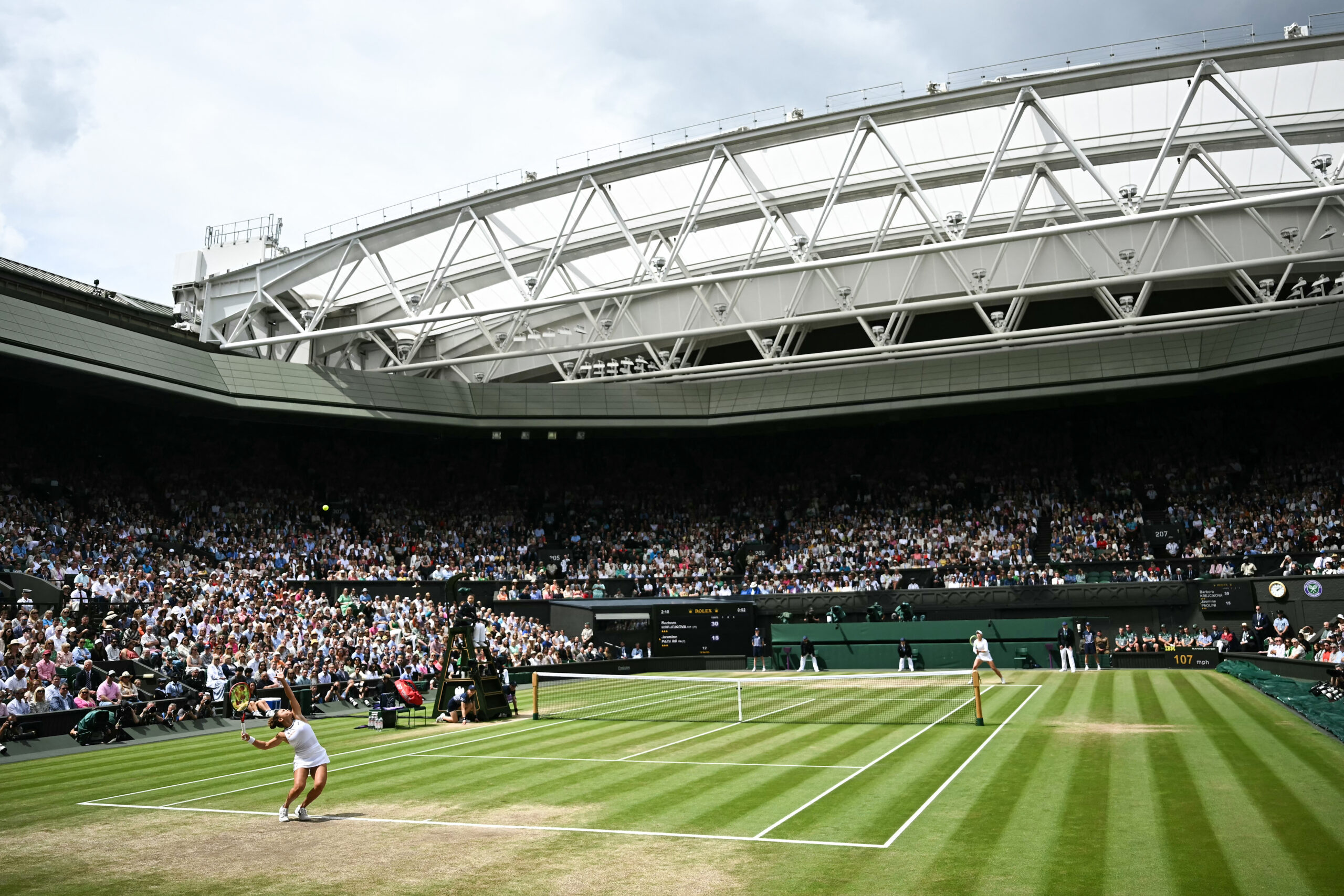
Every sport has a cathedral — an event or venue that carries more historical weight, more institutional prestige, and more emotional significance than any other in the competitive calendar. In professional tennis, that cathedral is Wimbledon.
The All England Club’s annual championship is not simply the oldest Grand Slam tournament. It is the event that defines what professional tennis aspires to be — the standard against which every other tournament measures itself and against which players measure their own careers.
Understanding how Wimbledon acquired that status — how a lawn tennis championship organized by a private club in a London suburb in 1877 became the most prestigious sporting event in professional tennis — requires understanding both the deliberate institutional choices that the All England Club has made across nearly a century and a half and the historical accidents, competitive narratives, and cultural associations that no institution could have engineered entirely by design.
The Foundation: Being First
Wimbledon’s most fundamental source of prestige is the simplest one: it was first. The 1877 Wimbledon Championship was the first organized lawn tennis tournament in the world — the event that established competitive tennis as a sport rather than a recreational pastime, that codified the rules that still govern the game, and that created the institutional precedent that every subsequent major tournament has followed.
Being first matters in sport in ways that being better or being bigger does not fully replicate. The first event of its kind carries a historical weight that later events cannot acquire simply by growing larger or offering more prize money.
Wimbledon’s claim to preeminence begins with the fact that it invented the competitive framework within which professional tennis has operated ever since — the rectangular court, the scoring system, the challenge cup that the winner’s name is engraved on, the institutional identity that has persisted through every subsequent transformation of the sport.
That founding status created a relationship between Wimbledon and the sport’s identity that the other Grand Slams — all of which came later — have never been able to replicate. The Australian Open, Roland Garros, and the US Open are all prestigious events with their own histories and identities. None of them can claim to have invented competitive tennis.
The Grass: Surface as Identity
Wimbledon’s insistence on grass — the surface on which lawn tennis was invented and on which the sport was exclusively played in its early decades — is the most visible expression of its historical identity and one of the primary mechanisms through which its prestige has been maintained.
Every other major tournament in professional tennis has changed its surface at least once. The US Open abandoned grass in 1974, switching first to clay and then to hard courts. The Australian Open abandoned grass in 1987, switching to hard courts.
Roland Garros has always been played on clay — but clay was not the original surface of competitive tennis. Wimbledon alone has maintained the surface on which the sport was born, and that continuity is a statement about institutional identity that carries genuine prestige.
The decision to maintain grass is not without cost. Grass courts are expensive to maintain, vulnerable to weather, and deteriorate under competitive use in ways that hard courts and clay do not.
Wimbledon’s entire grass preparation — the specific grass seed varieties, the mowing schedules, the rolling and watering regimens that produce the surface’s playing characteristics — represents a significant ongoing investment in maintaining a surface identity that requires specific expertise and continuous management.
That investment is a choice — one that Wimbledon makes deliberately and that signals something about what the institution values. The message is that historical continuity and surface identity matter more than the operational convenience of switching to a more practical surface. That message, communicated year after year across nearly a century and a half, is part of how prestige is built and maintained.
The grass surface also creates the specific competitive environment that has generated some of the sport’s most iconic moments. The serve-and-volley era’s greatest matches — the Borg-McEnroe final of 1980, the Sampras-Agassi encounters of the 1990s — were shaped by Wimbledon’s grass in ways that would have been impossible on any other surface.
Even after the surface modifications of the early 2000s slowed the grass and reduced serve-and-volley’s viability, the specific playing characteristics of Wimbledon’s courts continue to produce competitive dynamics that distinguish the tournament from the other Grand Slams.
The Traditions: Continuity as Prestige
Wimbledon’s prestige is inseparable from its traditions — the specific practices, requirements, and ceremonial elements that distinguish the tournament from every other event on the professional calendar and that have been maintained across generations of competitive change.
The white clothing rule
The requirement that players wear predominantly white clothing during competition — is the most visible and most discussed of Wimbledon’s traditions. No other Grand Slam or major professional tournament requires specific clothing colors.
Wimbledon’s insistence on white is a deliberate statement of historical continuity — white was the standard tennis clothing of the Victorian era when the tournament was founded, and the requirement to maintain it is a specific refusal to allow commercial and fashion considerations to displace historical identity.
The white clothing rule has been a source of ongoing tension with players and equipment manufacturers whose commercial interests would be better served by more colorful and brand-prominent clothing.
Wimbledon has maintained the requirement against that commercial pressure — a choice that demonstrates institutional authority and signals that the tournament’s identity takes precedence over individual commercial preferences.
The absence of player names on the Centre Court scoreboard
Replaced instead by the player’s nationality — was a tradition maintained for many years as an expression of the principle that the tournament was larger than any individual player’s celebrity. The modification of this practice in recent years reflects the commercial realities of the modern era but illustrates the institutional philosophy that Wimbledon has historically embodied.
The royal patronage and royal box
the presence of the British royal family at Wimbledon, the specific protocols around the royal box, and the association between the tournament and the British monarchy — connects Wimbledon to a social and cultural world that no other tennis tournament inhabits. This association is not simply ceremonial.
It is a statement about the social world from which Wimbledon emerged and within which it has maintained its institutional identity.
Strawberries and cream
the specific food association that has become one of Wimbledon’s most globally recognized cultural markers — is a tradition that began in the Victorian era and has been maintained as a conscious element of the tournament’s identity rather than simply as a catering decision.
The approximately 35,000 portions of strawberries and cream consumed at Wimbledon each year are a commercial and cultural institution as much as a refreshment option.
Centre Court: The Sport’s Most Important Stage
Wimbledon’s Centre Court is the most famous tennis arena in the world — not because it is the largest or the most modern but because of what has happened on it across nearly a century of competitive history and what those events represent in the sport’s collective memory.
The original Centre Court at the Worple Road grounds was the first dedicated tennis stadium — the first venue purpose-built for watching competitive tennis rather than simply a lawn adapted for the purpose.
The move to the current Church Road site in 1922 created the Centre Court that the modern world recognizes, and the subsequent additions — the retractable roof completed in 2009, the ongoing facility development — have maintained the venue’s operational relevance while preserving its historical character.
What makes Centre Court irreplaceable is not its architecture but its competitive history. The matches played on it — from the Victorian era through the Big Three rivalries of the modern game — constitute the most concentrated archive of significant competitive moments in tennis history.
Every generation of professional tennis has produced its defining Centre Court narrative: the Borg-McEnroe era in the late 1970s and early 1980s, the Sampras era in the 1990s, the Federer era in the 2000s, the Nadal-Federer rivalry’s defining encounters in 2008 and beyond.
That accumulation of competitive history is itself a form of prestige. A player who wins Wimbledon is not merely winning a tennis tournament. They are adding their name to a list that begins in 1877 and that connects them to every champion across the sport’s entire competitive history.
That connection — to Spencer Gore and William Renshaw and Suzanne Lenglen and Don Budge and Billie Jean King and Rod Laver and Bjorn Borg and Martina Navratilova and Pete Sampras and Roger Federer and Rafael Nadal — is what winning Wimbledon means in a way that winning any other tournament does not quite replicate.
The All England Club’s Institutional Autonomy
A significant but less discussed source of Wimbledon’s prestige is the institutional autonomy that the All England Club has maintained across its entire history — the ability to make decisions about the tournament’s format, conditions, and character without being subordinate to the ATP, the WTA, or any other governing body.
The All England Club owns and operates Wimbledon independently of the professional tours. It sets its own prize money, determines its own entry conditions, maintains its own traditions, and makes its own decisions about everything from surface preparation to clothing requirements to the specific format of the draw.
This autonomy is not simply a legacy of the amateur era — it reflects the specific legal and institutional structure of the club and its relationship to the tournament it has operated since 1877.
That autonomy has allowed Wimbledon to maintain characteristics — the grass surface, the white clothing rule, the specific atmosphere and protocols of the event — that would likely have been compromised by full integration into the commercial tour structures that govern the rest of professional tennis.
It has also created ongoing tensions with the ATP and WTA over prize money equity, scheduling, and the tournament’s refusal to follow tour regulations that other Grand Slams have adopted.
The 2022 decision to ban Russian and Belarusian players following the invasion of Ukraine — made unilaterally by the All England Club without ATP and WTA approval — was the most recent high-profile expression of this institutional autonomy.
The ATP and WTA responded by stripping Wimbledon of its ranking points for that year — an extraordinary measure that illustrated both how far Wimbledon’s institutional independence extends and the tensions that independence creates with the broader governance of professional tennis.
The Champions: Why Winning Wimbledon Feels Different
Part of Wimbledon’s prestige is created by the reactions of the players who win it — the specific emotional responses that Centre Court victories produce in champions who have won other Grand Slams without the same visible intensity of feeling.
Roger Federer’s first Wimbledon victory in 2003 — his first Grand Slam title — produced a display of emotion that he described in subsequent years as unlike anything he experienced at other tournaments. His eighth and final Wimbledon title in 2017 produced similar scenes.
Players who are typically composed in victory — who have won Grand Slams and celebrated them with satisfaction rather than overwhelming emotion — often respond to Wimbledon victories differently, as if the specific weight of the place and its history reaches something that other victories do not.
Nadal’s 2008 victory — examined in detail in the greatest match article — was the competitive achievement he had most visibly pursued across his career, despite his Roland Garros dominance making him technically more successful on clay.
The emotional significance of his collapse to the grass after winning — captured in one of the most reproduced images in the sport’s recent history — reflected what Wimbledon represented for a player who had been trying to win it since childhood.
These player responses are not manufactured. They are genuine reactions to winning at a place whose history they have grown up aware of — whose champions they can name going back generations and whose specific competitive environment has no equivalent anywhere else in professional tennis.
That emotional charge is transmitted to the audiences watching, to the media covering the event, and ultimately to the broader sporting public who may not follow tennis closely but recognize Wimbledon’s importance from the reactions it produces in those who compete there.
The Commercial Dimension: Broadcasting and Global Reach
Wimbledon’s prestige in the modern era is partly a product of its commercial reach — the global television audience it attracts, the broadcast relationships it has built across decades of the television age, and the specific visual identity it presents to audiences who may have no other point of contact with professional tennis.
The BBC’s coverage of Wimbledon — which has been broadcast on British television since 1937, making it the longest continuously broadcast sporting event on British television — has given the tournament a cultural presence in Britain that goes beyond the tennis-following audience.
For many British viewers, Wimbledon’s fortnight is an annual cultural event rather than simply a sporting one — something to be followed regardless of whether they watch tennis at any other time of year.
The global television distribution of Wimbledon’s broadcast — reaching audiences across every major market — has made its visual identity one of the most globally recognized in sport.
The green of the grass, the purple and green color scheme, the specific aesthetic of Centre Court with its traditions and architecture intact — these are visual signals that communicate Wimbledon’s identity instantly to audiences worldwide without requiring any explanation of what they are watching.
Prize money growth — from the zero prize money of the amateur era to the tens of millions available today — has been generated partly by Wimbledon’s broadcasting success and partly by the sponsorship value that its prestige attracts.
The tournament generates sufficient commercial revenue to offer prize money comparable to the other Grand Slams while maintaining the institutional independence that its autonomy from the tour structures allows.
Wimbledon in the Modern Era
The challenges that Wimbledon faces in the modern era are different from those of the amateur era or the early Open Era — not questions of whether the tournament will survive or whether professional players will participate, but questions about how its historical identity can be maintained in the face of commercial pressures, player welfare considerations, and the evolving governance structures of professional tennis.
The retractable roof — installed on Centre Court in 2009 and on No. 1 Court in 2019 — was the most significant physical accommodation to the realities of the modern professional game. Rain delays that had historically extended Wimbledon’s schedule into third weeks and created logistical crises are now manageable within the tournament’s standard fortnight. The roofs changed the operational character of the tournament while leaving its competitive character essentially intact.
The surface modifications of the early 2000s — discussed in the surfaces article in this series — changed the competitive character more significantly. The slower grass produced by modified preparation and heavier balls created conditions more hospitable to baseline players and less specifically advantageous for serve-and-volley specialists.
Whether those changes improved or diminished Wimbledon as a tennis event is a matter of genuine debate among those who prefer the serve-and-volley era and those who find the modern baseline game more compelling.
What has not changed is Wimbledon’s fundamental institutional identity — the combination of historical continuity, deliberate tradition maintenance, physical setting, and competitive history that makes it unlike any other tennis tournament.
The white clothing, the grass, the royal box, the Centre Court, the strawberries, the specific atmosphere of the fortnight in the London summer — these elements persist because the institution has chosen to maintain them, and that choice is renewed every year with the same deliberateness that produced it in the first place.
Why Wimbledon Remains the Standard
Wimbledon’s prestige is not simply a product of age or tradition for their own sake. It is the product of consistent institutional choices — to maintain the grass, to insist on white clothing, to preserve the specific character of the tournament against the commercial pressures that would have simplified and standardized it — that have accumulated across nearly a century and a half into something genuinely distinctive.
Other sports have old events and prestigious venues. What Wimbledon has that is genuinely rare is an institution that has maintained its identity with remarkable consistency across the full arc of the sport’s history — from the Victorian origins of lawn tennis through the amateur era, through the Open Era, through the television age, and into the commercial professional sport of the modern era — without losing what makes it specifically itself.
That consistency is the foundation of prestige. Not the longevity alone, not the traditions alone, not the history alone — but the institutional will to maintain all of those things simultaneously across a period of change that has transformed virtually everything else in professional tennis.
Wimbledon is the standard because it has chosen to be, year after year, for nearly a hundred and fifty years. That choice, renewed continuously across the sport’s entire competitive history, is what makes it irreplaceable.
Part of the Tennis History series. Previous: Tennis’s Longest Winning Streaks and Most Dominant Seasons. Next: How Prize Money in Tennis Evolved — From Amateur Roots to Million-Dollar Checks.