

Grand Slam titles are the most celebrated measure of greatness in professional tennis, but they are not the only one. The ability to win consistently across an entire season — to sustain excellence not just for a fortnight at a major event but across weeks and months of professional competition against the full depth of the tour — is a different kind of achievement that title counts alone do not capture.
Winning streaks and dominant seasons reveal something about professional excellence that Grand Slam records obscure. They show which players could maintain competitive intensity across the full breadth of the professional calendar, who performed at the highest level not just at the most important events but at every event they entered, and whose excellence was sustained rather than concentrated at peaks separated by ordinary performance.
This article examines the longest winning streaks in professional tennis history and the most dominant individual seasons the sport has produced — the years in which a single player’s performance was so far above the competitive standard that it stands apart from anything else the sport has generated.
The Longest Winning Streaks in Women’s Tennis
Martina Navratilova — 74 Consecutive Matches (1984)
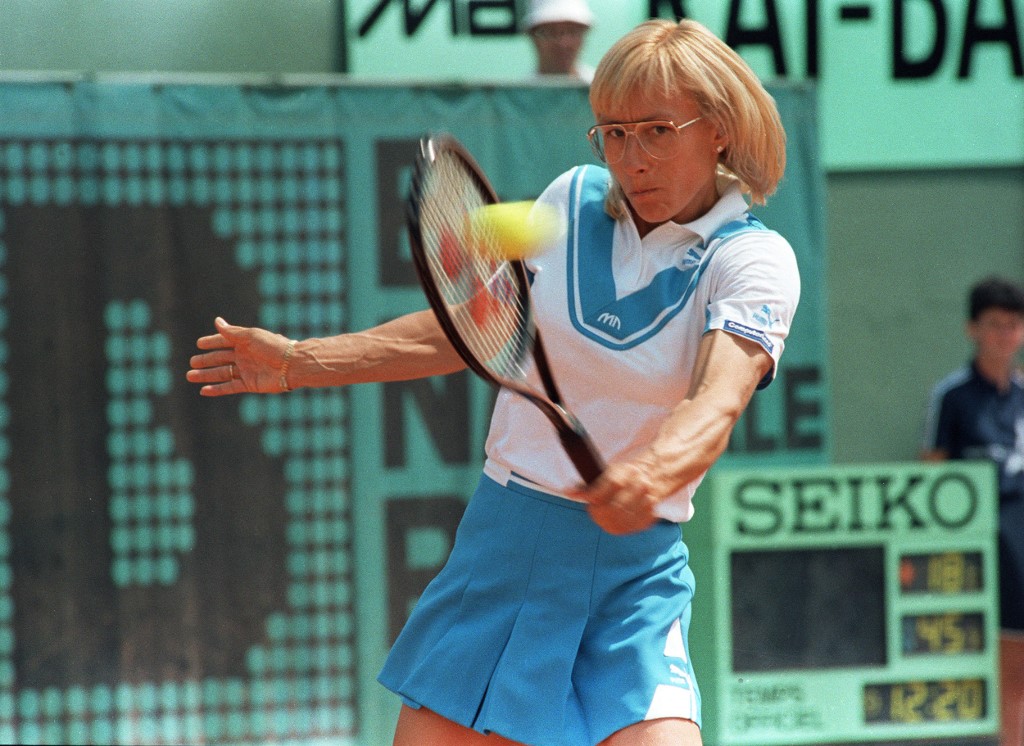
The longest winning streak in professional tennis history belongs to Martina Navratilova, who won 74 consecutive matches across 1984 — a run that lasted from January through December of that year before being ended by Helena Sukova in the semifinals of the Australian Open.
Navratilova’s 74-match streak was not simply a product of playing in weak fields or managing her schedule to avoid difficult opponents. It was accumulated across a full professional season that included Grand Slam events, major tour events, and the full range of competitive contexts that the women’s professional calendar contained.
She won six Grand Slam titles in 1983 and 1984 combined and reached the final of every Grand Slam she entered across the period of the streak.
The specific characteristics of Navratilova’s game that made the streak possible are worth examining. Her serve-and-volley game was the most technically complete in women’s tennis — the combination of serving power, net skills, and athletic movement that no contemporary could consistently handle.
Her physical preparation — at the time unusually sophisticated for women’s tennis — gave her a fitness base that could sustain the highest competitive demands across a full season without the physical deterioration that affected most of her contemporaries. And her competitive intensity — the ability to maintain focus and quality regardless of the opponent or the occasion — was the psychological foundation on which the streak rested.
The ending of the streak was itself historically significant. Helena Sukova — an eighteen-year-old Czech player who would go on to a successful professional career — beat Navratilova 1–6, 6–3, 7–5 in the Australian Open semifinal in a result that shocked the tennis world and ended a competitive run that had seemed as if it might continue indefinitely.
Steffi Graf — 66 Consecutive Matches (1989–1990)
Steffi Graf’s 66-match winning streak — accumulated between August 1989 and May 1990 — is the second longest in women’s tennis history and reflects the sustained dominance that characterized her peak years in the late 1980s and early 1990s.
The streak began following Graf’s 1989 Wimbledon victory and extended through the 1989 US Open, the 1990 Australian Open, and into the 1990 clay court season before being ended by Arantxa Sánchez Vicario at the 1990 French Open — one of the most significant upset victories in Roland Garros history.
Graf’s streak reflected a different competitive foundation from Navratilova’s. Where Navratilova’s dominance was built on serve-and-volley net skills and physical athleticism, Graf’s was built on the combination of an extraordinary forehand — hit with pace and topspin that no contemporary could consistently handle — exceptional court speed, and a competitive consistency that reflected her ability to maintain technical quality across the full range of competitive contexts the tour produced.
Chris Evert — 55 Consecutive Matches (1974)
Chris Evert’s 55-match winning streak in 1974 — which included her first French Open and Wimbledon titles — established the standard of women’s tour dominance before Navratilova’s emergence challenged and eventually surpassed it.
The streak reflected Evert’s extraordinary baseline consistency — the two-handed backhand, the controlled groundstroke game, the ability to maintain competitive quality across long matches — that made her the most reliable performer in women’s tennis through the mid-1970s.
The Longest Winning Streaks in Men’s Tennis
Guillermo Vilas — 46 Consecutive Matches (1977)
The longest winning streak in men’s professional tennis history belongs to Guillermo Vilas, the Argentine clay court specialist who won 46 consecutive matches across the summer and autumn of 1977 — a run that included the US Open title, won on clay at Forest Hills, and thirteen other tournament victories.
Vilas’s streak was accumulated primarily on clay and indoor hard courts — surfaces that suited his heavy topspin baseline game — which means it does not reflect the all-surface dominance that Navratilova’s streak demonstrated. But the sheer competitive volume of the run — thirteen tournament wins across several months of continuous competition — represents a level of sustained excellence that no men’s player has matched in the modern era.
The 1977 US Open was the centerpiece of the streak — won at Forest Hills on a clay surface that rewarded exactly the game Vilas had built — and remains the only US Open won by an Argentine player. His clay court dominance during this period anticipated the clay court revolution that Bjorn Borg and later Rafael Nadal would refine and extend.
Ivan Lendl — 44 Consecutive Matches (1981–1982)
Ivan Lendl’s 44-match winning streak across the autumn of 1981 and early 1982 reflects the methodical, baseline-dominant game that would eventually make him one of the most successful players of the 1980s.
Lendl’s streak was built on his ability to outgrind opponents from the baseline — the relentless groundstroke pressure and physical endurance that became his competitive signature — across a period of the calendar when his specific combination of qualities was at its most dominant.
Bjorn Borg — 33 Consecutive Matches at Wimbledon (1976–1981)
While not a conventional winning streak across multiple tournaments, Bjorn Borg’s consecutive match record at Wimbledon — 33 straight victories between 1976 and 1981, encompassing five consecutive titles — is the most extreme concentration of excellence at a single tournament in men’s tennis history.
Borg never lost a match at Wimbledon after his first appearance at the tournament — losing in the third round in 1973 and the quarterfinals in 1974 before beginning his extraordinary run — until John McEnroe ended it in the 1981 final.
The Most Dominant Individual Seasons
Steffi Graf — 1988
Steffi Graf’s 1988 season is the most dominant in the history of professional tennis — men’s or women’s. She won all four Grand Slams, the Olympic gold medal, and eleven of fourteen tournaments she entered. Her win-loss record for the year was 72–3. No player in the Open Era has come close to matching the combination of title accumulation and win rate that Graf produced in 1988.
The specific quality of her 1988 season — examined in detail in the Greatest Women’s Players article — was not simply that she won everything available but that she won it against the full depth of women’s professional tennis, in a year when her main rivals were healthy and competitive, and at a level of dominance that was visible in every match rather than concealed in close results.
Her French Open victory over Natasha Zvereva — 6–0, 6–0 in thirty-two minutes, the most one-sided Grand Slam final in the Open Era — was the extreme expression of what the 1988 season contained. A Grand Slam final won without losing a single game against a quality opponent in a season when Graf was operating at a level that made the competitive gap between herself and everyone else visible at the sport’s most important events.
Martina Navratilova — 1983
Martina Navratilova’s 1983 season produced a win-loss record of 86–1 — the highest single-season win total in the history of women’s professional tennis and a loss rate of barely one percent across a full professional year. She won sixteen tournaments including three Grand Slams — the French Open, Wimbledon, and the US Open — and her single loss came against Kathy Horvath at Roland Garros before she had reached the form that would define her for the next several years.
The 86 wins in a single season reflect the breadth of Navratilova’s participation across the professional calendar — she entered more tournaments than most modern players do, competing across a full schedule rather than the selective calendar management that characterizes the modern approach to professional tennis. Her ability to maintain competitive quality across that volume of competition was a product of her physical preparation and competitive drive that the win-loss record captures but cannot fully communicate.
Novak Djokovic — 2011
Novak Djokovic’s 2011 season is the most dominant in the men’s game since the early years of the Big Three era and represents the clearest expression of what his complete baseline game was capable of producing at its peak. He won three Grand Slams — the Australian Open, Wimbledon, and the US Open — reached the final of the French Open, and finished the year with a win-loss record of 70–6.
The specific quality of his 2011 season went beyond the title accumulation. He beat Rafael Nadal — the world number one entering the season — in five consecutive finals across different surfaces, which was the clearest possible demonstration that a player had emerged who could compete with and defeat the previously dominant force across the full range of competitive conditions.
His US Open semifinal victory over Federer — saving two match points to win — was the match that most completely illustrated the mental resilience that would define his career.
Roger Federer — 2006
Roger Federer’s 2006 season produced a win-loss record of 92–5 — the highest single-season win total in men’s professional tennis history — along with three Grand Slam titles, twelve tournament victories, and a year-end ranking of world number one for the fourth consecutive year.
The 92 wins reflect Federer’s participation in more tournaments than is typical for top players in the modern selective scheduling era, but the win rate — 94.8 percent across a full professional season — represents a standard of sustained excellence that the win total alone understates.
His five losses were spread across different surfaces and different stages of events, reflecting a player who was genuinely vulnerable in only the most extreme competitive circumstances rather than one who was protecting a high win rate through careful schedule management.
Rafael Nadal — 2008 Clay Season
Rafael Nadal’s 2008 clay court season — from Monte Carlo through Roland Garros — produced a level of surface-specific dominance that represents the most extreme competitive performance in the history of any surface block in professional tennis.
He won every clay court event he entered, completed the French Open without losing a set for the first time, and finished the clay season having not lost a single set across five consecutive clay court tournaments.
The specific statistical expression of that dominance — winning the French Open 6–1, 6–3, 6–0 against Federer in the final, the most one-sided men’s Grand Slam final between two players of that quality in the Open Era — remains the clearest single-match illustration of what surface-specific dominance looks like at its extreme.
Serena Williams — 2013 and 2015
Serena Williams produced two seasons in the modern era that stand among the most dominant in women’s tennis history. Her 2013 season — 78 wins, 4 losses, eleven tournament titles — represented her return to the absolute peak of the women’s game following the health issues that had disrupted her 2010 and 2011 seasons.
Her 2015 season — in which she won the first three Grand Slams before losing the US Open semifinal to Vinci in the most shocking upset in women’s Grand Slam history — produced the closest modern approach to a Calendar Grand Slam and reflected a player performing at the highest sustainable level of women’s professional tennis.
What Winning Streaks and Dominant Seasons Reveal
The winning streaks and dominant seasons examined in this article share certain structural features that illuminate what sustained competitive excellence requires.
Physical resilience is the foundation
Every player on this list maintained their physical quality across extended competitive periods — not just peak performances at specific events but consistent high-level tennis across weeks and months of professional competition.
The physical preparation required to sustain that quality — the training loads, the recovery management, the injury prevention that allowed continuous competition — is as much a part of what these records reflect as the competitive excellence itself.
Mental consistency separates streaks from ordinary excellence
Grand Slam titles can be won with a peak performance across a fortnight. Winning streaks require sustaining that peak across dozens of consecutive matches against opponents of varying quality, in competitive circumstances that range from Grand Slam finals to routine first-round encounters.
The mental discipline required to approach every match with the same competitive intensity — regardless of the opponent, the occasion, or the competitive stakes — is the quality most specifically revealed by winning streaks.
The competitive environment matters
Every winning streak occurs within a specific competitive context — an era, a surface preference, a specific set of contemporaries. Navratilova’s 74-match streak was accumulated against the full depth of women’s professional tennis of the 1980s.
Vilas’s 46-match streak was concentrated on clay surfaces. Djokovic’s 2011 dominance was achieved against Federer and Nadal simultaneously. The context shapes the meaning of each achievement without diminishing the excellence it represents.
The Standard These Records Set
The winning streaks and dominant seasons in this article represent the outer limits of what professional tennis can produce — the moments when individual excellence so exceeded the competitive standard of the era that the records generated remain reference points decades later.
They will not all be surpassed. Some — Navratilova’s 74-match streak, Graf’s 1988 Golden Slam season — may stand permanently simply because the combination of circumstances that produced them is unlikely to recur. Others — like the men’s consecutive match records — may eventually be challenged as the sport continues to produce players of exceptional quality in future generations.
What they collectively establish is a standard of sustained competitive excellence that defines the outer boundary of what professional tennis has shown to be humanly possible. The players who set them did not simply win more than their contemporaries. They competed at a level that made the gap between themselves and everyone else visible in the statistical record they left behind.
Part of the Tennis History series. Previous: The Most Grand Slam Singles Titles in Tennis History. Next: How Wimbledon Became the Most Prestigious Tournament in Tennis.