

For seventeen years, the story of Roland Garros was the story of Rafael Nadal. Fourteen titles across seventeen editions of the French Open established a competitive identity between a player and a tournament that professional tennis had never previously produced and will almost certainly never produce again.
When Nadal competed at Roland Garros, the question was not whether he would win but how far his opponents could push him before the inevitable conclusion arrived. The tournament had a protagonist, a narrative, and a competitive logic that required no further explanation.
That era is over. Nadal retired from professional tennis in November 2024, his final competitive appearance at the Davis Cup Finals in Malaga completing a career whose Roland Garros chapter had already been written in its entirety. The clay courts of Paris belong to the past now — to the fourteen trophies, the 112 match wins, the two career losses at a single Grand Slam across seventeen years of competition.
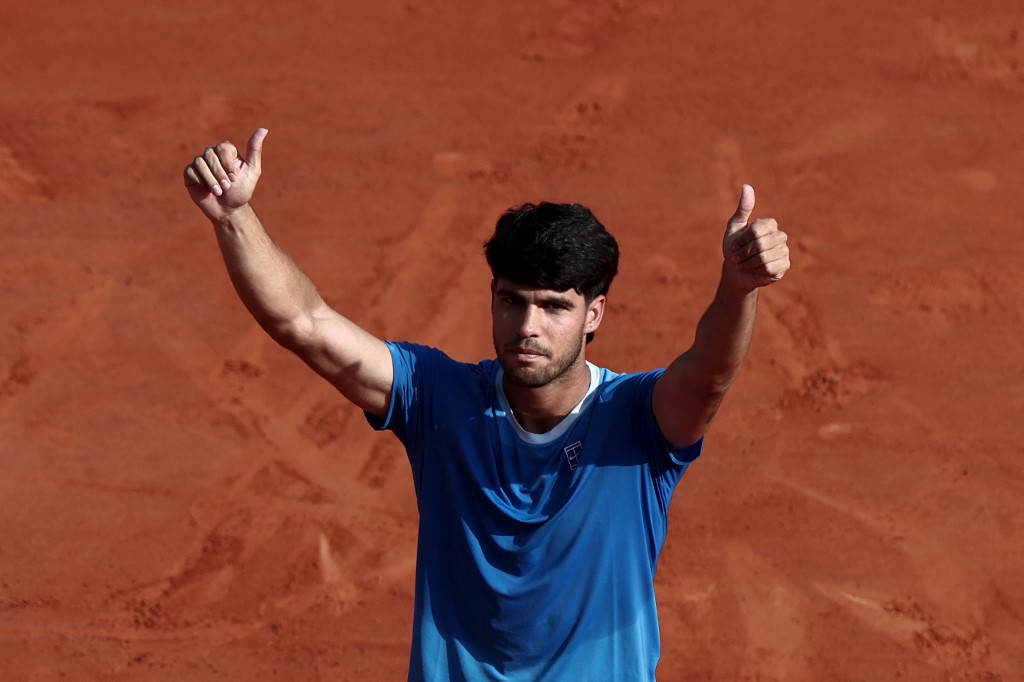
What they also belong to is the future. And the player who has most convincingly claimed that future — who has already won at Roland Garros, who has demonstrated the specific combination of qualities that clay court excellence requires, and who arrives at the 2026 French Open as the defending champion — is Carlos Alcaraz.
Who Alcaraz Is and Why He Matters at Roland Garros
Carlos Alcaraz was born in El Palmar, Murcia, Spain in May 2003. He turned professional at fifteen, broke into the top 100 in 2021, and in September 2022 became the youngest world number one in men’s tennis history — winning the US Open at nineteen in a performance that announced his arrival at the sport’s highest level more decisively than any junior title or development circuit result could have done.
He won Roland Garros for the first time in 2024 — defeating Alexander Zverev in the final 6–3, 2–6, 5–7, 6–1, 6–2 in a match whose fifth-set authority reflected the specific competitive quality that clay court excellence requires.
The title made him the first player since Bjorn Borg to win Roland Garros and Wimbledon in the same calendar year — a combination of clay and grass excellence that the specific demands of each surface make genuinely rare.
His 2024 Roland Garros title was his second Grand Slam on clay and his fourth overall — following his 2022 US Open, his 2023 Wimbledon title, and preceding his 2024 Wimbledon title. At twenty-one years old, four Grand Slam titles across three different surfaces placed him in the historical company of the sport’s most complete all-surface champions.
The Spanish Clay Court Tradition
Alcaraz’s Roland Garros success is inseparable from the Spanish tennis development system that produced him — the same clay court infrastructure and competitive culture that produced Nadal, Arantxa Sánchez Vicario, Sergi Bruguera, Carlos Moya, and the generations of Spanish clay court specialists who have made Spain the most prolific producer of Roland Garros champions in the Open Era.
He grew up competing on clay — the dominant surface in Spanish recreational and competitive tennis — and developed the technical profile that clay court success requires from the beginning of his competitive development rather than as an acquired addition to a hard court-based game. His heavy topspin forehand, his extraordinary lateral movement, his physical endurance, and his tactical patience on clay are not adaptations to a surface he has learned to handle — they are the foundations on which his entire game was built.
The specific connection to Nadal runs deeper than shared nationality. Alcaraz trained at the Juan Carlos Ferrero Academy in Villena — run by the former world number one and Roland Garros champion who has been his coach throughout his professional career.
Ferrero’s clay court pedigree and his firsthand knowledge of what Roland Garros success requires have shaped Alcaraz’s development in ways that are visible in how he approaches clay court competition — the physical preparation, the tactical sophistication, and the specific competitive mentality that clay court excellence demands.
The Spanish clay court tradition is not simply a cultural artifact — it is an active developmental system that continues to produce world-class clay court competitors because the infrastructure, the coaching expertise, and the competitive culture that built it remain in place. Alcaraz is the most recent and most prominent expression of that system’s continued effectiveness.
What Alcaraz’s Game Looks Like on Clay
Alcaraz’s clay court game is distinctive in the specific way that only the most complete players’ games on any surface are distinctive — it does not fit neatly into the clay court specialist template that Nadal defined, nor does it fit the all-court player template that players who perform adequately on clay but excel elsewhere represent.
It is something genuinely new — a combination of qualities that the clay court game has not previously produced in the same configuration.
The forehand is his primary weapon. Alcaraz generates heavy topspin on his forehand — comparable in spin rate and kick height to the best clay court forehands the game has produced — but combines that topspin with significantly more pace than most clay court specialists generate.
His forehand is not simply a defensive topspin shot designed to kick high and push opponents behind the baseline — it is an aggressive weapon that combines the kick of heavy topspin with the pace of a hard court baseline game, creating a ball that is difficult to handle both because of its height and because of its velocity.
His drop shot is a specific clay court weapon. Alcaraz uses the drop shot more frequently and more effectively than any comparable player of his generation — a tactical choice specifically suited to clay, where the high-bouncing topspin exchanges that define the surface create specific vulnerability to a well-executed short ball that forces opponents forward from behind the baseline.
His drop shot on clay is not a desperation play or an occasional surprise — it is a calculated tactical weapon deployed as part of specific point patterns that the clay surface makes viable.
His serve is more effective on clay than most clay court specialists’ serves. Alcaraz’s serving — particularly his kick serve — generates enough pace and bounce to create genuine difficulties on clay in ways that the surface typically neutralizes.
His ability to win free points on serve on clay — not at the rate he achieves on grass or hard courts but at a rate significantly above what most clay court specialists produce — gives his clay court game a first-strike capability that Nadal’s game did not rely on to the same degree.
His net game extends clay court tactics. Unlike most clay court specialists whose games are predominantly baseline-oriented, Alcaraz approaches the net on clay with genuine purpose and genuine quality — using the drop shot to draw opponents forward and following it to the net, or closing behind topspin groundstrokes when the ball sits up sufficiently.
His net play on clay is not a novelty but a tactical extension of his baseline game that creates problems for opponents who would otherwise be content to sustain baseline exchanges.
The 2024 Roland Garros Campaign
Alcaraz’s path to the 2024 Roland Garros title illustrated the specific competitive quality that winning the French Open requires and demonstrated that his clay court game was capable of handling the tournament’s most demanding competitive situations.
His quarterfinal against Stefanos Tsitsipas was the most physically demanding match of his tournament — a clay court exchange between two players with comparable topspin and physical quality that extended into the later sets before Alcaraz’s physical superiority and tactical variety gave him the decisive advantage.
The match reflected the specific demands of second-week Roland Garros competition — the accumulated physical wear of the first week requiring players to draw on physical and mental resources that first-round performance does not test.
His semifinal against Jannik Sinner — a rematch of one of their defining rivalries that had produced multiple competitive encounters across the 2023 and 2024 seasons — produced the match of the tournament before the final.
Alcaraz won 2–6, 6–3, 3–6, 6–4, 6–3 in a match whose final two sets reflected his specific quality of performing better rather than worse as competitive pressure increases — the specific mental quality that distinguishes the clay court champions who sustain their excellence in the tournament’s most demanding competitive moments.
The final against Zverev — won in five sets with a dominant fifth set that erased the competitive uncertainty of the middle sets — reflected the specific pattern that Alcaraz’s clay court performances had established across the tournament.
He competes fully through difficulty, maintains his tactical variety under pressure, and finds his best tennis in the moments when the competitive stakes are highest.
Alcaraz vs. Djokovic: The New Era’s Central Competition
Novak Djokovic’s relationship with Roland Garros — three titles, multiple final appearances, the competitive legacy of his sustained challenges to Nadal’s dominance — is the historical context within which Alcaraz’s emergence as the new clay court force must be understood.
Djokovic’s three Roland Garros titles represent the most successful challenge to the Nadal era that any player mounted — his 2016, 2021, and 2023 titles were won in circumstances that reflected both his all-court excellence and the specific windows that Nadal’s absences or reduced form created.
His 2023 title — won after Nadal’s withdrawal from the tournament due to injury — was followed in 2024 by his own quarterfinal exit due to a knee injury that required surgery and cost him significant playing time.
The competitive relationship between Alcaraz and Djokovic at Roland Garros is the central competitive dynamic of the post-Nadal French Open era. Djokovic’s three titles demonstrate that all-court excellence can win on clay when the specific competitive circumstances align.
Alcaraz’s 2024 title demonstrates that a new generation of clay court excellence has arrived that does not require the specific circumstances that Djokovic’s titles benefited from.
Their head-to-head record at Roland Garros will be one of the defining competitive narratives of the French Open’s next decade — two players of different generations and different competitive profiles competing for the title at the tournament where the specific properties of the clay surface create the most pronounced test of competitive completeness in professional tennis.
The Post-Nadal Roland Garros: What Changes and What Stays the Same
Nadal’s retirement has created a narrative vacuum at Roland Garros that no single successor can fully fill — the specific combination of dominance, consistency, and emotional investment that his fourteen titles represented is historically unique and will not be replicated.
What will not change is the surface. The red clay of Court Philippe-Chatrier will continue to reward the same combination of qualities that it has always rewarded — heavy topspin, physical endurance, tactical patience, lateral movement, and the specific competitive mentality that sustaining clay court excellence across seven matches over two weeks requires. The tournament’s competitive logic is determined by the surface, and the surface does not change with its champions.
What will change is the competitive narrative. The French Open without Nadal is a tournament with a genuinely open question at its center — who will dominate the clay courts of Paris in the way that Nadal dominated them, and over what period? That question may not produce a single answer equivalent to Nadal’s seventeen-year chapter.
The modern men’s tour — deeper, more competitive, and more physically sophisticated than any previous era — may simply produce better-distributed Roland Garros success across multiple players rather than the extreme concentration that Nadal’s specific qualities and specific development created.
Alcaraz is the most compelling candidate for the French Open’s post-Nadal defining figure — the defending champion, the most complete clay court game in the current generation, and the player whose Spanish development and Ferrero coaching have most specifically prepared him for what Roland Garros requires.
Whether his relationship with Roland Garros across the next decade produces titles at anything approaching Nadal’s frequency will be one of professional tennis’s most compelling ongoing questions.
The 2026 Roland Garros: What to Expect
Alcaraz arrives at Roland Garros 2026 as the defending champion and the world number two — the player with the most credible claim to the title based on recent clay court performance and the specific competitive profile that the French Open rewards.
His clay court season leading into Roland Garros 2026 — the results at Monte Carlo, Madrid, and Rome that determine the preparation and ranking context with which players arrive in Paris — will establish the specific competitive narrative around his defense.
A strong clay season arrival signals that his technical and physical preparation has been optimized for the surface. A disrupted clay season — through injury or inconsistent results — signals that the defense may be more vulnerable than his 2024 title would suggest.
The specific competitive challenges he faces in 2026 reflect the depth of the current men’s tour. Jannik Sinner — the world number one and Alcaraz’s most consistent rival across the past two seasons — arrived at his first Roland Garros final in 2024 and will arrive in 2026 having had another year of clay court development at the highest level.
Novak Djokovic’s fitness and competitive level entering the clay season will determine whether his experience and Roland Garros record remain competitive factors. And the broader field — the next generation of clay court competitors developing behind Alcaraz and Sinner — will add depth to the draw that the Nadal era’s specific dominance had historically suppressed.
What can be said with confidence about Roland Garros 2026 is that the most interesting clay court competition in professional tennis will be played on Court Philippe-Chatrier in late May and early June, that the defending champion will carry both the competitive quality and the competitive pressure that defending a Grand Slam title creates, and that the red clay surface will reward — as it has always rewarded — the players whose games are most completely suited to its specific demands.
Why the New Era at Roland Garros Is Worth Following
The transition from the Nadal era to the post-Nadal era at Roland Garros is one of professional tennis’s most significant competitive developments — not simply because a dominant champion has departed but because the departure creates the most genuinely open competitive question the tournament has faced in nearly two decades.
For seventeen years the French Open’s story was predictable in its broad outline even when it was compelling in its details. For the first time since 2004, Roland Garros does not have a player whose dominance shapes the tournament’s narrative before the first ball is struck.
What it has instead is a defending champion whose clay court excellence is genuine and whose competitive ambitions are clear, a field of rivals whose quality makes the competitive outcome genuinely uncertain, and the red clay surface whose specific demands will — as they always have — ultimately determine which player deserves to have their name added to the trophy that Nadal’s name adorns fourteen times.
That genuine uncertainty is not a diminishment of what Roland Garros is. It is a different kind of compelling — the competition of an open era rather than the celebration of a dominant one. And Carlos Alcaraz, as the player most positioned to shape what that open era becomes, is the figure whose relationship with the red clay of Paris will define the French Open’s next chapter.
Part of the Roland Garros series. Related: Rafael Nadal at Roland Garros — The Most Dominant Performance in Grand Slam History · The History of Roland Garros — How the French Open Was Founded · Why Roland Garros Is the Hardest Grand Slam to Win