

Professional tennis is a sport that asks its best players to compete across three fundamentally different surfaces — clay, grass, and hard courts — each of which rewards different technical and physical qualities. The players who succeed consistently across all three are celebrated as all-court champions.
But Roland Garros has a specific relationship with a different kind of player — the clay court specialist, whose game is built specifically around the demands of the red surface and who arrives at the French Open not simply as a competitor but as a player in their natural competitive habitat.
Clay specialists do not simply perform well at Roland Garros. They disproportionately dominate it — accumulating titles, making deep runs, and defeating higher-ranked opponents with a consistency that the ranking system alone does not predict.
Understanding why requires understanding what clay court specialization actually means, what specific competitive advantages it confers at the French Open, and why the surface’s properties create such a pronounced gap between players whose games are optimized for clay and those whose are not.
What Clay Court Specialization Actually Means
Clay court specialization is not simply a preference for playing on clay or a comfort with the surface that comes from practicing on it regularly. It is a specific configuration of technical skills, physical development, and tactical approach that is optimized for the demands that clay imposes — and that may not be equally effective on faster surfaces where different qualities determine competitive outcomes.
A true clay court specialist has developed several specific competitive qualities that clay rewards and that their game is built around expressing.
Heavy topspin groundstrokes from both sides. The clay specialist’s primary offensive weapon is the heavy topspin groundstroke — particularly the forehand — that kicks above shoulder height on clay and forces opponents behind the baseline.
Generating heavy topspin consistently requires a specific swing path, a specific preparation, and the physical strength and flexibility in the shoulder, wrist, and core that the brush-up contact demands.
Players who have developed this technique from the beginning of their competitive development — typically by learning tennis on clay courts in Spain, South America, or other clay-dominant tennis cultures — have it as a natural part of their game.
Players who learned on hard courts must specifically develop it as an addition to their natural technique.
Physical endurance built for long rallies. Clay court specialists are conditioned specifically for the physical demands of clay court competition — the extended rallies, the sustained lateral movement, the repeated topspin generation across long matches.
Their training load and physical development reflect the specific endurance demands of winning on clay, which are greater than the equivalent demands on faster surfaces.
This physical preparation cannot be replicated in the weeks before Roland Garros by a player whose training year has been built around the different demands of hard court competition.
Tactical patience and construction. Clay court tennis requires building points through accumulated pressure rather than attempting to end them aggressively before the construction work is done.
The clay specialist has developed the tactical patience to sustain cross-court exchanges, wait for the right moment to attack, and resist the temptation to force pace through the clay’s resistance.
This tactical patience is partly a mental quality and partly a technical one — the confidence in one’s own topspin and movement to sustain long rallies without anxiety about their duration.
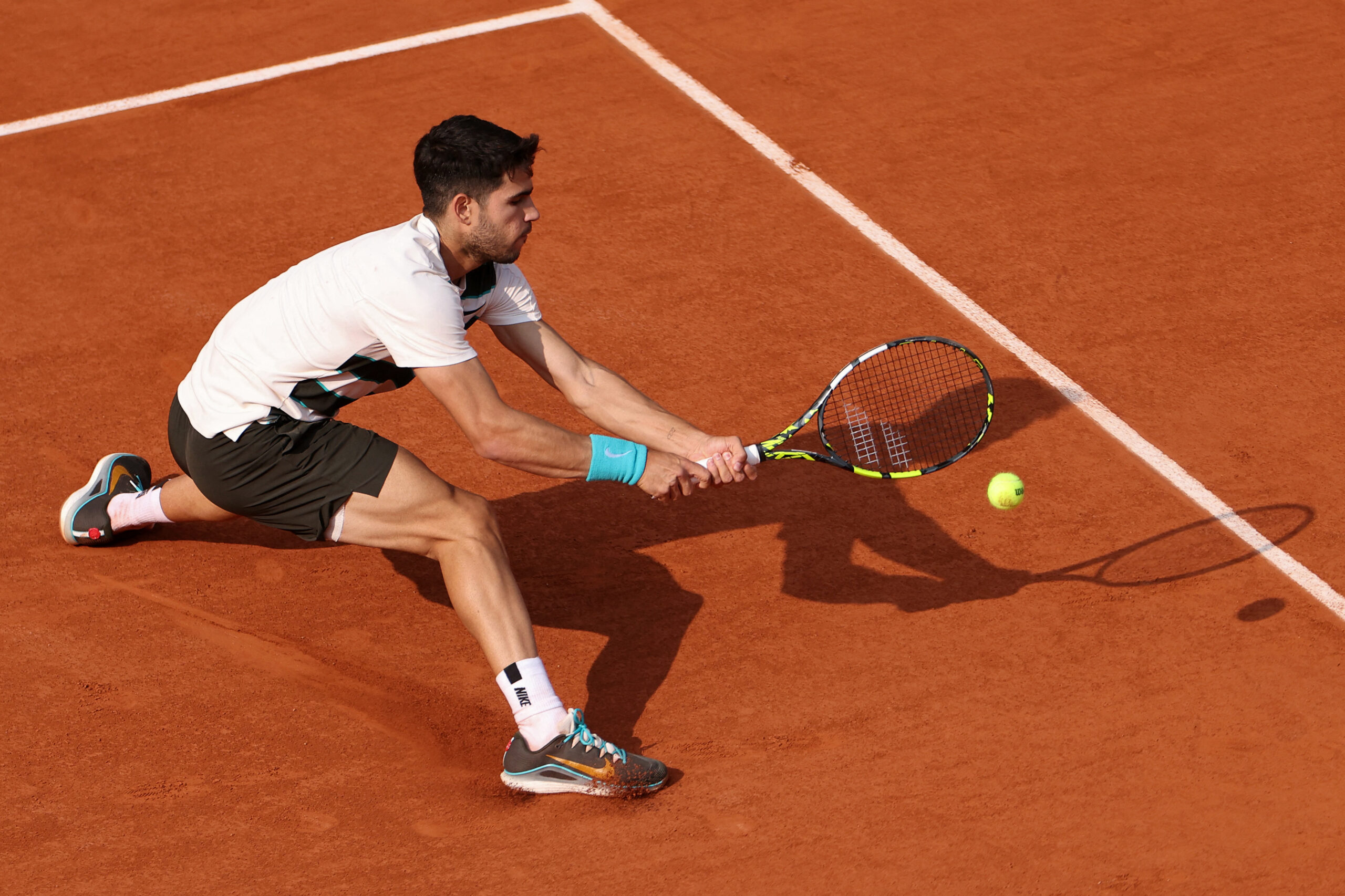
Sliding and clay-specific movement. The sliding technique that clay’s loose surface layer makes both possible and necessary is developed across years of competition on clay — it is not a skill that can be acquired in weeks.
Clay specialists slide into shots, recover their balance and positioning efficiently after wide balls, and use the surface’s properties to cover more court with less effort than their non-clay-specialist opponents.
This movement advantage compounds across long matches — the clay specialist arriving at later stages of a five-set match with less accumulated physical cost from movement than an opponent who has been stopping and resetting throughout.
The Competitive Advantages at Roland Garros
These clay court specialization qualities translate into specific competitive advantages at Roland Garros that explain the disproportionate success of clay specialists at the French Open.
The technical gap is largest at Roland Garros. On hard courts, the difference between a player with heavy topspin and a player with moderate topspin is meaningful but manageable — the surface is fast enough that pace and placement can compensate for lower topspin levels, and the lower bounce reduces the kick advantage of heavy topspin.
On clay, the same technical gap is amplified by the surface — the heavy topspin specialist’s kick becomes genuinely difficult to handle, while the moderate topspin player cannot compensate with pace because clay absorbs it. The clay specialist’s technical advantage is therefore at its maximum at Roland Garros in a way that it is not at any other Grand Slam.
The physical advantage compounds across the fortnight. A clay specialist arrives at Roland Garros in peak physical condition for clay court competition — having spent the preceding weeks of the clay season preparing specifically for these demands.
Their opponents — particularly those whose games are hard court-oriented — have transitioned from the Australian swing and the North American hard court preparation in the preceding months. The clay specialist’s physical preparation advantage is greatest at the tournament whose physical demands are highest.
The tactical advantage in specific matchups is decisive. The tactical adjustments required to compete effectively against heavy topspin on clay are specifically challenging for players whose technical games are not built around producing or handling those specific ball characteristics.
A hard court player whose backhand is optimized for handling flat balls at comfortable heights faces a genuinely different technical challenge when a clay specialist’s heavy topspin forehand starts kicking above their shoulder — and the adjustment required across five sets on clay is more difficult than the reverse adjustment a clay specialist makes when encountering pace on faster surfaces.
Spain: The Clay Specialist Production System
The most consistent source of clay court specialists in the history of professional tennis is Spain — a country whose tennis development infrastructure has been built almost entirely around clay courts and whose player development system has produced generations of Roland Garros champions.
Spain’s clay court dominance reflects infrastructure reality. The overwhelming majority of tennis courts in Spain — particularly across the south and east of the country where the most prominent tennis academies and development programs are located — are clay. Spanish junior players develop on clay from their earliest competitive experiences.
They learn to slide, to generate topspin, to construct points patiently, and to sustain the physical demands of clay court competition because that is the surface their competitive development is built around.
The Spanish player development system has historically emphasized physical conditioning alongside technical development — a recognition that clay court success requires not just the right technique but the endurance base to express it across long matches and long tournaments.
The combination of technical clay court development and specific physical conditioning for clay demands has made Spanish tennis the most consistent producer of Roland Garros champions in the Open Era.
Rafael Nadal is the most extreme expression of what the Spanish clay court development system can produce — a player whose technical profile was built from the beginning around the heavy topspin forehand, the physical endurance, and the tactical patience that clay court specialization requires.
His fourteen Roland Garros titles are in one sense a tribute to individual genius. In another sense they are the fullest expression of a development system that was specifically designed to produce clay court champions.
Beyond Nadal, Spain has produced multiple Roland Garros champions — Arantxa Sánchez Vicario, Conchita Martínez, Sergi Bruguera, Carlos Moya, Albert Costa, and most recently Carlos Alcaraz — whose collective record at the French Open is unmatched by any other nationality across the Open Era.
South America: The Clay Court Culture
South America — particularly Argentina, Chile, and Brazil — has produced a consistent stream of clay court specialists whose impact on Roland Garros extends beyond the specific champions the region has generated.
Argentine clay court culture is the most prominent in South America — the product of the same clay-dominant infrastructure that characterizes Spanish tennis development. Buenos Aires and the broader Argentine tennis development system have been clay-based since the country’s competitive development infrastructure was established, and Argentine players have developed the clay court qualities that Roland Garros rewards across generations of competitive development.
The Argentine clay court specialists who have had the most significant impact at Roland Garros include Guillermo Vilas — who won the French Open in 1977 and remains one of the great clay court players of the pre-Open Era modern period — and the 2004 finalist Guillermo Coria, whose clay court excellence was among the best of his era before injury reduced his competitive level in the later stages of his career.
The 2004 Roland Garros final between Guillermo Gaudio and Guillermo Coria — both Argentines — reflected the specific depth of South American clay court development and the degree to which the region’s player production system generates genuine Roland Garros-level clay court specialists rather than simply solid clay court performers.
Clay Specialists Versus All-Court Players at Roland Garros
The specific competitive dynamic between clay specialists and all-court players at Roland Garros is one of the tournament’s most consistent narratives — and the results of their encounters on the red clay reflect a competitive advantage for the specialist that the ranking system does not always predict.
All-court players — those who compete effectively across all three surfaces and who reach the later rounds of Grand Slams regardless of the surface — are at their most vulnerable at Roland Garros. Their technical games are not clay-optimized — they represent compromises between the different demands of different surfaces rather than the single-surface optimization that clay specialists bring to Paris.
The specific matchup between Novak Djokovic — the most complete all-court player in the history of men’s tennis — and Rafael Nadal — the most extreme clay court specialist the sport has produced — illustrates this dynamic in its most concentrated form. Djokovic’s all-court excellence has produced more Grand Slam titles than any other player in history and has included multiple Roland Garros titles.
But his record against Nadal specifically at Roland Garros — winning once in their multiple direct meetings — reflects the specific competitive advantage that Nadal’s clay court specialization confers even against the most complete all-court player the sport has ever produced.
The broader pattern across the Open Era confirms the dynamic. Players ranked outside the top 20 who have deep Roland Garros runs — reaching quarterfinals, semifinals, or finals — disproportionately represent clay court specialists whose overall ranking does not reflect their specific clay court quality.
Players ranked inside the top five who have struggled at Roland Garros — Sampras, McEnroe, Becker — are consistently the players whose technical games were least suited to clay.
The Clay Specialist’s Career Trade-Off
Clay court specialization at the level required to dominate Roland Garros involves a specific trade-off that shapes the career arc of the players who pursue it.
A game built specifically around clay court excellence — the heavy topspin, the physical endurance, the tactical patience — is not equally effective on the faster surfaces that constitute the majority of the professional calendar.
The serve-and-volley game that grass rewards is essentially incompatible with the clay specialist’s technical profile. The flat-hitting, pace-based approach that fast hard courts reward is undermined by the clay specialist’s technique, which generates topspin rather than pace.
This means that genuine clay court specialists — players whose games are fully optimized for clay rather than all-court balanced — tend to have more extreme competitive profiles than all-court players. They dominate the clay season and particularly Roland Garros. They are more competitive on clay than their overall ranking suggests. And they are typically less competitive on grass and fast hard courts than their overall ranking suggests.
The career trade-off is illustrated by the specific historical record — genuine clay specialists rarely win Wimbledon or the US Open, while all-court players who win both those events typically struggle to win Roland Garros as many times as their overall record might suggest. The specific optimization that clay court specialization requires comes at the cost of the versatility that winning across all surfaces demands.
Why Roland Garros Belongs to the Clay Specialists
The question of why clay specialists thrive at Roland Garros ultimately has a simple answer: the tournament is played on their surface, under their preferred conditions, across the distance that suits their specific physical and technical profile.
Roland Garros is not a neutral test that rewards universal excellence — it is a specific competitive environment that rewards the specific excellences that clay court specialization develops.
The broader tennis world celebrates all-court excellence — the players who win across all surfaces are the ones whose Grand Slam records are most complete, whose legacies are most fully expressed in the historical record, and whose competitive profiles are most admired in the abstract.
But Roland Garros specifically rewards the clay specialist — the player who has built their game around the demands of the red surface and who arrives in Paris as close to their competitive ceiling as the calendar allows.
When a clay specialist beats a higher-ranked all-court player at Roland Garros, the outcome is not an upset in the meaningful sense — it is the predictable result of a surface-specific competitive advantage expressing itself under the conditions where it is most powerful.
The clay specialist was not the better overall player. They were the better player on that surface, in that tournament, under those conditions. At Roland Garros, that is what winning requires.
Part of the Roland Garros series. Related: How Red Clay Changes Tennis at Roland Garros · Why Roland Garros Is the Hardest Grand Slam to Win · Rafael Nadal at Roland Garros — The Most Dominant Performance in Grand Slam History