

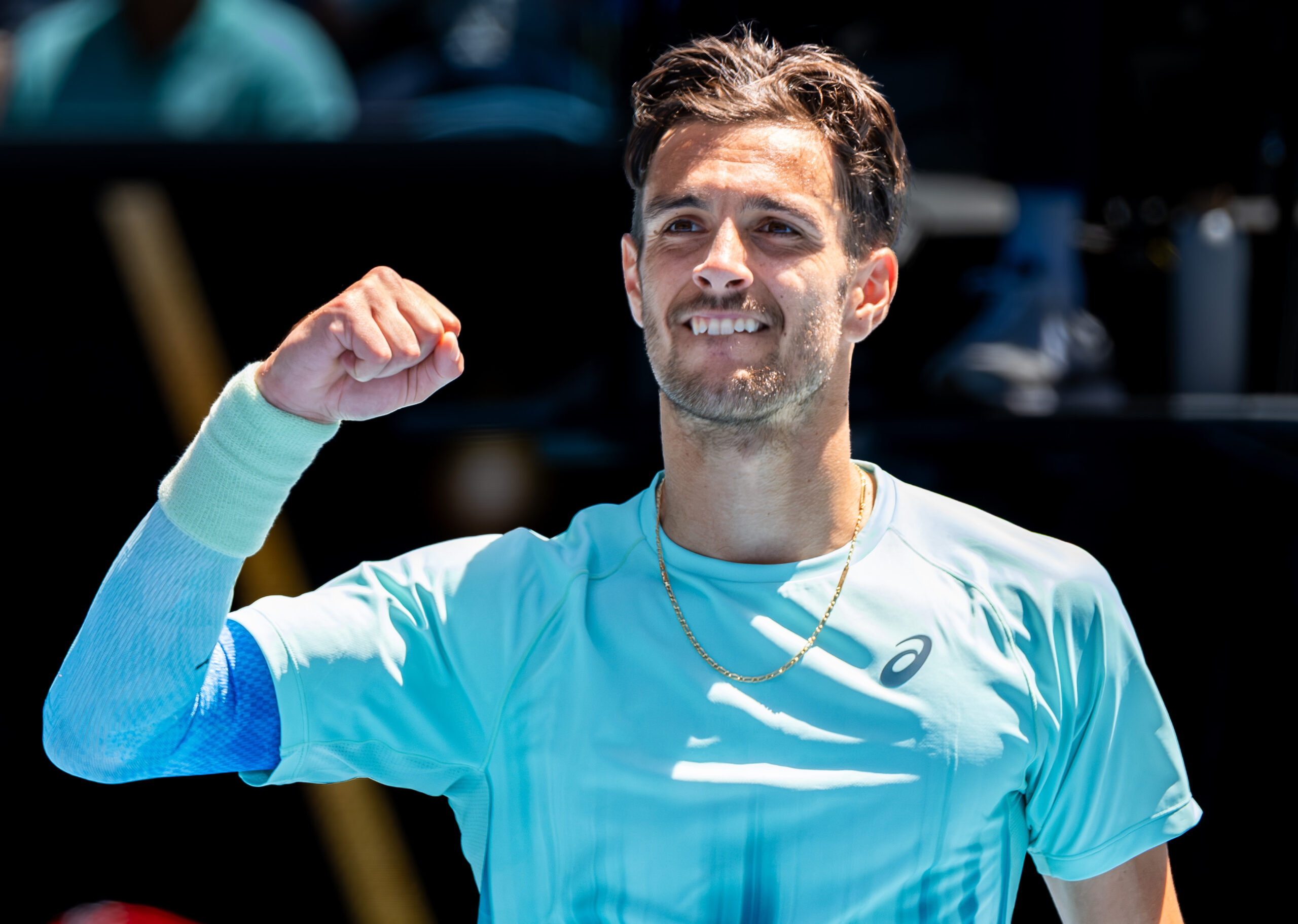
Lorenzo Musetti is poised to end nearly three months on the sidelines, appearing on the entry list for the Mubadala Citi DC Open as the Italian looks to salvage an injury-wrecked season and rebuild form before the U.S. Open.
Musetti, now ranked No. 14, has not played a tour-level match since a tear to the rectus femoris in his left thigh — sustained at the Italian Open in Rome in May — forced him to withdraw from both the French Open and Wimbledon. His inclusion among the acceptances for the ATP 500 event in Washington, which runs July 27 to Aug. 2 at the William H.G. FitzGerald Tennis Center, signals that the 24-year-old intends to open his North American hard-court swing in the U.S. capital.
The return, if it holds, would cap a frustrating stretch for a player who began the year as one of the sport’s fastest risers. Musetti climbed to a career-high No. 5 in January after reaching the Hong Kong final, then pushed Novak Djokovic to the brink in the Australian Open quarterfinals, leading by two sets before a leg injury forced him to retire from the match. It was the latest in a run of physical setbacks that have repeatedly interrupted his best tennis at the biggest moments.
What followed was a stop-start spring. Musetti made only a handful of appearances through the Sunshine Double and the clay swing, showing flashes — including a quarterfinal run in Barcelona — without stringing results together. Then came the Rome injury, a muscle tear that ruled him out of Roland Garros, where he had reached the semifinals a year earlier, and cost him the entire grass season through Wimbledon. By the time the tour reached the North American hard courts, Musetti had slipped nine places out of the top 10 he had occupied at the start of the year.
The layoff also brought change to his team. Musetti’s collaboration with coach José Perlas ended during the injury break, a split the Italian announced on social media. Longtime coach Simone Tartarini, who has guided Musetti since his junior days, remains at his side for the comeback.
Washington offers a favorable landing spot. The men’s field has thinned considerably in the run-up to the tournament, with Arthur Rinderknech, Sebastian Korda, Reilly Opelka and Felix Auger-Aliassime all off the list, leaving defending champion Alex de Minaur and Taylor Fritz as the only top-10 players in the draw. That reshaped field could hand Musetti seeding and a manageable early path as he shakes off the rust. He is not the only marquee name returning from injury in Washington either: Britain’s Jack Draper, sidelined much of the season with an arm problem, is also set to make his comeback there, alongside wildcard entrants Stefanos Tsitsipas and Kei Nishikori.
For Musetti, the timing is about more than one tournament. Washington is the first hard-court event before the two Masters 1000 stops in Canada and Cincinnati that traditionally set the table for the U.S. Open, which begins Aug. 23 at Flushing Meadows. With minimal match play since the winter and a ranking to defend down the stretch, the Italian needs court time as much as results, and the DC Open gives him a low-pressure runway on a surface where he has historically been less comfortable than on clay.
The comeback is not without caveats. An entry-list appearance is not a guarantee of match play, and players can and do withdraw before the first ball is struck, particularly when returning from a muscle injury that demands full match-intensity loading before it can be trusted. Reporting from Italy has described his rehabilitation as progressing well, but Musetti himself has not competed since spring, and the gap between a clean practice block and a best-of-three battle in Washington’s late-July heat is where comebacks are often tested.
Should he come through it, the reward is significant. Musetti at his best is a top-five talent with a one-handed backhand and a shot-making range few on tour can match, and a healthy summer would put him back in the conversation among the second tier of contenders chasing Jannik Sinner and Carlos Alcaraz. First, though, comes the simplest and hardest test of all after so long away: getting back on court and staying there.