

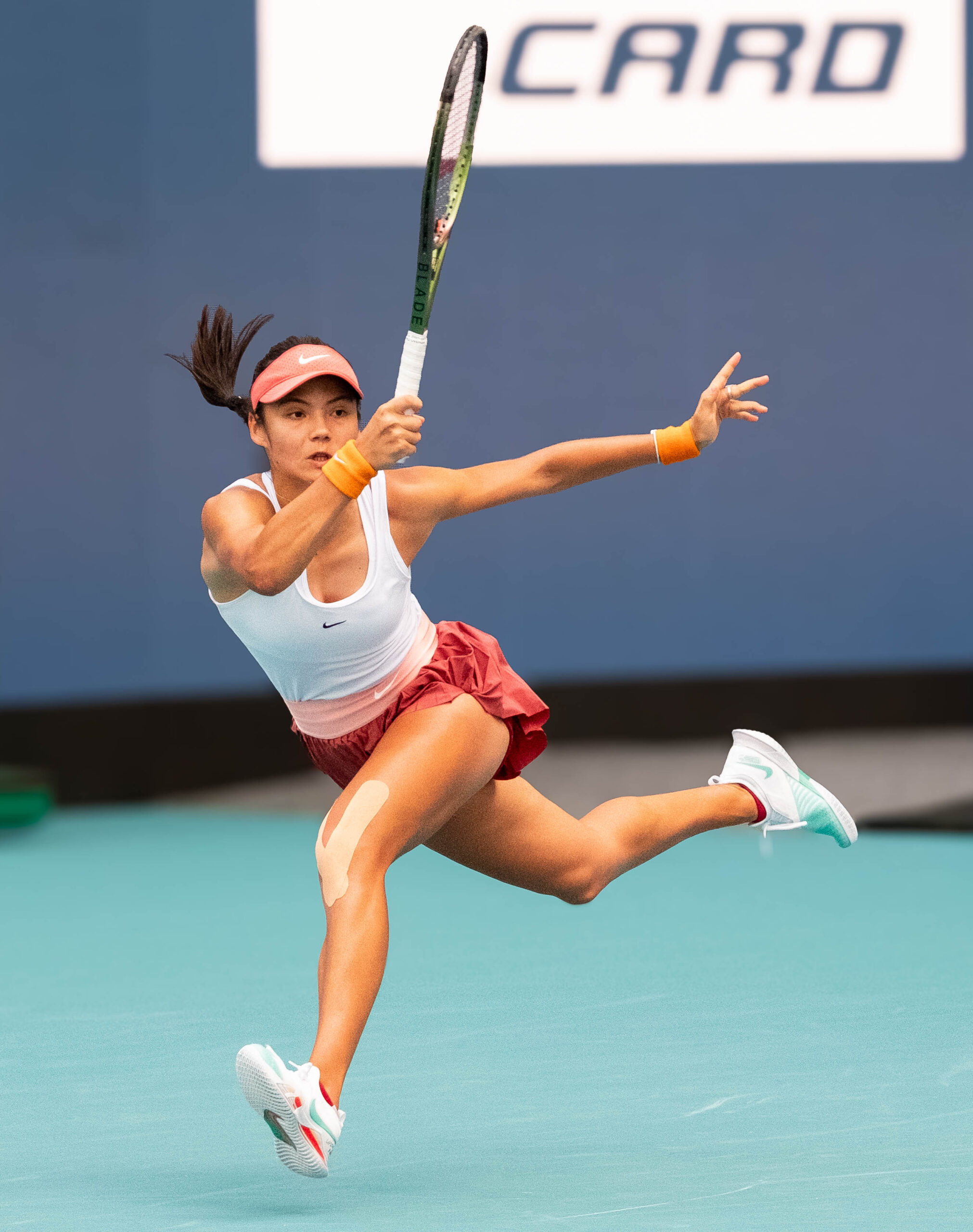
Emma Raducanu will arrive at Wimbledon next week with a seeding for the first time since her 2021 US Open triumph, the reward for a revival run to the Queen’s Club final that has reframed her grass-court summer. Yet barely had her projected 30th seed been confirmed than a familiar question resurfaced in the commentary box: should there be that many seeds at all?
Raducanu, 23, is set to be seeded 30th when the women’s singles order is finalized, slotting in behind Alexandra Eala at 29th after both climbed the rankings during the grass swing. It is the first time either player will be seeded at a major. For Raducanu the placement carries real weight: a seeding guarantees she cannot meet anyone ranked inside the top 32 before the third round, a buffer she has lacked through a season disrupted by a post-viral illness that cost her Miami, Madrid and Rome and left her with a single win between March and June.
That changed at Queen’s. Raducanu reached her first career grass-court final without dropping a set, beating Anna Blinkova, Sorana Cîrstea, Kamilla Rakhimova and Iva Jović before losing to Croatia’s Donna Vekic in the title match. It was her deepest run at any tour event since New York, and it arrived alongside a coaching reunion that is increasingly looking like the steadying influence she has lacked. Andrew Richardson — the coach who guided her to the US Open as a qualifier — returned to her team in May, and the pair have confirmed they will work together for the rest of the season after a procession of short-lived partnerships.
“There’s so much upside from this week,” Tim Henman said, pointing to the “controlled, aggressive tennis” of her Queen’s run. Raducanu, who pushed world No 1 Aryna Sabalenka to the limit in a third-round thriller at last year’s Championships, opted to skip both Nottingham and Eastbourne to rest and practice at Wimbledon — a sign of a player managing her body, and her expectations, more carefully than in summers past.
But the protection a seeding offers is precisely what some want dismantled. During the BBC’s coverage of the Cerúndolo–Paul final at Queen’s, former British No 1 Andrew Castle and three-time Grand Slam mixed doubles champion John Lloyd argued that the four majors should revert to 16 seeds — the system in place until the turn of the century. “I think there should be 16 and then we would have better matches in the first week, guaranteed,” Castle said on air, with Lloyd backing the view that the opening rounds too often lack jeopardy when 32 names are shielded.
The numbers tell the story Castle and Lloyd are reacting to. A 16-seed cut would leave both Eala and Raducanu unseeded and exposed to a top player from round one — the exact early-blockbuster scenario the pundits crave, and the exact peril a home favourite’s supporters would dread. Grand Slams doubled their seeds to 32 in 2000, a change introduced partly to stop clay-court stars boycotting Wimbledon and partly to insulate the game’s biggest names from early ambush. Critics have long argued the reform traded jeopardy for predictability.
For now, the debate is just that. Wimbledon and the other majors have shown no appetite to roll back the 32-seed format, and the AELTC’s seedings since 2021 simply mirror the world rankings rather than applying the old grass-court weighting. The draw ceremony takes place on Friday, and as a seed placed between 25 and 32 Raducanu is in line to be drawn against a top-eight player in the third round — a tougher projected path than a higher seed, but still a meaningful upgrade on the unseeded lottery she would face under the system Castle wants back.
The dual storyline is the draw: a resurgent home favourite handed a measure of protection at the very moment respected voices are campaigning to take it away. Whatever the AELTC decides long term, Raducanu’s immediate task is to justify the seeding she has — at the tournament where her support, she says, “trumps anything that you ever really think of.”