

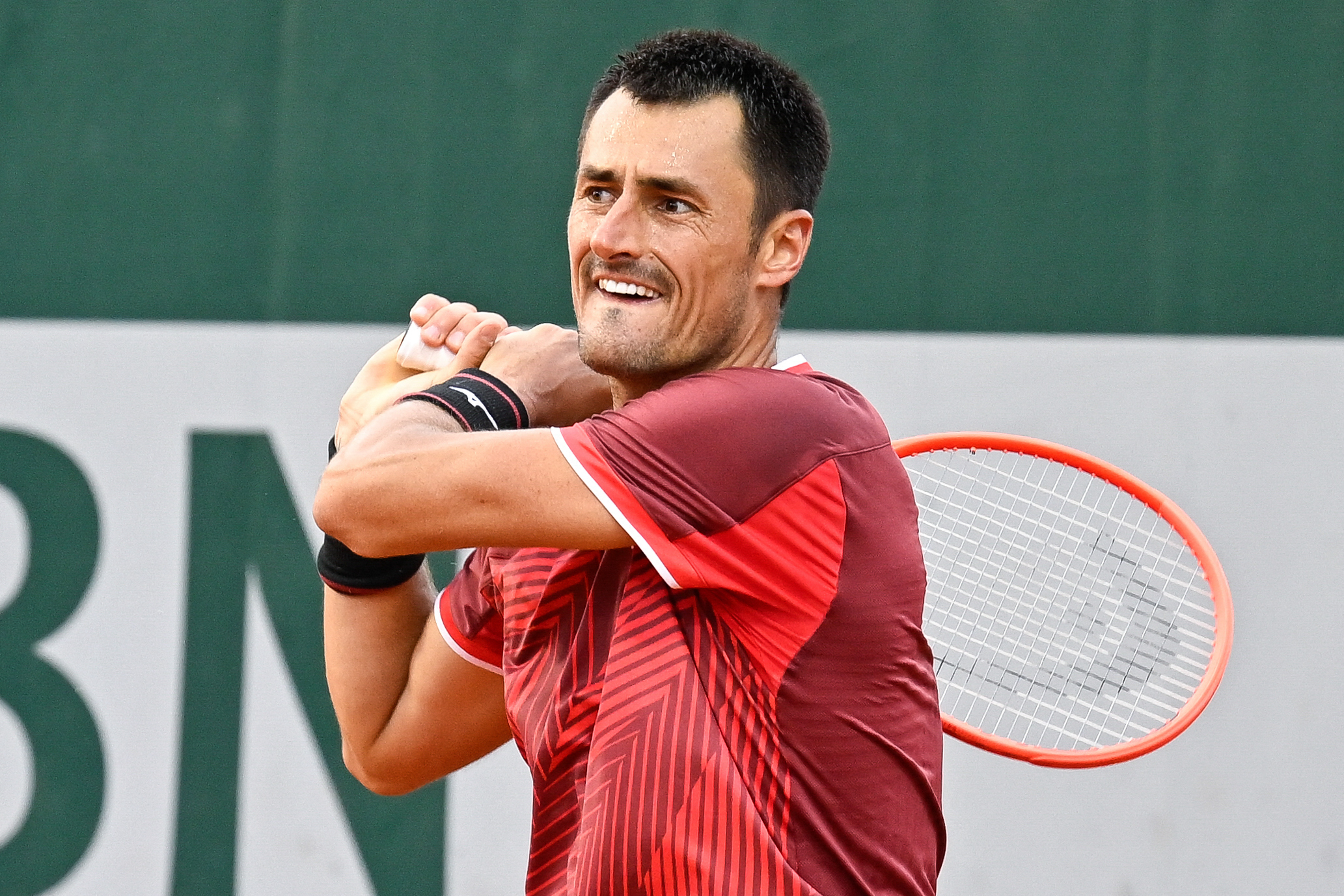
Bernard Tomic held serve to open his quarter-final against Cameron Norrie on Thursday night at the Mifel Tennis Open. He did not win another game. Norrie, the fifth seed and the 2021 champion in Los Cabos, took the next 12 in succession for a 6-1, 6-0 win in 50 minutes, reaching his first semi-final of the 2026 season. The Briton had arrived in Mexico on a six-match losing streak and has now won three straight matches without dropping a set.
The performance. The scoreline on its own would have been unremarkable. Norrie is an established hard-court counterpuncher and Tomic entered the tournament ranked No. 171, in the main draw only as a lucky loser after withdrawing ill from his final qualifying match. What drew attention was the manner of it. Tomic’s movement and engagement dropped away sharply once the first set was gone, and through the second he was contesting few rallies of any length. Norrie was asked afterwards only about his own game. “I’m pleased with the result. I was very solid, I returned well,” he said.
What came before. The reaction was amplified by the three matches that preceded it. Eleven days earlier Tomic had won the Lincoln Challenger, his biggest title since 2018, and said afterwards that he had been weighing retirement this season. In his first ATP main draw of 2026 he beat Mexican qualifier Alex Hernandez 6-1, 6-0 in 46 minutes, the fastest tour-level match of the year. He then upset fourth seed Karen Khachanov 6-2, 6-4 to reach his first quarter-final at this level since Atlanta in 2019, where he lost to Alex de Minaur. It was his best win by opponent ranking since beating Fabio Fognini in the 2018 Chengdu final.
Why the response was disproportionate. A short, one-sided defeat is an ordinary outcome in professional tennis. For Tomic it is not read as a result. It is read as evidence, because of what 2019 established. At Wimbledon that year he lost to Jo-Wilfried Tsonga in 58 minutes and was docked his entire £45,000 first-round cheque for failing to meet what the referee called the required professional standards. It remains one of the largest fines in Grand Slam history.
His appeal was rejected in unusually blunt terms by the Grand Slam Board, which offered to refund a quarter of the sum only if he went eight majors without a further sanction. Novak Djokovic, then president of the ATP Player Council, publicly called the penalty unfair. Asked at the time whether he was satisfied with his effort, Tomic answered: “Next question.”
The pattern problem. That history is the reason a routine quarter-final loss became a story about character rather than tennis. Online criticism was immediate and severe, including calls for sanction. Tomic has not responded publicly. No disciplinary action has been reported by the ATP or the tournament, and none should be assumed; illness had already forced him out of qualifying four days earlier, and a 33-year-old playing his fourth match in six days against an opponent whose entire method is extending points is not an obvious candidate for suspicion. But the burden of proof for Tomic is not the same as it is for anyone else on tour, and that asymmetry is the practical cost of his own record.
What it does not change. The week remains his deepest tour-level run in seven years and delivers a ranking gain he has not had since 2019. The Khachanov result is not retroactively diminished by what followed it. The comeback narrative was always going to be tested by a bad day; what makes this one difficult is that the bad day arrived in the exact form his critics were waiting for.
The actual test. It is not this match. It is the next tournament. A player rebuilding through Challenger events absorbs heavy losses routinely, and one 50-minute defeat to a former top-10 opponent proves very little in isolation. What it does do is reset the question to where it stood a month ago.
Whether Tomic answers it will be visible in whether he enters, and how he competes, over the North American hard-court weeks ahead. Norrie meets defending champion Denis Shapovalov in the semi-finals.