
HomeAnalysisHow the Davis Cup and Billie Jean King Cup Work

How the Davis Cup and Billie Jean King Cup Work

For eleven months of the year, professional tennis is an individual sport. Players travel alone or with small personal teams, compete for themselves, and bear the results of every match entirely on their own terms. Rankings rise and fall on personal performance. Prize money goes to the player who wins. The sport’s entire competitive architecture is built around the individual.

Then team tennis arrives — and everything changes.

The Davis Cup and the Billie Jean King Cup are professional tennis’s two flagship national team competitions. They are the only events in the sport where players compete not for themselves but for their country, under a captain’s leadership, with teammates beside them in the player box cheering every point. The atmosphere is closer to international football than to anything on the weekly tour. The stakes feel different. The emotions run higher. And the format — built around head-to-head ties between nations rather than individual draws — produces a kind of drama that no ranking points race or Grand Slam run can fully replicate.

Understanding how these competitions work, what makes them structurally distinct from tour tennis, and why they matter to the sport’s history and identity is essential context for following professional tennis at its fullest.

What Team Tennis Is — and Why It Feels Different

Before getting into the specifics of each competition, it helps to understand what team tennis actually changes about the sport — because the differences go deeper than simply playing for a country rather than for yourself.

Captains make tactical decisions. In individual tour tennis, players and their coaches set strategy before a match and communicate during changeovers within the rules. In team tennis, a national captain selects the lineup, decides who plays singles and who plays doubles, and makes tactical calls that affect the entire tie. A captain’s decision to rest a top singles player and field a specialist doubles pairing on the second day can swing a tie as decisively as anything that happens on the court.

Teammates provide courtside support. During team competition, players sit in the player box and coach their teammates openly between points — a level of courtside engagement that is not permitted in individual tour matches. The energy this creates is palpable. A player fighting through a difficult third set with their entire national team behind them in the stands is having a categorically different experience from playing an equivalent match in a regular tour event.

Doubles carries outsized importance. In most Davis Cup and Billie Jean King Cup ties, the doubles match is a single encounter that can decide the entire tie if singles results are split. Unlike the doubles draws at tour events — which many top singles players enter selectively or not at all — the doubles rubber in team competition is a high-stakes, high-preparation match that can determine which nation advances. Captains spend significant time selecting their doubles pairing and strategizing around it.

Home advantage is real and significant. Team tennis ties are often played on home soil, with home nation crowds generating an atmosphere that has no equivalent in regular tour tennis. The choice of surface — which the home nation typically controls — adds another strategic dimension. A nation with a strong clay court player can schedule a home tie on clay to maximize that player’s advantage. A nation whose top player thrives on fast hard courts can prepare an indoor hard surface for a crucial home qualifier. These decisions are openly strategic and openly discussed.

The emotional register is simply different. Players who are composed and measured in individual tour competition sometimes show a different side of themselves in team tennis. The combination of national pride, collective stakes, and crowd intensity produces moments of raw emotion — celebration, devastation, relief — that the individual tour rarely generates in the same way. A single tie can reshape a player’s season narrative and, in some cases, their career story.

The Davis Cup: Men’s International Team Tennis

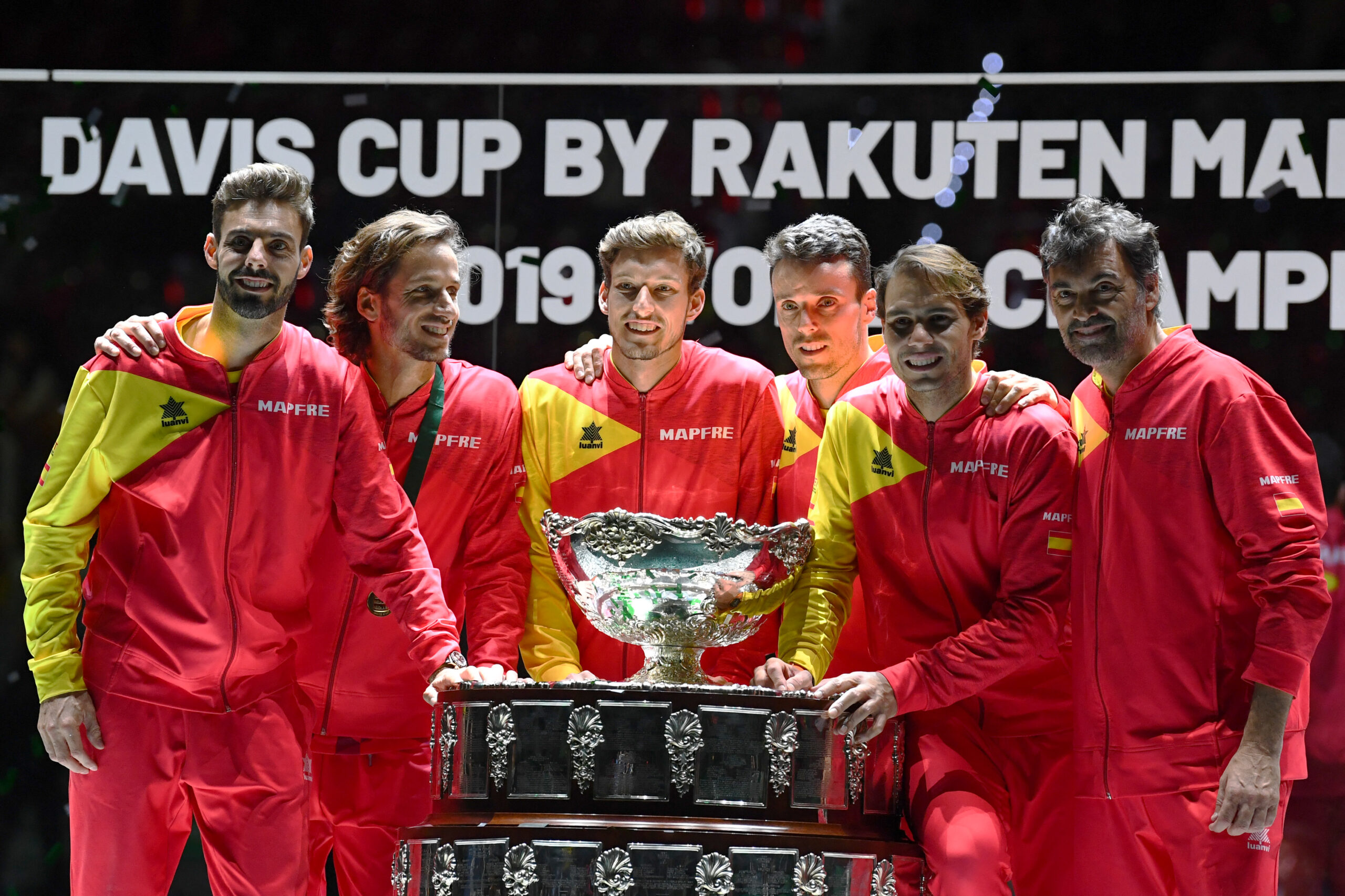
The Davis Cup is the premier men’s international team competition and one of the oldest team sporting events in the world. Founded in 1900 as a bilateral competition between the United States and Great Britain, it has grown over more than a century into a global competition involving over 140 nations across multiple tiers of competition.

The Basic Format

The Davis Cup operates on a system of ties — head-to-head matchups between two nations — and a season-ending Finals stage that crowns the annual champion. The structure has evolved significantly over the Davis Cup’s long history, with the current format representing a relatively recent modernization that has been subject to ongoing debate within the sport.

A standard Davis Cup tie in the Qualifiers stage is played across two days and consists of up to five rubbers — the term used for individual matches within a tie:

Day one features two singles matches — each nation’s captain selecting one player to compete in singles, with the two matches played in sequence. Day two features the doubles rubber followed by two reverse singles matches, where the singles players from day one switch opponents. The first nation to win three rubbers takes the tie.

The captain’s role in selecting lineups is both tactically significant and strategically opaque to the opposing team until the selections are formally announced. Captains can and do use selection decisions strategically — resting their best player for the reverse singles, fielding an unexpected doubles pairing, or naming a lineup designed to exploit a specific weakness in the opposing team’s roster.

The Finals Stage

Nations that win their Qualifier ties advance toward the Davis Cup Finals — a season-ending championship event that brings together a select group of nations to compete for the title. The Finals format has changed in recent years, moving from a traditional home-and-away knockout format to a concentrated Finals event held across a limited number of host cities over a compressed timeframe.

The current Finals structure groups nations into round-robin pools, with the top finishers from each group advancing to a knockout stage culminating in the final. The exact number of nations participating in the Finals, the group composition, and the scheduling details have varied across recent editions and are subject to ongoing evolution as the competition’s organizers respond to player, captain, and commercial feedback.

The Davis Cup Finals have historically attracted significant criticism from top players regarding the scheduling demands they place on already crowded calendars — the competition takes place late in the season when players are managing fatigue and prioritizing rest before the following year. Participation rates among top-ranked players have been a recurring point of tension between the competition’s organizers and the ATP.

National Tiers and Promotion

Below the top tier of Davis Cup competition, nations compete across a series of regional groups that determine promotion and relegation between levels. A nation ranked outside the elite tier can work its way up through successive years of regional competition — winning promotion, advancing through qualifying rounds, and eventually reaching the stage where Finals qualification is possible.

This tiered structure is one of the Davis Cup’s most important features. It means that nations from every tennis-playing country in the world have a competitive pathway, and that the competition has genuine meaning at every level — not just for the handful of nations capable of winning the Finals, but for countries where reaching a higher tier of competition represents a genuine national achievement.

The Billie Jean King Cup: Women’s International Team Tennis

The Billie Jean King Cup — known for most of its history as the Fed Cup before being renamed in 2020 in honor of Billie Jean King’s contributions to women’s tennis and gender equality in sport — is the premier women’s international team competition and the largest annual women’s team sporting event in the world by number of participating nations.

The Basic Format

The Billie Jean King Cup operates on the same fundamental structure as the Davis Cup: ties between nations, a qualification pathway, and a Finals stage that crowns the annual champion. The head-to-head tie format in the Qualifiers stage follows a similar two-day, best-of-five rubbers structure — two singles on day one, a doubles rubber and two reverse singles on day two, with the first nation to three rubbers winning the tie.

The captain’s role is equally central in the Billie Jean King Cup. Selection decisions, doubles pairings, and tactical lineup choices carry the same weight as in the men’s competition, and the home advantage dynamic — choice of surface, home crowd support, familiarity with local conditions — operates identically.

The Finals Stage

The Billie Jean King Cup Finals bring together the nations that have qualified through the Qualifier pathway and direct entry positions held by the previous year’s strongest nations. Like the Davis Cup Finals, the women’s competition has undergone format changes in recent years, moving toward a more concentrated Finals event held across a smaller number of host cities rather than the traditional home-and-away knockout format.

The Finals structure typically involves group stage play followed by a knockout round, with the specifics of group composition and qualification pathways subject to evolution across editions. The Billie Jean King Cup Finals have faced some of the same scheduling challenges as the Davis Cup — finding a window in an already compressed professional calendar where top players are willing and able to commit to national team competition.

Participation and Top Player Engagement

One of the distinguishing features of the Billie Jean King Cup relative to the Davis Cup is the historically strong participation of top-ranked women’s players in national team competition. Several of the most prominent figures in women’s tennis history have been vocal advocates for the competition and consistent participants across multiple editions — a tradition of engagement that has helped maintain the competition’s profile and competitive quality.

That tradition has not been universal or uninterrupted, and the same scheduling tensions that affect men’s team tennis participation apply to the women’s competition as well. But the Billie Jean King Cup has generally been able to count on strong participation from players who view national team competition as a meaningful part of their professional identity — an attitude that reflects both the competition’s history and the particular culture around women’s tennis and its advocates.

How Qualification Works

Both competitions use a similar qualification structure, though the specific details vary by year and are subject to ongoing format evolution.

The core pathway is consistent: nations compete in home-and-away Qualifier ties — typically played in February or March — with winners advancing toward the Finals stage held later in the year. The Finals field is completed by nations that qualified through the Qualifier pathway plus any nations holding direct entry positions based on the previous year’s results.

Nations that lose in the Qualifiers may face a playoff tie that determines their status for the following year’s competition — whether they maintain their position in the top tier or drop to the regional group competition. This promotion and relegation dynamic gives Qualifier ties stakes that extend beyond simple Finals qualification, particularly for nations on the boundary between the top tier and the regional competition below it.

The home-and-away nature of the Qualifiers is one of the format’s most important features. The home nation selects the surface and venue, creating a genuine home advantage that makes the tie a two-legged contest in a meaningful sense — not just in terms of travel and familiarity but in terms of the surface preparation and crowd atmosphere that the home nation can engineer around their strongest players.

How These Competitions Differ From Tour Events

Understanding what makes the Davis Cup and Billie Jean King Cup structurally distinct from regular tour events clarifies why they produce a different kind of tennis and a different kind of experience for both players and fans.

No individual rankings points in the traditional sense. Both competitions operate outside the standard ATP and WTA rankings structures. While some ranking points have been made available for participation in recent formats — a decision that has been debated and adjusted multiple times — the primary motivation for competing is national representation rather than individual ranking advancement. This changes the competitive calculus for players managing their schedules and fitness across a long season.

Captains, not players, control lineups. In tour tennis, players choose which tournaments to enter and manage their own competitive schedules. In team competition, a captain decides who plays — and a player selected for their national team is competing at the captain’s direction, not purely their own. This subordination of individual autonomy to team leadership is one of the most profound differences in the team tennis experience.

The tie format rewards team depth. A nation with one exceptional player and limited depth behind them is more vulnerable in the team format than in individual tour competition, where that single exceptional player can go deep in any draw on their own. A tie requires winning three rubbers across singles and doubles — which means a nation whose second singles player and doubles pairing are also competitive has a structural advantage that individual rankings don’t capture.

Surface selection is a competitive weapon. In tour tennis, surface is fixed by the tournament. In team tennis, the home nation chooses the surface for home ties — and that choice is made with explicit reference to the strengths of their own players and the weaknesses of the visiting nation. Surface selection as a competitive strategy is one of the most distinctive and fascinating dimensions of team tennis.

Why These Events Matter

Team tennis competitions occupy a unique place in professional tennis’s identity — one that their relatively modest profile in mainstream tennis coverage does not fully reflect.

For players from nations without multiple tour-level stars, the Davis Cup and Billie Jean King Cup are often the most significant competitive experiences of their professional careers. Representing their country, competing in front of home crowds, and contributing to a national team’s advancement through the competition tiers carries a weight that individual tour results — even significant ones — do not always match. Players who have never won an ATP or WTA title have had defining career moments in team competition that their entire nation celebrated.

For the sport’s history, both competitions carry enormous significance. The Davis Cup has been contested for over a century and has produced some of professional tennis’s most iconic moments — tie-deciding rubbers played in front of capacity crowds, national rivalries settled on the court, players performing beyond their individual capabilities when the collective stakes are highest. The Billie Jean King Cup’s history is shorter but equally meaningful, and its renaming in 2020 represented a significant symbolic moment in recognizing the figures who built women’s professional tennis.

For fans, team tennis offers a version of the sport that the individual tour cannot replicate — the combination of national identity, collective stakes, tactical captaincy decisions, and crowd intensity that makes a single tie feel like an event rather than a match. Even fans who follow tennis primarily through Grand Slams and ranking races often find that team tennis produces their most emotionally memorable moments in the sport.

Key Terms at a Glance

  • Tie — A head-to-head matchup between two nations in Davis Cup or Billie Jean King Cup competition; consists of up to five individual rubbers.
  • Rubber — An individual match within a tie — either a singles or doubles match.
  • Captain — The national team leader who selects lineups, makes tactical decisions, and provides courtside coaching during team competition.
  • Qualifier — A home-and-away tie that determines which nations advance to the Finals stage.
  • Finals — The season-ending championship event that crowns the Davis Cup or Billie Jean King Cup winner for that year.
  • Home advantage — The structural benefit of hosting a tie on home soil, including surface selection, familiar conditions, and home crowd support.
  • Reverse singles — The two singles rubbers played on day two of a tie, where the singles players from day one switch opponents.
  • Promotion and relegation — The system by which nations move between tiers of regional competition based on their results.

The Competitions Are Evolving

Both the Davis Cup and Billie Jean King Cup have undergone significant format changes in recent years, and both continue to evolve in response to commercial pressures, player scheduling concerns, and the practical challenges of running global team competitions alongside an already demanding individual tour calendar.

The direction of travel — toward more concentrated Finals events, more commercially viable host city arrangements, and better integration with the broader professional tennis calendar — reflects the organizers’ recognition that team tennis must adapt to remain relevant in a sport whose individual tour has grown significantly in scale and commercial sophistication.

What has not changed, and is unlikely to change, is the fundamental appeal of what these competitions offer. National pride. Collective stakes. The singular experience of playing for something larger than a ranking point or a prize check. In a sport built around individual excellence, the Davis Cup and Billie Jean King Cup remain the clearest expression of what tennis looks like when it becomes something more.

Related: How Tennis Tournaments Work — Draws, Seeds, and the Road to a Championship · How Tennis Rankings Work — ATP, WTA, and the Points System Explained · How Wildcards Are Awarded — and Who Really Gets Them

RELATED ARTICLES
- Advertisment -spot_img

Most Popular

Latest Tennis News