

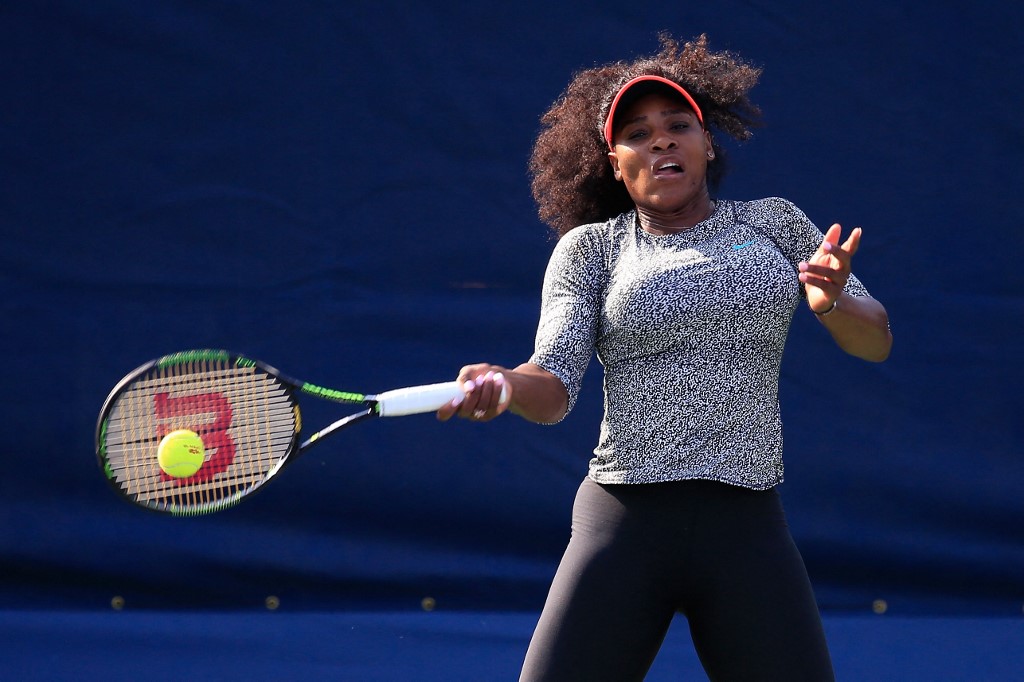
Eight days before the Championships begin, Wimbledon has done something it almost never does: leave a question hanging. The All England Club has handed out its first wave of main-draw wildcards but deliberately kept one women’s singles place open, and the reason has the sport on edge. Serena Williams has not said whether she wants it.
The 44-year-old has not played a singles match since the third round of the 2022 US Open, the contest widely assumed to be her farewell. Yet a comeback that began quietly this month — in doubles, alongside the names she trusts most — has reopened a door everyone thought was closed. Pressed this week on whether she would accept a singles wildcard, Williams gave nothing away, and that silence has become the story.
What is confirmed is the reunion. Serena and Venus Williams will play the Wimbledon women’s doubles together on a wildcard, pairing up at the grass-court Grand Slam for the first time in years. The sisters last won the title as a team in 2016, the most recent of a partnership that yielded 14 Grand Slam doubles crowns and three Olympic golds — Sydney 2000, Beijing 2008 and London 2012. For a tournament that trades on history, a Williams doubles run alone would be a marquee attraction.
The competitive groundwork has been laid carefully. Serena returned to match play this month in doubles at Queen’s Club, her first appearances after four years away, before a further outing in Berlin. Her own verdict on where her game stands was characteristically blunt — she acknowledged there was work to do — and that candour is precisely what makes the singles question so finely balanced. A doubles comeback is one thing; the physical demands of best-of-three singles against a tour that has moved on are another entirely.
That is the calculation Wimbledon appears willing to wait on. When organizers announced their initial wildcards on Tuesday, the men’s singles slots went to Grigor Dimitrov and Stan Wawrinka alongside a clutch of British players, while the women’s list featured French Open runner-up Maja Chwalinska and a strong home contingent. One women’s singles place, conspicuously, was not filled — a courtesy held in reserve that functions, in effect, as a standing invitation.
The appeal for the tournament is obvious. A Serena singles return would be the rare tennis event that travels far beyond the sport’s core audience, the kind of headline that lands on front pages and general-news bulletins worldwide. Wimbledon, more than any other major, understands the value of a moment, and few names generate one like hers. Holding the spot costs the Club nothing and keeps the speculation — and the anticipation — alive right up to the draw.
For Williams, the equation is more personal. She owns seven Wimbledon singles titles, an Open-era record, and remains one short of Margaret Court’s all-time mark of 24 major singles crowns, a number that has shadowed the back half of her career. The temptation of one more run on the lawns where she has been so dominant is real. So is the risk of a comeback that ends not in storybook fashion but in an early, lopsided defeat — the outcome she would be most determined to avoid.
The clock, at least, is unambiguous. Wimbledon runs from June 29 to July 12, and the women’s draw must be finalised in the days beforehand. That leaves a narrow window in which Williams must decide, the Club must confirm, and the tennis world must stop guessing. Until then, every practice sighting and every non-committal answer will be parsed for clues.
Whatever she chooses, the doubles reunion guarantees the Williams name on a Wimbledon order of play once more. The far bigger prize — a singles return that would dominate the fortnight — sits in a single unallocated line on the entry list, waiting on one of the most consequential decisions of her late career.