

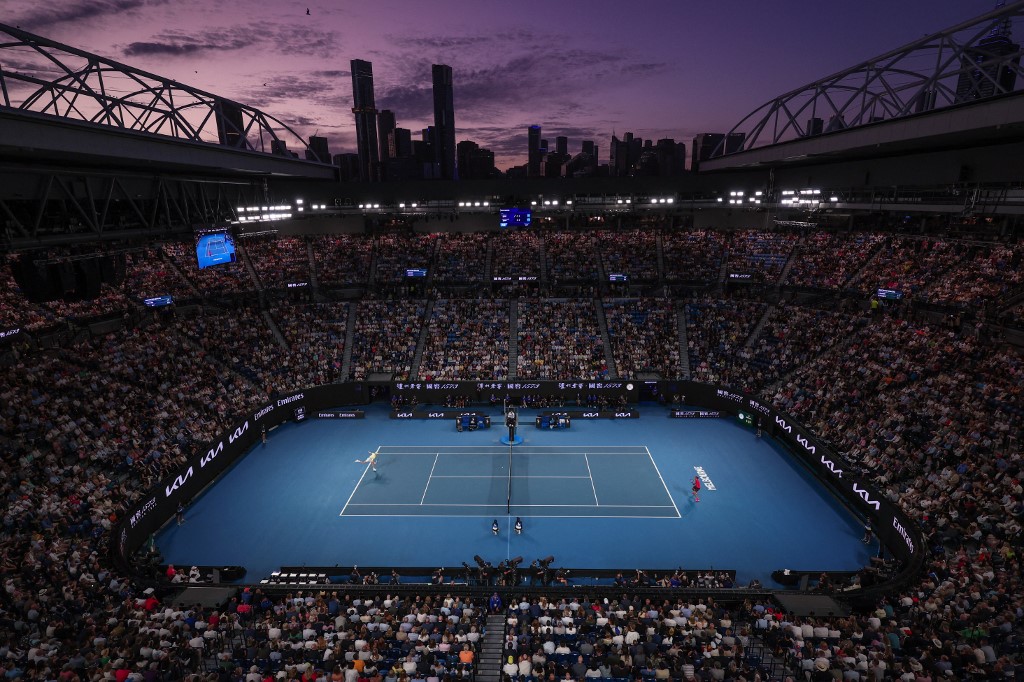
Professional tennis runs for approximately eleven months of the year. From the first hard court events in Brisbane and Auckland in early January to the indoor European autumn swing that closes the regular season in November, the sport operates on a schedule so densely packed that players, coaches, and administrators spend enormous energy navigating it.
Understanding how that schedule is built — who decides what goes where, what forces shape the calendar, and why the sequencing of tournaments matters — reveals a dimension of professional tennis that never appears on a scoreboard but influences almost everything that does.
The tennis calendar is not simply a list of tournaments arranged in a convenient order. It is a negotiated, contested, commercially driven document that reflects decades of historical precedent, competing institutional interests, player welfare considerations, and the practical realities of running a global sport across six continents.
Understanding it changes how you read a season — why certain players peak at certain times, why the transition between surfaces creates the competitive disruptions it does, and why the politics of the calendar are among the most contentious in professional sport.
Who Controls the Tennis Calendar
Before examining the calendar itself, it helps to understand who actually decides what goes where — because professional tennis has an unusually fragmented governance structure that makes the answer more complicated than it is in most major sports.
Professional tennis is governed by multiple bodies with overlapping but distinct authority. The ATP runs the men’s professional tour. The WTA runs the women’s professional tour. The International Tennis Federation oversees the sport’s rules, the Grand Slams, and international team competitions.
The four Grand Slam tournaments — the Australian Open, Roland Garros, Wimbledon, and the US Open — are each run by their respective national tennis associations and operate with a degree of independence that no regular tour event enjoys.
This fragmentation means that no single authority controls the entire calendar. The ATP and WTA each set the schedule for their respective tours, but they cannot dictate the dates of Grand Slams, which are set by the Slams themselves.
The four Grand Slams each have specific windows that are effectively immovable — January for Australia, May-June for Paris, late June-July for London, August-September for New York — and the entire rest of the calendar is built around those fixed anchor points.
Within the ATP and WTA tour structures, calendar placement is also subject to negotiation between the tour organizations and individual tournament promoters, who hold licenses to run events at specific dates and locations. A tournament that has held its calendar slot for decades acquires a form of historical entitlement to that slot. Moving or displacing it requires negotiation and, in some cases, financial settlement.
The result is a calendar that is simultaneously more rigid — because of the fixed Grand Slam dates and historical tournament positions — and more contested than most fans realize.
The Four Anchor Points: Grand Slams
The Grand Slams are the immovable architecture around which everything else is arranged. Their dates have been essentially fixed for decades, and the rest of the professional calendar is structured to flow into and out of them in ways that make competitive and commercial sense.
The Australian Open
opens the season in January, typically beginning in the second week of the month and running through to late January. The Australian Open’s January positioning makes it the first major test of the season — players arrive having prepared through an offseason of varying length, some fresh and motivated, others still finding their form after the previous season’s demands.
The hard court events that precede it in the first weeks of January in Brisbane, Auckland, Adelaide, and other Asia-Pacific locations serve as preparation tournaments for the Slam itself.
Roland Garros
takes place in Paris in late May and early June. Its position at the end of the clay court season — which runs from April through June — makes it the culmination of several weeks of clay preparation. The clay court season is the most strategically coherent block of the calendar: tournaments in Monte Carlo, Madrid, Rome, and other cities serve as a progressive buildup to Roland Garros, and the best clay court players peak across this entire period rather than arriving at the Grand Slam without prior clay preparation.
Wimbledon
follows Roland Garros with a gap of approximately two weeks — one of the most dramatic surface transitions on the calendar, from the slowest major surface to the fastest, in the shortest possible time.
This compressed transition is a recurring topic in player scheduling discussions and one of the calendar’s most structurally contentious features. Wimbledon runs in late June and early July, preceded by a small number of grass court warm-up events — most notably the Queen’s Club Championships in London and the Halle Open in Germany — that give players their only genuine grass preparation before the season’s most prestigious grass court event.
The US Open
closes the Grand Slam calendar in late August and early September in New York. Its positioning at the end of a North American hard court swing — the Rogers Cup in Canada and the Cincinnati Masters immediately precede it — gives it a preparation block similar in structure to Roland Garros, with players building toward the Slam through several weeks of hard court competition.
The US Open’s late summer New York timing produces the sport’s most physically demanding Slam conditions — heat, humidity, and night session matches that can run past midnight — which adds a physical endurance dimension that other Slams do not replicate.
The Surface Blocks: How the Calendar Is Divided
The professional tennis calendar is organized, below the level of the Grand Slams, into surface blocks — extended periods where a single surface type dominates the schedule and players can build form and confidence on the same playing conditions across multiple weeks.
Hard court season (January–February and August–November): The year begins and ends on hard courts, giving this surface the largest total calendar presence of any surface type. The January hard court swing in Australia and the Asia-Pacific region transitions after the Australian Open into the first of two North American hard court periods — the February events in the United States and South America. After the clay and grass seasons, the calendar returns to hard courts for the North American summer swing and the indoor European autumn circuit that closes the season.
Clay court season (April–June): The clay season begins in earnest in April with the Monte Carlo Masters and runs through Roland Garros in early June. This block is the most cohesive and strategically deliberate surface period on the calendar — players who want to compete at Roland Garros spend six to eight weeks building on clay, and the tournaments across this period have a cumulative narrative that no other surface block quite replicates.
Grass court season (June–July): The shortest surface block, grass lasts approximately five weeks between the end of Roland Garros and the end of Wimbledon. The brevity of this window is both a competitive challenge — players have little time to adapt from clay — and a commercial limitation, because there are relatively few grass court venues capable of hosting professional events at the required standard.
The surface block structure matters enormously for how players plan their seasons. A clay specialist can build across ten or twelve weeks of clay court preparation and arrive at Roland Garros in peak form. A grass court specialist has five weeks at most — and the two weeks immediately following Roland Garros, when most players are recovering from the physical demands of the clay season rather than actively building grass court form.
The Mandatory Tournament Structure and Its Calendar Implications
As covered in the rankings and tournaments articles in this series, certain events on the professional calendar are mandatory for top-ranked players — the four Grand Slams and the ATP Masters 1000 events for men, with equivalent mandatory events on the WTA tour. The distribution of mandatory events across the calendar has significant implications for how players manage their schedules.
The mandatory events are spread across all three surface types and multiple continents — which means top players have no meaningful ability to specialize their schedule around preferred surfaces and locations.
A player who would prefer to skip the clay season entirely cannot do so without ranking consequences from missing mandatory clay court Masters events. A player who finds the grass court preparation window too short and disruptive to their game cannot simply skip Wimbledon without significant ranking and commercial consequences.
This mandatory structure is deliberately designed to ensure that the highest-ranked players appear at the most important events regardless of personal preference. It serves the commercial interests of the mandatory events, which need the presence of top players to maintain their television audiences and ticket revenues.
It serves the sport’s competitive integrity, which benefits from consistent participation by the best players at the biggest events. And it creates the scheduling pressure on players that is one of the most persistent sources of tension between the tour organizations and the players they represent.
The Physical Demands of the Calendar Structure
One of the most significant critiques of the professional tennis calendar — raised consistently by players, coaches, and sports scientists — is that its length and density create physical demands that are incompatible with sustainable professional careers.
An eleven-month season that includes four Grand Slams, nine ATP Masters 1000 events for men, and dozens of additional tour events provides almost no genuine recovery window. The offseason — roughly six weeks between the end of the Paris indoor Masters in November and the beginning of the Australian Open preparation swing in December — is the only extended break most professional players take.
Six weeks is not enough time to recover fully from the physical accumulation of an eleven-month season, prepare technically and physically for the following year, and arrive at the Australian Open in peak condition.
The consequences of this compressed recovery window are visible in injury statistics, which have been a growing concern across both the ATP and WTA tours. Stress fractures, shoulder injuries, and the chronic physical deterioration that comes from competing on hard courts for seven or eight months of the year have shortened careers and interrupted seasons with increasing frequency.
The relationship between the calendar’s structure and player injury rates is not incidental — it is causal, and it is one of the reasons the ATP and WTA have both faced growing pressure from players to reduce the total number of mandatory events or extend the offseason.
The physical toll is also distributed unevenly across surfaces. Hard courts — the calendar’s dominant surface by weeks of competition — are the most physically punishing surface to compete on, transmitting impact forces through the legs and lower back at a rate that clay and grass do not.
The fact that hard courts dominate both the beginning and end of the season means players are absorbing the hardest surface’s physical demands when they are least recovered — at the start of the year, before they have rebuilt physical resilience after the offseason, and at the end of the year, when cumulative fatigue from eleven months of competition has accumulated.
Commercial Interests and Calendar Politics
The professional tennis calendar is not just a competitive scheduling document — it is a commercial one, and the commercial interests of the parties involved shape it in ways that are not always visible but are consistently significant.
Grand Slam dates are set years in advance and reflect the commercial and logistical requirements of events that are among the most valuable in global sport. Wimbledon’s late June timing is partly historical but also reflects the summer television audience window in the United Kingdom and across Europe.
The US Open’s late August positioning captures the end of the North American summer when tennis audiences are at their peak. These dates are not negotiable in any practical sense — they are commercial fixtures that the rest of the calendar accommodates.
Below the Grand Slam level, calendar positioning is a significant commercial variable for individual tournaments. An event in the week before a Grand Slam benefits from the player field building toward the Slam — top players enter to prepare.
An event in the week after a Grand Slam struggles to attract top players who are resting and recovering. These positioning effects can determine whether a tournament attracts the field it needs to maintain its television deals and sponsorship relationships.
The competition for calendar slots between established events and newer or relocating events is genuinely contentious. A new tournament in a commercially attractive market — a major Asian city, for example, or a new venue in the Middle East — requires a calendar slot that typically means displacing or reducing the prominence of an existing event.
These negotiations involve the tour organizations, established tournament promoters, and national tennis federations, and they can take years to resolve.
How the Calendar Creates Competitive Narratives
Beyond the logistics of scheduling and the commercial interests of tournament organizers, the tennis calendar creates competitive narratives that define how seasons are understood and remembered.
The clay court season has a narrative arc that no other surface block produces in quite the same way. It begins modestly in Monte Carlo, builds through Madrid and Rome, and culminates at Roland Garros — a progression from smaller events to the Slam that creates genuine momentum and allows clay court specialists to build toward their peak at the right moment.
Following a player through the entire clay season — watching how their form develops, how they handle the physical demands of weeks on clay, and whether they arrive at Roland Garros at their best — is one of the most compelling extended narratives in professional sport.
The Wimbledon preparation window creates a different kind of narrative — compressed, almost frantic, defined by the challenge of transitioning from clay to grass in minimal time. Who handles the transition best, who sacrifices clay season results to arrive at Wimbledon fresh, and who arrives carrying clay season fatigue — these questions shape the Wimbledon draw in ways that the ranking list does not fully capture.
The US Open series — the North American hard court swing that builds toward the year’s final Grand Slam — creates a third narrative structure, one defined by the physical accumulation of a long season and the question of who has managed their body and schedule well enough to compete at full intensity in late August’s New York heat.
And the year-end race — the accumulation of results that determines qualification for the ATP and WTA Finals and shapes the final ranking order — creates a season-long narrative thread that runs parallel to all the surface-specific stories and connects them into a single competitive season.
Why Player Scheduling Decisions Matter
One consequence of understanding how the calendar is built is that player scheduling decisions — which tournaments to enter, which to skip, when to rest and when to push — become legible as strategic choices rather than arbitrary preferences.
A top player who skips the Monte Carlo Masters at the start of the clay season is making a calculated decision: they would rather prepare on their own terms than compete in an early clay event, and they are willing to accept the ranking implications of that absence in exchange for arriving at Roland Garros fresher.
A player who enters every clay court event before Roland Garros is making the opposite bet — that match practice and competitive rhythm are worth the physical cost of five or six weeks of consecutive clay court competition.
Similarly, a player who skips the grass court warm-up events and goes directly from Roland Garros to Wimbledon preparation is prioritizing rest over surface-specific match practice. A player who plays Queen’s Club or Halle immediately after Roland Garros is accepting less recovery in exchange for genuine grass competition before Wimbledon.
Both approaches have been used successfully by different players — and the right choice depends on the individual’s physical resilience, grass court ability, and competitive temperament in a way that no general rule can capture.
Reading these scheduling decisions — understanding why a player has entered or skipped a specific event and what it signals about their priorities and physical state — is one of the most revealing analytical exercises available to a serious tennis follower. The calendar is the context within which those decisions are made, and understanding the calendar is what makes the decisions interpretable.
Key Terms at a Glance
- Surface block — An extended period of the calendar dominated by a single surface type; the clay, grass, and hard court seasons each represent a distinct surface block.
- Mandatory event — A tournament that top-ranked players must enter or face ranking consequences; the Grand Slams and Masters 1000 events for men are mandatory.
- Calendar slot — A specific week or weeks on the professional schedule assigned to a particular tournament; slots are licensed by the tour organizations and can be contested between events.
- Preparation tournament — An event in the weeks before a Grand Slam that players use for surface-specific match practice and competitive rhythm.
- Offseason — The approximately six-week window between the end of the Paris indoor Masters in November and the beginning of the following year’s Australian Open preparation swing.
- Year-end championships — The ATP Finals and WTA Finals, held in November, which bring together the top eight players based on the year’s Race standings.
- Defending points — Ranking points earned at a tournament in the previous year that expire when that tournament recurs, creating ongoing scheduling pressure throughout the season.
The Calendar as the Sport’s Hidden Architecture
The tennis calendar is the structure within which everything else in professional tennis happens. Rankings are built by navigating it successfully. Careers are shaped by managing it wisely. Injuries are often caused by failing to respect its physical demands. Commercial relationships are maintained or strained by the competitive presence or absence it requires.
For fans, understanding the calendar transforms a season from a sequence of individual tournaments into a coherent story — one with surface-specific chapters, Grand Slam climaxes, physical and competitive arcs that run from January to November, and a year-end resolution that crowns the season’s definitive performers.
The best players in professional tennis are not just the ones who hit the ball best. They are the ones who understand the calendar well enough to peak at the right moments, manage their physical resources across its demands, and navigate its commercial and competitive obligations without being overwhelmed by them.The calendar, in this sense, is itself a competitive test — one that never appears in a match record but that shapes everything that does.
Related: How Tennis Tournaments Work — Draws, Seeds, and the Road to a Championship · How Tennis Rankings Work — ATP, WTA, and the Points System Explained · What It Actually Costs to Be a Professional Tennis Player