

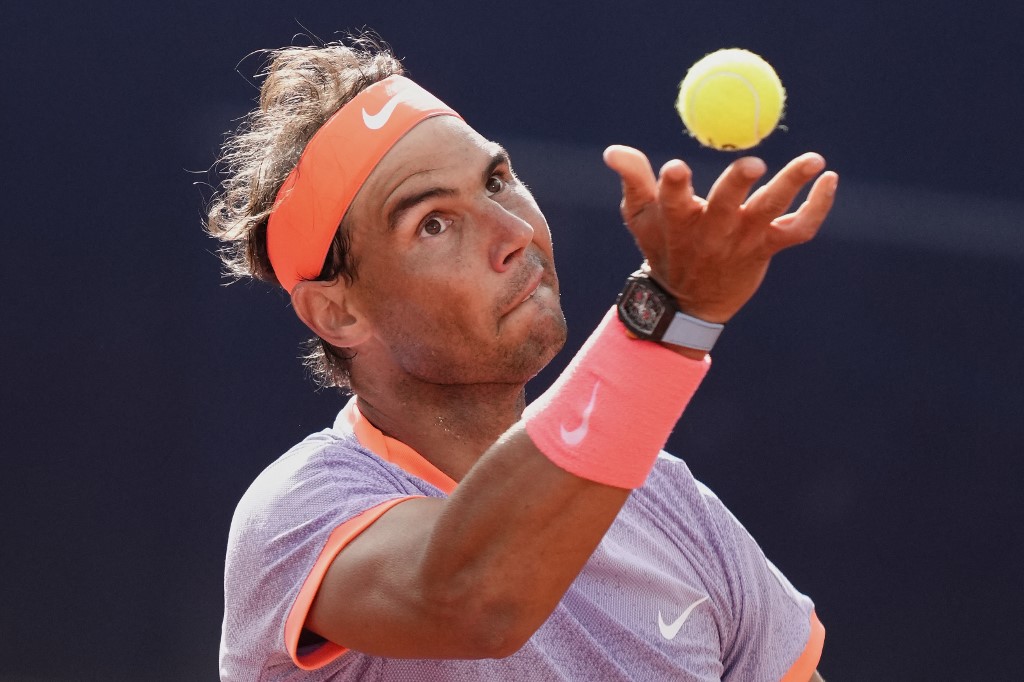
There is a shot that every recreational tennis player attempts and most professional tennis players depend on — a shot so embedded in the modern game that it is easy to forget it was once unusual, then controversial, and then revolutionary before becoming simply the way professional tennis is played. That shot is the topspin groundstroke.
And its rise from tactical novelty to universal foundation is one of the most consequential developments in the sport’s history.
Topspin did not just change how professional players hit the ball. It changed where they stood on the court, how they constructed points, which surfaces rewarded which styles, what the physical demands of professional tennis became, and ultimately which players could compete at the highest level.
Understanding why topspin changed professional tennis means understanding the modern game at its most fundamental level — not just as a technical fact but as a competitive and historical force.
What Topspin Actually Is
Topspin is forward rotation on the ball — the same direction the ball is traveling. When a player brushes upward across the back of the ball at the moment of contact, rather than driving through it flat, the resulting spin causes the ball to rotate forward. That rotation interacts with the air and the court surface in ways that produce the topspin groundstroke’s distinctive characteristics.
In the air, topspin causes the ball to dip more sharply than a flat shot. The Magnus effect — the aerodynamic phenomenon that causes a spinning object to curve in the direction of its rotation — pulls a topspin ball downward more aggressively than gravity alone would.
This means a topspin shot can be hit higher over the net — creating a larger margin of error — and still land inside the court, because the spin brings it down before it would otherwise travel out.
After the bounce, topspin causes the ball to accelerate and kick upward more sharply than a flat shot would. The forward rotation of the ball grips the court surface on landing and converts some of the ball’s horizontal momentum into vertical momentum — producing the high, heavy bounce that topspin groundstrokes are known for and that their opponents find so difficult to handle comfortably.
These two properties — the ability to clear the net with more margin and the aggressive post-bounce behavior — are what made topspin so transformative. Together they created a way of hitting the ball that was simultaneously safer and more difficult to attack than the flat, drive-based groundstrokes that had previously dominated professional tennis.
Where Topspin Came From: The Historical Context
Topspin groundstrokes are not a modern invention. Players have generated topspin on tennis balls since the sport’s earliest days, and the physical principles that make it effective were available to any player with the technical skill and physical strength to exploit them.
What changed in the 1970s and 1980s was not the existence of topspin but the extent to which it became viable as a primary weapon at the professional level.
The key constraint on topspin in the early history of professional tennis was equipment. Wooden rackets, which dominated the professional game until the late 1970s, were heavy, small-headed, and had relatively little power in their frames.
Generating the racket head speed necessary to brush aggressively up the back of the ball and impart heavy topspin required extraordinary physical strength and technical precision. Most professional players found it more efficient to drive through the ball flatly, using the pace and directional control of a clean flat strike rather than the more physically demanding topspin technique.
The player who most visibly demonstrated that heavy topspin could be a primary competitive weapon within the constraints of the wooden racket era was Bjorn Borg. Borg’s topspin forehand and two-handed topspin backhand were not just technically distinctive — they were strategically revolutionary.
His ability to generate heavy topspin consistently, combined with extraordinary physical endurance and exceptional movement, produced a clay court game that had no meaningful precedent at the level he played it.
Borg won six Roland Garros titles and five consecutive Wimbledon titles in the late 1970s using a style that challenged the conventional wisdom about what professional tennis required.
But Borg’s topspin, for all its effectiveness, was still operating within the limitations of the wooden racket era. What happened when those limitations were removed changed everything.
Racket Technology: The Enabler of the Topspin Revolution
The transition from wooden rackets to graphite composite frames — which accelerated dramatically through the 1980s and was essentially complete at the professional level by the early 1990s — is the single most important enabling development in the topspin revolution.
Graphite rackets were lighter than wooden ones, which meant players could swing them faster with the same physical effort. They were stiffer, which meant more of the energy generated by the swing was transferred to the ball rather than absorbed by the frame flexing.
They had larger head sizes, which created a larger sweet spot and made off-center contact less costly. And they were strung with synthetic strings at tensions and with string types that interacted with the ball differently than the natural gut strings of the wooden era.
All of these properties combined to make generating racket head speed — the primary driver of topspin — dramatically easier than it had been with wooden equipment. A professional player swinging a graphite racket could generate topspin at a level that would have required superhuman effort with a wooden frame, and they could do it consistently across a long match without the same degree of physical fatigue that wooden racket topspin demanded.
The result was that topspin became accessible to players who would not have had the physical profile to rely on it with wooden equipment. The technique spread rapidly through the professional game as players discovered that the graphite racket’s properties made heavy topspin not just possible but efficient — a better use of their physical resources than the flat driving game the previous equipment generation had rewarded.
Polyester strings, which became increasingly prevalent in professional tennis through the 1990s and 2000s, amplified this effect further. Polyester strings — stiffer and more durable than natural gut — allowed players to string their rackets at lower tensions while maintaining control, and the resulting string bed interacted with the ball in ways that made generating topspin even more efficient. The combination of graphite frames and polyester strings created the equipment foundation on which the modern topspin game is built.
How Topspin Changed Point Construction
The most immediate competitive effect of the topspin revolution was a fundamental change in how professional players constructed points from the baseline.
Before topspin became dominant, professional baseline rallies were primarily contests of flat driving — players hitting the ball hard and flat, trying to outpace each other or generate errors through pace and placement.
The exchange was relatively low over the net, fast, and rewarded clean striking and precise direction. Points were constructed around creating openings through flat groundstroke pressure and attacking them with flat finishing shots.
The topspin game changed this structure in several important ways.
First, topspin created a new dimension of physical pressure that flat driving did not produce. A heavy topspin ball bouncing above shoulder height forces the receiver to strike the ball from an uncomfortable position — too high for a standard groundstroke, requiring either a step back to let it drop or a swing adjustment upward that reduces leverage and control.
Sustained topspin pressure pushes opponents progressively further behind the baseline, where they are increasingly passive and decreasingly able to generate attacking pace of their own.
Second, topspin changed the margin calculus of baseline exchanges. A player hitting with heavy topspin can miss the net by two or three feet and still land the ball inside the court, because the spin brings it down.
A flat hitter has a much narrower margin — a shot hit two feet over the net at pace will often land beyond the baseline. This asymmetry meant that topspin players could sustain higher levels of aggression from the baseline without a proportional increase in error rate, changing the risk-reward calculation of baseline exchanges in favor of topspin.
Third, topspin changed the physical demands of professional tennis at the baseline. Defending against heavy topspin — dealing with high bounces, being pushed behind the baseline, managing uncomfortable contact points — is physically demanding in a way that flat driving exchanges are not.
Players who could generate heavy topspin consistently were not just winning points — they were accumulating physical attrition in their opponents that paid dividends in the later stages of long matches.
Clay Court Tennis and Topspin’s Natural Home
The surface on which topspin’s effects are most pronounced is clay — and the dominance of topspin specialists on clay has been one of the most consistent and dramatic features of professional tennis since the topspin revolution took hold.
Clay is slower than hard courts or grass, which means the ball spends more time in the air and more time interacting with the court surface. The slower surface amplifies topspin’s post-bounce characteristics — the high kick is even higher, the forward acceleration even more pronounced, and the time the ball spends rising to an uncomfortable height even longer than on faster surfaces. Clay is, in effect, the surface that was made for topspin.
The Roland Garros clay court statistics of the topspin era are remarkable. Rafael Nadal’s 14 French Open titles — the most dominant sustained performance in the history of any Grand Slam event — were built on a topspin forehand that generated more revolutions per second than virtually any other professional player’s groundstroke, combined with the physical endurance to sustain that level of spin through five-set matches across a two-week tournament.
Nadal’s topspin forehand on clay is the most extreme expression of what the topspin revolution produced — a weapon so specifically calibrated to the clay court environment that it essentially defined the limits of what was possible on that surface for over a decade.
But topspin’s influence on clay extends far beyond individual champions. The entire competitive culture of clay court tennis — the grinding baseline exchanges, the emphasis on physical endurance, the tactical patience required to construct points through sustained topspin pressure — reflects the surface’s amplification of topspin’s properties.
Clay court specialists are, to a significant degree, topspin specialists whose game is optimized for the surface where topspin is most effective.
How Topspin Changed Hard Court Tennis
The topspin revolution’s impact on hard court tennis is more nuanced than its effect on clay, but ultimately just as significant.
Hard courts do not amplify topspin to the same degree as clay — the bounce is lower, the surface faster, and the ball spends less time in the air. This means hard court tennis is more contested between topspin and flat hitting than clay court tennis, and the balance of effectiveness between the two approaches is more even.
What topspin did to hard court tennis was not eliminate flat hitting but change its role. Flat hitting on hard courts remains effective — particularly on first serves, on short ball approaches, and on finishing shots — but the baseline exchange on hard courts has moved predominantly toward topspin because the consistency and physical pressure advantages topspin provides on clay translate, if less dramatically, to hard court surfaces as well.
The players who have dominated hard court tennis in the modern era — Djokovic, Federer, Serena Williams, and their contemporaries — are not pure topspin players in the way that clay court specialists are.
They are players who combine topspin’s consistency and physical pressure with the ability to flatten the ball out and drive through it when the opportunity arises. The modern hard court game is fundamentally a topspin game with flat hitting as a finishing weapon, rather than the primarily flat game it was before the topspin revolution.
Topspin and Grass: The Surface That Resisted Longest
Grass was the surface that most successfully resisted the topspin revolution for the longest period, and understanding why illuminates both topspin’s properties and the specific characteristics of grass as a playing surface.
Grass produces a low, skidding bounce that is the opposite of topspin’s ideal operating conditions. Where clay amplifies topspin’s kick, grass minimizes it — the ball stays low after bouncing on grass, denying topspin the time and height it needs to create physical pressure on the opponent.
Heavy topspin on grass produces a bounce that is only marginally more difficult than a flat shot would produce, while the spin’s effect in the air — the dipping trajectory — provides less margin benefit because the ball’s lower trajectory over the net on grass means the dipping effect matters less.
For these reasons, grass favored flat hitting and serve-and-volley tactics much longer than other surfaces. Players who thrived on clay with heavy topspin often struggled on grass because the surface neutralized their primary weapon. The serve-and-volley game — already declining on hard courts by the 1990s — held on at Wimbledon through the late 1990s and early 2000s in a way it did not elsewhere because grass genuinely rewarded the flat, net-approach game that topspin was displacing everywhere else.
What eventually changed grass court tennis was not topspin becoming more effective on grass but rather two other developments: Wimbledon’s decision to modify its grass preparation to produce a slower, higher-bouncing surface starting in the early 2000s, and the progressive improvement of topspin players’ ability to adjust their game for grass.
The modern Wimbledon surface plays significantly slower than the grass of the Sampras-Agassi era, and topspin is considerably more effective on it than on the original surface. The last true serve-and-volley champion at Wimbledon was Lleyton Hewitt in 2002 — a date that, not coincidentally, roughly aligns with the surface changes that made the old Wimbledon grass a historical artifact.
What Topspin Did to the Physical Demands of Professional Tennis
One of the least-discussed consequences of the topspin revolution is what it did to the physical requirements of professional tennis — not just the technique but the body required to compete at the highest level.
The topspin game is physically demanding in ways that the flat driving game was not. Generating heavy topspin consistently requires significant rotational strength in the core and shoulder, fast-twitch muscle activation in the legs and hips for the explosive movements that topspin preparation requires, and the endurance to maintain technical quality across matches that are longer and more physically intense than pre-topspin professional tennis produced.
The players who emerged as dominant forces in the topspin era were not just technically superior — they were physically different from the professionals of earlier generations. Nadal’s physical development — the muscle mass, the explosive movement patterns, the endurance capacity — is a direct product of the physical demands his topspin-based game places on the body.
Djokovic’s extraordinary flexibility and movement efficiency, which allow him to take heavy topspin balls on the rise from positions that would compromise other players, reflect a physical training approach built around the demands of competing in the topspin era.
The professionalization of physical preparation in tennis — sports science, nutrition, strength and conditioning work specific to the demands of the modern game — accelerated in direct response to the physical requirements of playing and surviving against heavy topspin over a full professional season. The modern tennis athlete is in many ways a creation of the topspin revolution as much as the modern tactical game is.
The Topspin Rally: What It Looks Like and What to Watch For
Understanding topspin changes what you see when you watch professional baseline rallies. Here is what to look for.
Watch the ball’s trajectory in the air. A topspin shot has a distinctive arc — it climbs after leaving the racket, peaks, and then dips more sharply than a flat shot would. On slow motion replay this arc is obvious. In real time it is visible as a slightly higher, rounder trajectory compared to the flatter, more linear path of a drive.
Watch the bounce height. A heavily topped ball kicks up significantly after landing — often to shoulder height or above against players positioned at the baseline. Watch for the moment when a player suddenly has to adjust their swing upward, taking the ball above their natural strike zone. That adjustment is topspin doing its work.
Watch where players are standing after a long topspin exchange. Heavy, sustained topspin pushes players behind the baseline as the exchange continues. A player who starts the rally on the baseline and is four or five meters behind it after ten shots has been displaced by topspin pressure — exactly the outcome the topspin hitter was seeking.
Watch for the moment a player steps inside the baseline to take a topspin ball on the rise. This is the counter-topspin adjustment — refusing to be pushed back, taking the ball before it can kick to full height, and denying the topspin its operating space. The tension between the topspin hitter trying to push their opponent back and the aggressive returner refusing to go is one of the defining tactical conversations in modern professional tennis.
Topspin as the Language of Modern Tennis
Topspin is not a tactic in the modern professional game. It is the language in which modern professional tennis is spoken — the foundational technical and tactical framework within which every other element of the game operates.
First serves are designed to set up second serve topspin kicks. Court positions are determined by how much topspin pressure a player can generate or absorb. Surfaces are evaluated by how much they amplify or neutralize topspin’s effects. Physical preparation is built around the demands of producing and withstanding topspin across a full professional season.
The players who reshaped professional tennis most fundamentally in the modern era — Borg, Agassi, Nadal, Djokovic, and on the women’s tour Serena Williams and Justine Henin, among others — did so by finding ways to generate, exploit, or neutralize topspin more effectively than their contemporaries. Their dominance was built on the same physical principle: a ball rotating forward interacts with air and court in ways that give the player controlling that rotation a structural advantage.
That advantage, discovered and developed over decades of technical evolution, is what changed professional tennis. And it is what, for as long as the game is played on the surfaces and with the equipment of the modern era, will continue to define it.
Related: How Court Position Has Changed the Modern Baseline Game · Why the Second Serve Has Become the Most Important Shot in Tennis · · Why Hard Courts Do Not All Play the Same in Pro Tennis