

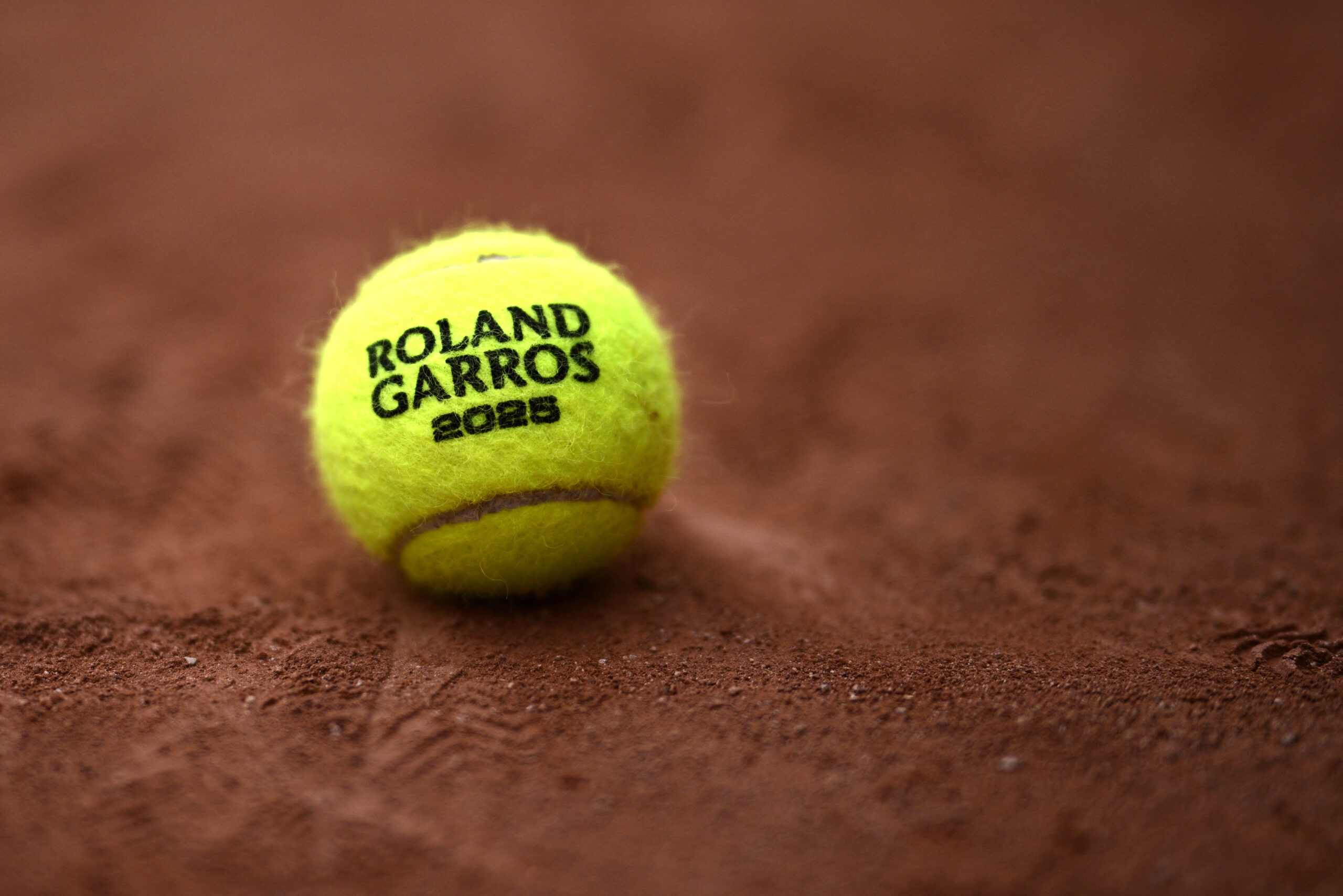
Tennis balls look simple. They are not. At the highest level of the sport, the ball is one of the most important moving parts in every match. It affects pace, bounce, spin, control, and even the physical toll on a player’s arm and shoulder.
That is why major tournaments are so particular about which balls they use, how often they are replaced, and how they are handled from the moment a can is opened.
For fans who are new to the sport, the constant arrival of fresh balls can seem excessive. Ball kids bring out new cans, players inspect them, old balls disappear, and the cycle repeats all match long. But there is a practical reason for all of it. Tennis balls lose performance quickly, especially under professional conditions.
Do all major tournaments use the same tennis ball
No. Major tournaments do not all use the same ball. As of 2026, the Australian Open uses Dunlop, Wimbledon uses Slazenger, Roland Garros uses Wilson, and the US Open also uses Wilson. Those partnerships matter because each manufacturer produces balls with slightly different characteristics in felt, liveliness, and durability, even when all of them meet official standards.
That may sound minor, but players feel those differences immediately. A ball that comes off the racket a little faster, sits up a little higher, or fluffs up more quickly can change the rhythm of points and the effectiveness of certain styles of play. Big servers, heavy topspin players, flat hitters, and defensive baseliners all experience a ball differently.
Even before surface comes into the conversation, the ball itself is already shaping the match.
Why are tennis balls changed so often
The short answer is that tennis balls degrade fast. Under professional conditions, a ball is being hit by elite athletes, often at speeds that casual players never experience. Serves can exceed 125 miles per hour. Groundstrokes are loaded with topspin.
Hard courts grind down the felt. Clay fills the fibers with dust. Grass keeps skidding behavior in play. Heat, humidity, and court abrasion all matter. The result is that a tennis ball does not stay new for long.
The felt starts to fluff up and wear down. The internal pressure drops gradually once the can is opened. The bounce becomes less lively and less consistent. The ball can also become heavier in feel, particularly as the felt roughens and picks up debris or moisture. That affects how fast it travels through the air and how high it jumps off the court.
At the pro level, even small changes become major tactical issues. A fresh ball tends to move faster through the court and rewards aggressive first-strike tennis. An older ball usually gets slower, sits up more, and can make it easier for returners to neutralize serve. Fresh balls can help servers and shotmakers.
Worn balls often help defenders extend rallies. That is why tournaments do not leave the timing of ball changes to chance.
How often are balls changed in pro matches
The Rules of Tennis allow event organizers to set the ball-change policy in advance. At Grand Slam tournaments, six balls are typically used for each main-draw match, and they are changed after the first seven games and then every nine games after that.
The reason the first change comes after seven rather than nine is to account for the warm-up, when the balls are already being struck before the first point begins. Wimbledon states this plainly on its official site: new balls are introduced after the first seven games and then after every nine games.
That routine is familiar to regular tennis viewers. It is also one reason players often pay close attention to the scoreboard. They know when new balls are coming, and many adjust strategy around it. A server may try to be especially aggressive in the game right after a ball change. A returner may be happy to survive that moment and wait for the balls to slow down.
So when fans hear the umpire announce new balls please, it is not just housekeeping. It can shift the feel of a match.
What are tennis balls actually made of
Modern tennis balls are built around two main elements: a rubber core and a fabric outer covering. According to the ITF rules, the ball must have a uniform outer surface consisting of a fabric cover, and approved balls must conform to strict specifications.
The ITF technical material also notes that modern tennis balls are based on rubber and that the sport evolved from early rubber balls to hollow, pressurized designs covered in flannel-like felt.
In simple terms, the inside gives the ball its bounce. The outside gives it its grip, drag, and feel. The rubber core is what stores and releases energy when the ball hits the court or the strings.
Most top-level balls are pressurized, which helps create the lively bounce players expect. The felt covering is just as important. It influences how the ball travels through the air, how much spin players can create, and how the ball reacts off different surfaces.
That fuzzy outer layer is not cosmetic. It is central to performance.
How are tennis balls made
The full industrial process varies by manufacturer, but the basic structure is well established. First, manufacturers create the rubber core. Historically, tennis ball cores developed from shaped rubber pieces that were formed into a hollow sphere and then pressurized.
Today, modern production is more advanced, but the principle remains the same: build a resilient rubber shell that meets strict size, weight, deformation, and rebound standards.
Then the outer felt is applied. Typically, two dumbbell-shaped pieces of felt are bonded around the rubber core to form the familiar seam pattern seen on every tennis ball. The covering must be smooth and uniform, with stitchless seams under the official rules.
After that comes finishing and testing. Balls are checked for consistency in weight, size, bounce, and other performance standards. The ITF maintains approval standards for balls used in competition, and tournament balls must come from the official list of approved balls.
So while a tennis ball may look basic from the stands, it is actually a carefully engineered piece of sports equipment.
Why do different surfaces make balls behave differently
Surface and ball are always interacting. On hard courts, the felt tends to wear more quickly because the surface is abrasive. That is one reason hard-court tournaments often use extra-duty style balls built to handle rougher conditions. Wilson, for example, describes its US Open ball as suited to hard courts and made with premium woven felt.
On clay, the issue is a little different. The ball picks up dust, and the felt can get heavier and dirtier during long rallies. Roland Garros describes its official Wilson ball as designed for clay, with woven felt intended to prevent the ball from catching too much moisture and dirt.
On grass, the lower bounce and skidding nature of the court create a different challenge, and the freshness of the ball becomes especially noticeable early in games. This is why players talk so much about not just the court, but the court-ball combination.
Do players care a lot about new balls
Yes. Constantly. At the pro level, players often inspect new balls before serving, choose particular ones for first and second serves, and talk openly about how a ball changes across a match. Some like newer balls because they can attack more easily. Others prefer older balls because they are easier to control from the baseline.
The state of the ball influences serve speed, return timing, rally length, and shot tolerance. It can also affect injury management. A heavier, worn ball can feel tougher on the arm over time, especially in cold or damp conditions.
For casual fans, a ball change may seem like a minor ritual. For players, it can be a tactical moment.
The bigger point
Tennis is unusual because the ball changes so dramatically during play. In sports like soccer or basketball, the game ball usually remains in use for long stretches. In tennis, the equipment itself is in constant decline from the second the seal is broken.
That decline is exactly why ball changes are part of the sport. Major tournaments replace balls often because consistency matters. The players are too good, the margins are too small, and the conditions are too demanding to let worn-out balls dictate the contest.
A fresh can keeps the match closer to the standard the event wants to present. So the next time you hear new balls please, it is not a formality. It is part of how elite tennis protects fairness, pace, and quality from the first game to the last.