

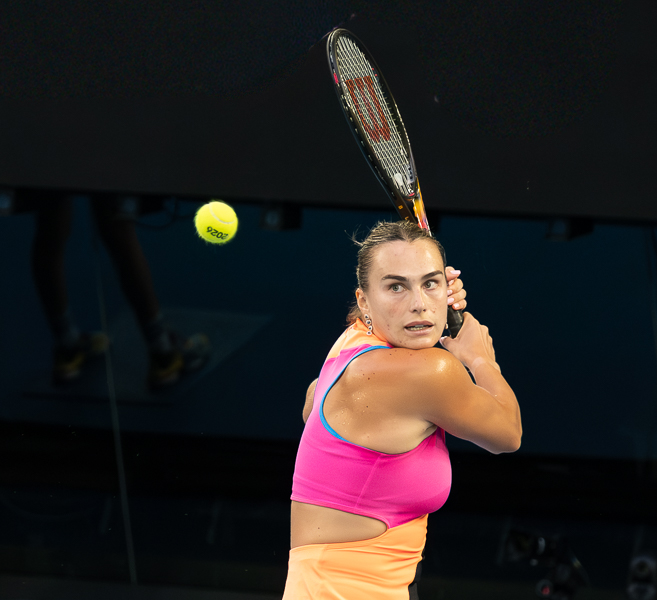
Aryna Sabalenka has thrown her support behind a push to extend women’s matches to best-of-five sets in the later rounds of Grand Slam tournaments, saying the format would play to her strengths and potentially boost her major title count.
The world No. 1 made her comments ahead of the BNP Paribas Open in Indian Wells, where the WTA 1000 event begins this week. Sabalenka, known for her powerful game and endurance, responded enthusiastically when asked about the idea, which has gained traction in recent months.
“Yes, let’s do it,” Sabalenka said. She added that the longer matches could have altered her career trajectory. “I feel like I probably would have more Grand Slams. Physically I’m very strong, and I’m pretty sure my body can handle it.”
The proposal comes from Craig Tiley, the former Australian Open director who was named CEO of the U.S. Tennis Association last week. In a recent interview with The New York Times, Tiley suggested implementing five-set matches for women starting from the quarterfinals at the majors.
He pointed to data showing that viewer interest grows as matches extend, arguing it could help the sport adapt and attract more fans. “All the research shows interest increases as the match goes on,” Tiley said. “As a sport, we have to evolve.”
Sabalenka’s endorsement marks a shift from her stance last year. During Wimbledon in 2025, she expressed concerns about the physical toll, saying she wasn’t ready for five sets and that it might lead to more injuries.
“I think it’s too much on the woman’s body,” she said at the time. Now, however, the Belarusian appears confident in her ability to thrive under the change, highlighting her fitness as a potential edge.
“I guess it’s a lot of fitness work to be done for others, but I feel like we’re in sport and we have to care about ourselves,” Sabalenka said. “If they do it, I have huge advantage.”
Not all top players share her view. The debate has divided the WTA Tour, with several leading figures raising issues about fairness, physical demands, scheduling, and fan appeal.
World No. 2 Iga Swiatek, a four-time French Open champion, dismissed the idea outright. She argued that in an era where entertainment trends toward shorter formats, extending matches might not resonate with audiences.
“Honestly, I think it’s a weird approach in a world where everything is getting faster,” Swiatek said. “So I don’t know if the audience, honestly, would like that.”
The Polish star also highlighted physiological differences between men and women, noting that men typically have more capacity for extended play. She warned that the change would require overhauling training regimens and could limit players’ participation in other events.
“We’ve never trained in a way that prepares us for that,” Swiatek said. She added that Grand Slams would become so grueling that “there might not be time to prepare properly for the rest of the calendar.”
Coco Gauff, the reigning French Open champion and a rising force in the game, offered a more nuanced take. The American said she could handle the physical challenge but insisted on consistency if the format shifts.
“If it ever happened, she said, she would prefer it be used throughout the entire tournament rather than introduced mid-event,” Gauff noted. “Changing the format in the middle of the tournament goes against equal conditions.”
Jessica Pegula, ranked No. 5, acknowledged women’s athletic prowess but questioned the necessity of the move. She emphasized practical hurdles, including packed schedules and the strain on tournament operations.
“I think we have incredible female athletes and, honestly, I think we could do it,” Pegula said. “I don’t think it’s that we can’t; I just don’t necessarily think we should.”
Pegula pointed out existing challenges in managing the tour calendar. “We can’t even meet the current schedule,” she said. “So I’m not really sure how that would work for the fan experience.”
Elena Rybakina, the 2022 Wimbledon champion and current No. 4, joined the chorus of skeptics. Speaking at Indian Wells, she argued that women’s matches already deliver plenty of drama without needing extension.
“I don’t think it’s necessary,” Rybakina said. “We already have long matches.”
The discussion revives a long-standing topic in tennis. Women have played best-of-three sets at Grand Slams since the 1970s, while men compete in best-of-five throughout. Proponents like Tiley see the change as a way to heighten excitement and parity, but critics worry it could exacerbate injury rates and disrupt the balance between men’s and women’s events.
Historical context adds layers to the debate. In the early days of the Open Era, some women’s finals were best-of-five, but the format was abandoned due to concerns over endurance and scheduling.
Recent seasons have seen women’s matches produce epic encounters, such as Sabalenka’s three-set battles in her four Grand Slam triumphs, including back-to-back Australian Open wins in 2023 and 2024, and U.S. Open victories in 2024 and 2025.
Still, the physical demands of the tour remain a hot-button issue. Players have increasingly voiced frustrations over extended seasons and dense schedules, with injuries sidelining stars like Naomi Osaka and Simona Halep in recent years. Extending Grand Slam matches could amplify those pressures, particularly for players without Sabalenka’s robust build.
Tiley’s role at the USTA puts him in a position to influence change, especially at the U.S. Open. But any shift would require buy-in from all four majors, the WTA, and players. The ATP and WTA have collaborated on initiatives like equal prize money, but format changes have proven contentious.
For now, the proposal remains in the discussion phase. As the Indian Wells tournament unfolds, more players may weigh in, but the split opinions suggest no quick resolution.
Sabalenka, meanwhile, heads into the event as the top seed, aiming to build on her dominant start to 2026. She defended her Australian Open title in January and remains unbeaten in sets at majors this year. Whether five-set matches become reality, her confidence underscores why she’s atop the rankings.
The tennis community will watch closely. If adopted, the change could reshape the sport, demanding new levels of preparation and strategy. Until then, the best-of-three format holds firm, delivering the high-stakes action fans expect.