

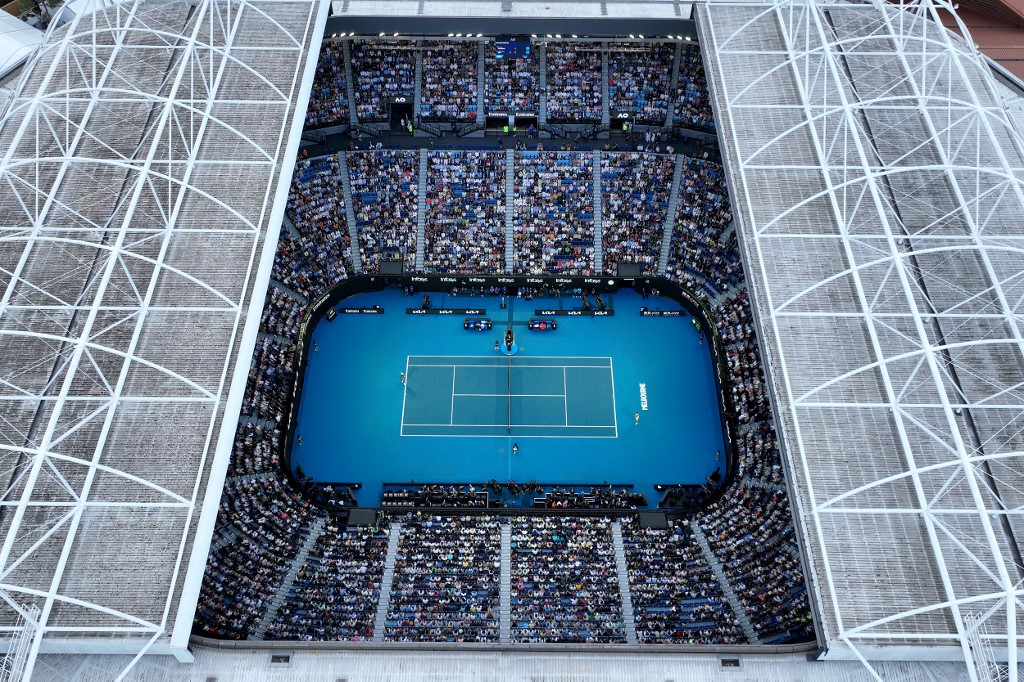
Every Australian Open tournament begins not on Rod Laver Arena but in a draw ceremony held several days before the first ball is struck. In the space of an hour, 128 men and 128 women are assigned their positions in a bracket that determines who plays whom, when, and under what competitive conditions.
The draw does not determine who will win the Australian Open. But it shapes every player’s path to the title, creates the projected quarterfinal and semifinal matchups that analysts discuss for weeks, and produces the first competitive narratives of the season before any tour-level match in the new calendar year has been played.
Understanding exactly how the Australian Open draw works — how players get into the draw, how seeds are placed, what the draw ceremony involves, and how the bracket structure determines projected paths — transforms the draw announcement from a scheduling document into the first chapter of the new tennis season.
The Australian Open Draw Size
The Australian Open main draw contains 128 players in both the men’s and women’s singles competitions — the same draw size used at all four Grand Slams and the largest competitive field in professional tennis at any single event.
With 128 players and seven rounds of competition, the draw’s structural mathematics are straightforward. Round one eliminates 64 players. Round two eliminates 32 more. The third round eliminates 16. The fourth round — the round of 16 — eliminates 8. The quarterfinals eliminate 4. The semifinals eliminate 2. The final determines the champion from the two remaining players.
This seven-round structure means that winning the Australian Open requires seven consecutive victories across the 15-day tournament — each match played on the medium-fast GreenSet hard court surface in the Melbourne summer heat. No player can win the Australian Open without winning every match — a single loss ends the tournament regardless of how many matches have been won previously.
The doubles draws — 64 teams each in men’s, women’s, and mixed competitions — operate under their own specific entry and seeding rules but share the same single-elimination bracket structure.
How Players Enter the Australian Open Main Draw
The 128 spots in the Australian Open main draw are filled through four distinct entry mechanisms — each reflecting a different pathway into the tournament.
Direct Acceptances
The majority of Australian Open main draw spots — approximately 104 to 108 depending on the specific year’s allocation — are filled through direct acceptance. Players ranked inside the direct acceptance cutoff at the entry deadline receive automatic main draw entry based on their ATP or WTA ranking.
The entry deadline for the Australian Open falls approximately six weeks before the tournament begins — set by Tennis Australia in accordance with Grand Slam and tour regulations. Players who are ranked inside the cutoff at that deadline receive direct acceptance regardless of their subsequent results or ranking movements during the off-season weeks that follow.
The specific direct acceptance cutoff varies year to year — typically falling somewhere between approximately 90th and 110th in the world depending on how many wild cards and protected ranking entries have been awarded and how many higher-ranked players have withdrawn. A player ranked 95th in the world at the entry deadline can generally expect direct acceptance into the Australian Open main draw.
The AO’s January timing introduces one specific complication that the other Grand Slams don’t share: the entry deadline falls during the previous year’s off-season, when players are not competing and ranking movements are limited. The cutoff is therefore based on rankings established by the previous November’s results rather than recent form.
Wild Cards
The Australian Open is allocated eight wild cards for the singles main draw — split between the men’s and women’s competitions. Tennis Australia controls the wild card allocation and distributes them through several distinct categories, each reflecting a different competitive or development priority.
The most distinctive AO wild card category is the AO Wildcard Play-off — a competitive tournament held in Australia each December that awards main draw wild card entries to its winners. Separate play-offs operate for Australian players and for players from the Asia-Pacific region, providing a competitive route to the main draw for players who would not otherwise qualify by ranking. The play-off format gives Tennis Australia a structured competitive process for distributing wild cards rather than relying solely on discretionary selection.
Reciprocal wild card agreements with the French Tennis Federation and the US Tennis Association allow Tennis Australia to exchange one wild card with each of those Grand Slam organisations — meaning an American or French player can receive an AO wild card while an Australian player receives a US Open or Roland Garros wild card in return.
Discretionary wild cards are also awarded to returning champions or prominent players whose current ranking does not reflect their established level, and to promising young Australian players whose competitive development the tournament wishes to support. The specific wild card recipients are announced in the weeks before the tournament — generating their own wave of media analysis and occasionally controversy when selections appear to reflect commercial or political considerations alongside competitive merit.
Qualifiers
Sixteen qualifying spots in the Australian Open main draw are earned through the qualifying competition held in the four days before the main draw begins. The qualifying draw contains 128 players competing across three rounds for the sixteen main draw spots — a competitive field drawn primarily from players ranked approximately 100th to 250th in the world.
Qualifying at the Australian Open is among the most competitive qualifying competitions in professional tennis. The combination of the Grand Slam’s prestige, the points available, and the specific hard court demands at the start of the season makes qualifying performance a genuine test of early-season form.
Players who win three qualifying matches have demonstrated the competitive level required to belong in the main draw and arrive in match rhythm from their qualifying competition — a meaningful advantage during the first round of the main draw, when direct acceptances are still finding their form after the off-season.
Protected Rankings
Players returning from extended absence who hold a Protected Ranking can use that ranking for entry into the Australian Open main draw if their current ranking falls outside the direct acceptance cutoff. Protected Ranking entries receive a main draw spot but are not seeded — they compete as unseeded players regardless of the ranking they are using for entry purposes.
For a deeper look at how the Protected Ranking system works across both tours, see How Protected Rankings Work in Tennis.
How Australian Open Seedings Work
The seeding structure at the Australian Open follows the standard Grand Slam format — 32 seeds placed into protected positions in the 128-player draw to prevent the highest-ranked players from meeting each other too early.
Seeds are determined by the ATP or WTA ranking at a specific cutoff date set by Tennis Australia — typically approximately two weeks before the tournament begins. The player ranked first in the world at the cutoff becomes the first seed, the player ranked second becomes the second seed, and so on through the 32 seeded positions.
The practical effect of seeding is to divide the draw into protected zones that guarantee specific competitive outcomes cannot occur before specific rounds. The first and second seeds are placed in opposite halves of the draw — guaranteeing they cannot meet before the final.
The third and fourth seeds are placed in the two quarters not occupied by the first and second seeds — guaranteeing they cannot meet the top two before the semifinals. Seeds five through eight are distributed across the four quarters — guaranteeing they cannot meet the top four before the quarterfinals.
This protection structure creates the concept of a player’s quarter of the draw — the specific section of the bracket they occupy, which determines which seeds they could potentially face at each stage.
A player drawn into the same quarter as the first seed faces the possibility of a quarterfinal against the world number one if both players win their first four matches. A player in the opposite quarter from the first seed cannot face them until the final.
Pure Ranking-Based Seeding
The Australian Open uses a pure ranking-based seeding system — the ATP and WTA ranking at the cutoff date determines seed order without surface-specific adjustment. This places the AO in line with Roland Garros and the US Open in using rankings directly, and contrasts with Wimbledon, which has historically applied a grass court performance modifier to its seedings.
The AO’s pure ranking approach means that hard court specialists are not seeded higher than their overall ranking suggests, and players whose recent results have come on slower surfaces are not seeded lower than their overall ranking suggests. A player ranked 15th in the world is the 15th seed at the Australian Open regardless of their hard court record.
The Draw Ceremony
The Australian Open draw ceremony — held three to four days before the first round begins — is a formal event that assigns all 128 players their specific bracket positions. The ceremony is broadcast on the Australian Open official platforms and covered extensively by tennis media as the first major event of the tournament fortnight.
The process works in stages that reflect the seeding protection structure described above.
Seeds one and two are assigned to the top and bottom halves of the draw — not drawn randomly but fixed by convention. Seed one goes to the top half, seed two to the bottom half. Their specific quarter and section within those halves may be determined by draw or fixed by convention depending on the specific year’s procedures.
Seeds three and four are drawn to determine which of the two remaining quarters each occupies — one in the top half, one in the bottom half, in the quarters not occupied by seeds one and two. The draw between seeds three and four determines which specific quarter each player occupies and therefore which seed they would potentially face in the semifinal.
Seeds five through eight are drawn into the four eighths of the draw not occupied by seeds one through four — ensuring they cannot meet the top four until the quarterfinals. Seeds nine through 16 are drawn into the remaining sections. Seeds 17 through 32 are distributed across the draw in protected positions that prevent them from meeting the top 16 until the third round.
The unseeded players — direct acceptances, qualifiers, and wild cards who are not among the 32 seeds — are drawn into the remaining positions after all seeds have been placed. An unseeded player can be drawn against any seeded player in the first round, including the first or second seed, depending purely on where their name falls in the draw.
Reading the Australian Open Draw
Once the draw is announced, the competitive analysis that follows focuses on several specific elements that determine how each player’s tournament is likely to unfold.
Quarter of the Draw
The quarter of the draw a player occupies determines which seeded player they could potentially face in the quarterfinals if all favorites advance. A player drawn into the first seed’s quarter faces a projected quarterfinal against the world number one — a significantly harder projected path than a player drawn into a quarter with a lower seed. The analysis of which players have received favorable or unfavorable quarters is typically the first and most significant discussion following the draw announcement.
Projected Semifinal Matchups
The draw’s seeding structure creates projected semifinal matchups based on which seeds occupy which halves of the draw. If seeds one and three are in opposite halves from seeds two and four, the projected semifinals would be one versus three and two versus four — producing specific matchup narratives that analysts discuss from the moment the draw is announced.
These projections are frequently disrupted by upsets and early-round surprises, particularly at the Australian Open, where the start-of-season timing means that players are coming off the off-season rather than peak-form mid-season. The AO is one of the most volatile Grand Slams in terms of early-round upsets — partly because top players sometimes need a tournament to reach full form, and partly because hard court conditions at Melbourne reward aggressive play from players who would not be as competitive at slower-surface events.
The Lucky Loser Positions
After the main draw is announced but before play begins, withdrawals can create vacancies that are filled by lucky losers — players who lost in the final qualifying round and inherit the withdrawing player’s draw position. Lucky loser entries at the Australian Open are identified in the draw sheet and inherit both the position and the projected path of the player they replace.
The AO sees more late withdrawals than any other Grand Slam, partly because the January timing puts players at risk of off-season injuries that may not have fully healed by the entry deadline. This creates one of the more volatile lucky loser cycles in tennis — with multiple lucky losers frequently entering the main draw in the days before the tournament begins.
How Off-Season Conditions Affect Australian Open Draw Analysis
One of the specific features of Australian Open draw analysis that distinguishes it from the other Grand Slams is the degree to which the tournament’s calendar position affects competitive assessment of the draw.
At the other three Grand Slams — Roland Garros, Wimbledon, and the US Open — analysts have access to multiple weeks of recent competitive form to assess each player’s current level. The Roland Garros draw is read against the European clay court swing that precedes it. The Wimbledon draw is read against the grass court warm-ups. The US Open draw is read against the North American hard court season.
The Australian Open draw is different. The tournament’s January timing means the draw is announced when most players have not played a competitive tour-level match since the previous year’s ATP Finals or WTA Finals — approximately seven weeks earlier in November.
The competitive read on each player’s current form is therefore unusually difficult. Some players use the off-season to rebuild from injury and arrive in better shape than their previous results suggest. Others use the off-season to recover from a heavy schedule and may take time to find their rhythm. The few early-January warm-up events — including the United Cup and ATP 250 tournaments in Adelaide, Auckland, and Brisbane — provide limited but valuable data on which players are starting the season strongly.
This off-season uncertainty is what makes Australian Open draw analysis a distinct exercise rather than a simple ranking-order exercise. Experienced analysts assess each player’s likely off-season preparation, their results at the early-January warm-up events, their injury status entering the tournament, and the specific matchups their section of the draw presents — producing draw assessments that frequently identify dangerous unseeded players whose positions in the bracket present specific threats to higher-seeded players who may not yet be at peak form.
How the Surface Affects Draw Analysis
The AO’s medium-fast hard court surface plays differently from the other three Grand Slams in ways that affect draw analysis. Compared with Roland Garros’s clay, where rallies are long and surface specialisation matters enormously, the AO’s hard court conditions translate ranking differences into match outcomes more directly.
Compared with Wimbledon’s grass, the AO is slower and more rally-oriented — meaning that grass-court specialists who excel at the All England Club are not necessarily threats at Melbourne Park. Compared with the US Open’s Laykold hard court, the AO has historically played faster, meaning that big servers and aggressive baseliners gain a marginal advantage that they may not enjoy in New York.
The combination of off-season form uncertainty and hard court conditions makes Australian Open draw analysis lean more heavily on ranking than at Roland Garros (where clay specialisation can override ranking) but less heavily on ranking than at hard court events during the regular season (where competitive form is more readily assessable).
The Draw as the Tournament’s First Chapter
The Australian Open draw ceremony produces the tournament’s first competitive narrative — the projected paths, the potential matchups, the favourable and unfavourable sections that will define how each player’s tournament is likely to unfold. Understanding how that draw is constructed — how seeds are placed, how unseeded players are distributed, how off-season conditions affect the competitive assessment of what the bracket contains — is what transforms the draw announcement from a scheduling exercise into the genuinely revealing competitive document it actually is.
Every Australian Open champion has navigated seven rounds of a specific bracket whose structure was determined in that ceremony. Their path to the title — the opponents they faced, the specific challenges their section of the draw presented, the projected matchups that materialised or were disrupted by upsets — is inseparable from the draw that created it. Reading the draw is reading the first chapter of the story that the subsequent fortnight will complete.
Part of the Australian Open series. Related: The Australian Open Guide · Australian Open Records — Titles, Matches, and Statistics · How to Watch the Australian Open — Broadcast, Schedule, and Streaming Guide