

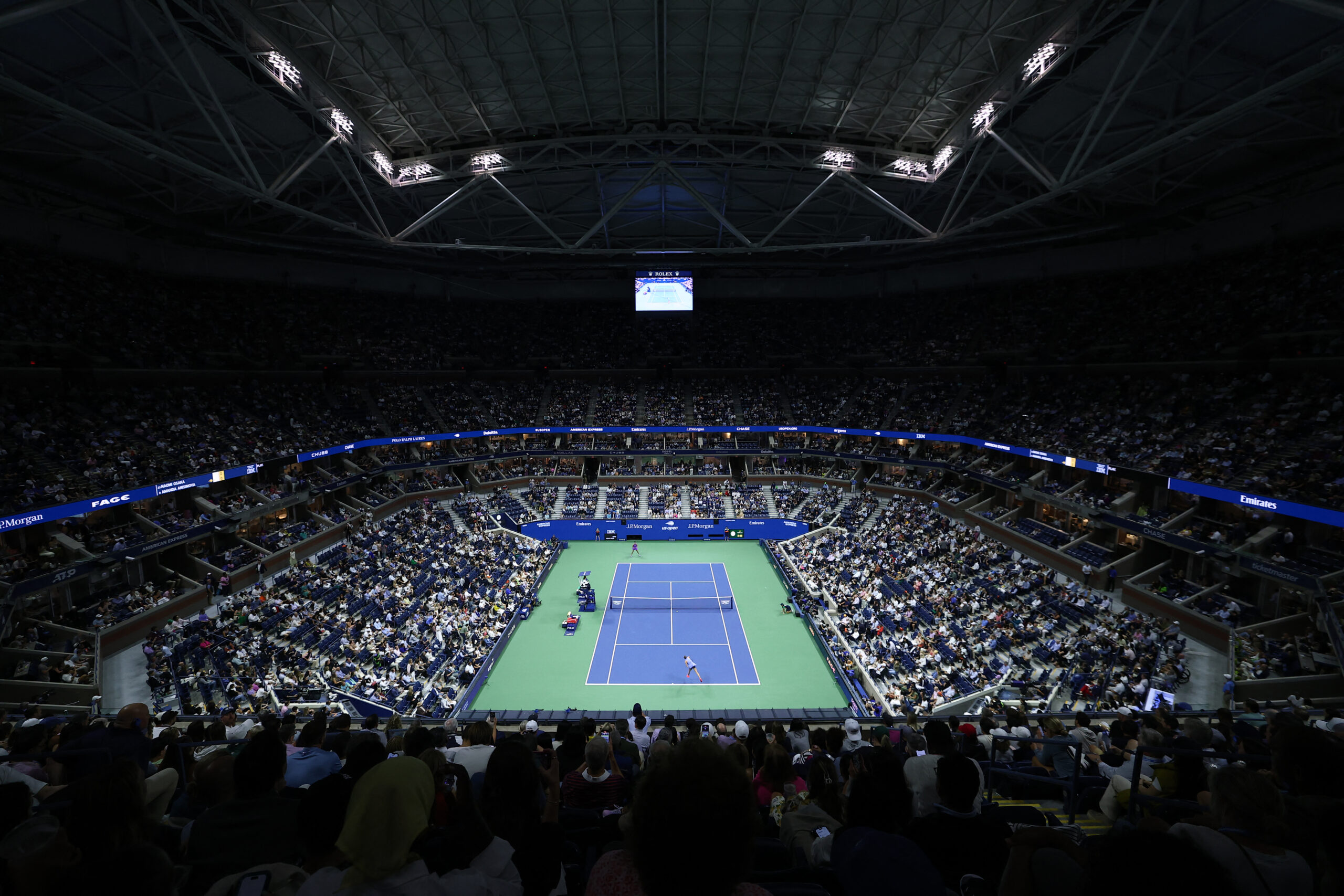
The four Grand Slam tournaments announced Thursday that they will form a joint Grand Slam Player Council, a body giving players a formal channel into decisions at the sport’s four biggest events, and the US Open paired the news with a record player compensation package 10 days before its main draw begins.
The council was one of the specific demands players had been making for roughly 18 months. It arrived alongside the USTA’s confirmation that total player compensation at this year’s tournament will reach $108 million, a 20% rise on last year and a 44% increase over two years. The singles champions will each earn $5.5 million, the largest winner’s check in the history of the sport. A player who loses in the first round of singles will earn $140,000, up 27%. Quarterfinalists take $780,000, semifinalists $1.45 million and the runners-up $2.8 million. The winning teams in each doubles event split $1 million.
The USTA also committed an initial $2 million to a new Player Support Program, split equally between men and women and held in escrow while its terms are finalized. It is designed to sit alongside existing end-of-career pension arrangements and to cover mid-career events and the transition out of the sport. Eligibility will not be tied to ranking tiers — anyone in the main draw of singles or doubles qualifies — which makes it structurally different from most player benefit schemes in tennis, where access tends to track performance. The US Open is the first major to establish one.
Ben Shelton, the American ranked sixth in the world, welcomed the council in a statement, saying he was “really pleased to see this council come together.”The c ontext for all of this is a dispute that has run since last year, when a group of leading players signed a joint letter to the four majors seeking a larger share of tournament revenue, greater investment in player welfare and a formal voice in how the events are run.
The signatories spanned both tours and included the biggest names in the game. The disagreement escalated at Roland Garros this year, when players in the top 10 on both tours limited their contracted media obligations in protest. A comparable action was considered at Wimbledon and averted late. Further action around the US Open had been discussed.
Two of the three asks now have something attached to them. Welfare has the support program. Representation has the council. The third — a defined share of tournament revenue — is the one Thursday’s announcement did not settle in any published form, and it is the one that has driven the dispute from the beginning. Players have consistently framed the argument as being about the percentage rather than the headline number, on the grounds that a record purse in a year of record revenue can still represent a shrinking slice.
There is a second, quieter shift inside the numbers. Ten years ago the singles champions took a substantially larger portion of total singles payouts than they do now; the growth in recent years has been concentrated in the early rounds and qualifying, where the players who most need the money to cover a season’s expenses are. That redistribution mirrors what has happened at the other three majors. The doubles pools, by contrast, are close to flat on last year.
Whether the package holds off another protest in New York is unresolved. Players have not committed publicly to dropping further action, and the council’s remit, membership and meeting schedule have not been published. The USTA said details of the support program will follow after further consultation.
What is clear is the timing. The announcement came on the same day the defending men’s champion confirmed his return, in the week the Cincinnati Open reached its quarterfinals, and 10 days before the first ball is struck at Flushing Meadows — the last window in which a governance concession could plausibly change the atmosphere of the tournament rather than react to it.
The US Open main draw runs Aug. 30 through Sept. 13.