

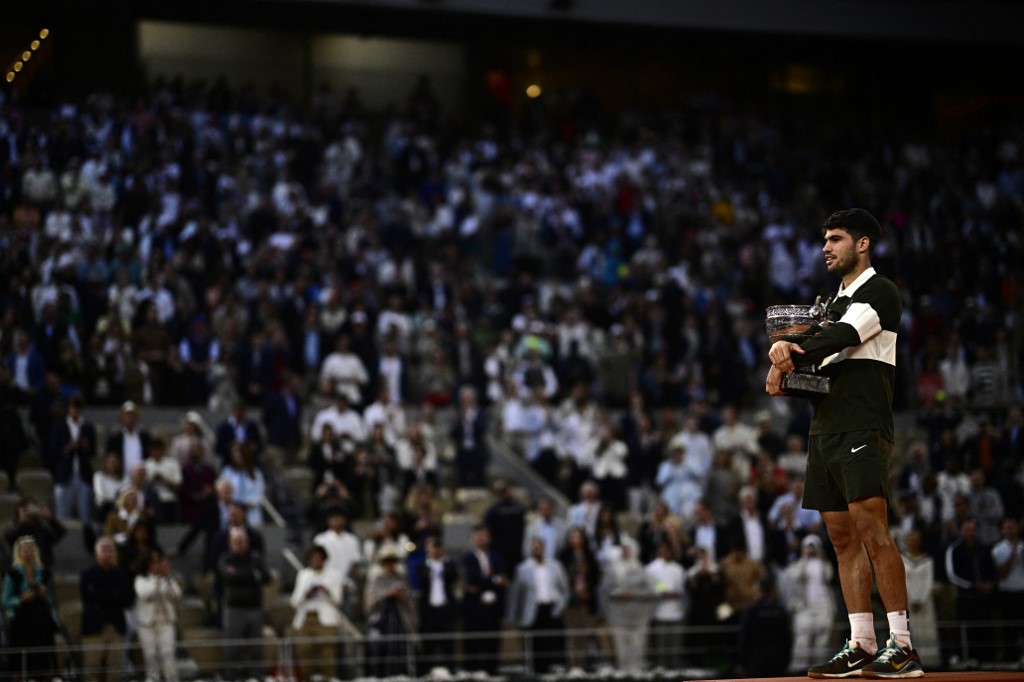
Every player who competes at Roland Garros — from the qualifier who loses in the first round of the main draw to the champion who lifts the trophy on Court Philippe-Chatrier — earns prize money.
The French Open distributes its total prize fund across every round of the main draw and the qualifying competition, creating a financial structure that rewards competitive achievement at every level of the tournament.
Understanding how Roland Garros prize money works — what each round pays, how the total prize fund has grown over time, how it compares to the other Grand Slams, and what the financial reality of competing at the French Open looks like for players at different levels of the professional game — is one of the most practically useful things a tennis follower can know about how the tournament operates.
The 2026 Roland Garros Prize Money
Roland Garros announced a prize money increase ahead of the 2026 edition — continuing the consistent growth of the French Open’s financial commitment to its competitors that has characterized the tournament across the past decade.
The specific figures for 2026 reflect both the tournament’s commercial growth and the French Tennis Federation’s stated commitment to rewarding competitive excellence at every level of the draw.
The approximate prize money distribution for Roland Garros 2026 singles competition:
| Round | Prize Money (approximate) |
|---|---|
| Champion | €2,400,000+ |
| Finalist | €1,200,000+ |
| Semifinalist | €700,000+ |
| Quarterfinalist | €400,000+ |
| Fourth Round | €230,000+ |
| Third Round | €130,000+ |
| Second Round | €80,000+ |
| First Round | €60,000+ |
Qualifying prize money is distributed separately across the three qualifying rounds — players who reach the final qualifying round but do not win through to the main draw earn meaningful prize money that contributes to the financial sustainability of careers at the margins of main tour access.
Important note: Prize money figures at Roland Garros are announced in euros and are updated annually. The figures above reflect the approximate 2026 distribution based on the French Tennis Federation’s announced prize money package. Always verify the current year’s specific amounts through the official Roland Garros website for precise figures.
How Roland Garros Prize Money Has Grown
The prize money history of Roland Garros reflects both the tournament’s commercial development and the broader evolution of professional tennis from the modest prize money structures of the early Open Era to the tens of millions available at modern Grand Slams.
When the Open Era began in 1968 — the first year that Roland Garros offered prize money to professional players — the total prize fund was modest by any standard. The champions of the first Open Era French Open received amounts that reflected both the early stage of professional tennis’s commercial development and the absence of the global television rights infrastructure that would eventually drive prize money to its current scale.
The growth of Roland Garros prize money across the subsequent decades tracked the broader commercialization of professional tennis — expanding as television rights fees grew, as global sponsorship infrastructure developed, and as the French Tennis Federation invested in the facility improvements and commercial relationships that support the tournament’s current financial scale.
Several specific milestones in Roland Garros prize money history deserve attention:
1973 — Equal prize money adopted. Roland Garros became the second Grand Slam to offer equal prize money to men and women — following the US Open’s pioneering 1973 decision — in a move that reflected both the advocacy of Billie Jean King and the WTA and the commercial evidence that women’s professional tennis generated comparable audience value. The other Grand Slams completed equalization later — Wimbledon and the Australian Open in the 1980s, with some sources citing later completion dates for full parity.
The 2000s and 2010s — acceleration of growth. The expansion of global sports television markets, digital rights, and sponsorship across the first two decades of the twenty-first century drove Roland Garros prize money growth at rates that earlier decades had not produced. The tournament’s total prize fund crossed the ten million euro threshold in this period and continued growing toward the tens of millions that the current edition offers.
Recent years — commitment to competitive compensation. The French Tennis Federation has consistently increased Roland Garros prize money in recent years — with the 2026 prize money increase continuing a pattern of year-on-year growth that has made the French Open competitive with the Australian Open and US Open in financial terms, though the specific comparisons vary by year and round.
How Roland Garros Compares to Other Grand Slams
The four Grand Slams each set their own prize money independently — and the specific amounts offered at each tournament vary by year as the individual tournaments negotiate their commercial arrangements and make their own decisions about prize money commitment.
The broad pattern in recent years has been relative parity across the four Grand Slams in terms of champion prize money — all four offering amounts in a broadly comparable range — while differences exist at the lower rounds where each tournament’s specific commercial calculations produce different outcomes.
The US Open has historically led in total prize fund size — the commercial advantages of the New York market, the tournament’s strong television deals, and the US Open’s large night session audiences generating commercial revenues that have supported the highest absolute prize money totals. Wimbledon’s commercial structure — the All England Club’s specific ownership and commercial arrangements — produces prize money comparable to the US Open at the champion level.
The Australian Open’s prize money has grown significantly in recent years as Tennis Australia has invested in the tournament’s commercial development. Roland Garros’s prize money growth has also been consistent, with the French Tennis Federation regularly announcing pre-tournament prize money increases that maintain the French Open’s competitive financial position relative to the other three majors.
For players competing across the full Grand Slam calendar — which all top professionals do — the prize money differences between the four majors are meaningful at the lower rounds but relatively modest at the champion and finalist levels where the amounts at all four tournaments are broadly comparable.
What the Prize Money Means at Different Levels
The financial significance of Roland Garros prize money varies dramatically depending on where a player is positioned in the competitive hierarchy — a fact that is easy to miss when discussion focuses exclusively on the champion’s check.
For the champion: The Roland Garros title produces the largest single prize money payment available in professional tennis — two million euros or more, which represents financial security regardless of results elsewhere across the season.
Combined with the ranking points, the sponsorship leverage, and the commercial opportunities that a Grand Slam title creates, winning Roland Garros is one of the most financially transformative single competitive results in professional sport.
For quarterfinalists and beyond: Players reaching the quarterfinals of Roland Garros earn prize money in the hundreds of thousands of euros — meaningful amounts that make a Roland Garros deep run one of the most financially significant results of a typical professional season.
A player ranked 50th in the world who reaches the Roland Garros quarterfinal has earned prize money equivalent to multiple Challenger tournament titles.
For first and second round losers: The first-round prize money at Roland Garros — approximately 60,000 euros or more — is the most significant financial aspect of the tournament for players who cannot consistently reach the later rounds.
Against the costs of professional competition examined in the costs article in the Analysis series, this amount may not cover the full expense of competing in Paris, but it represents a meaningful contribution to the financial sustainability of careers at the margin of main tour access.
For qualifiers: The financial structure of qualifying prize money — distributed across all three qualifying rounds — creates meaningful competition at the qualifying level where every round won produces both ranking points and financial return.
A player who wins through all three qualifying rounds and earns main draw entry has earned prize money from qualifying plus whatever the main draw produces — a combination that can represent a significant weekly financial result for players competing in the top 100–200 range.
The Equal Prize Money Story at Roland Garros
Roland Garros’s equal prize money commitment — the same amounts offered to men’s and women’s champions, finalists, and players at every round of the draw — is one of the tournament’s most significant institutional commitments and one whose history reflects the broader fight for financial equality in professional tennis.
The French Open’s 1973 adoption of equal prize money placed it among the sport’s earliest movers on prize money equality — a decision made in the same year as the US Open’s pioneering equalization and the founding of the WTA. The specific circumstances of the 1973 decision reflected both the advocacy of Billie Jean King and the commercial recognition that women’s professional tennis generated audience value comparable to men’s.
The consistency of equal prize money at Roland Garros across the subsequent five decades — maintained through periods when the commercial justifications for equality were contested and when pressure to reduce women’s prize money relative to men’s was present within tennis governance debates — reflects an institutional commitment that has been as significant as the initial decision.
The equal prize money commitment means that the financial stakes of competing at Roland Garros are identical for men and women at every round — the same first-round payment, the same quarterfinal payment, the same champion’s check. This structural equality is one of the clearest expressions of what the French Open believes professional tennis should value.
Prize Money and the Professional Tennis Economy
Understanding Roland Garros prize money in isolation misses the broader context of how Grand Slam prize money functions within the professional tennis economy.
Grand Slam prize money — and Roland Garros prize money specifically — is the most efficient points and financial accumulation opportunity in professional tennis. The 2,000 ranking points and the significant prize money available at Roland Garros make it the single most valuable competitive result available on the professional calendar.
Players structure their schedules, their preparation, and their physical management across the year partly around maximizing their Grand Slam performance precisely because the Grand Slam prize money and points are so much more significant than what other events offer.
The prize money gradient — the geometric increase from first round to champion — creates specific incentives that shape competitive behavior within the tournament. A player who loses in the third round has earned approximately 130,000 euros. A player who wins one more match and reaches the fourth round earns approximately 230,000 euros.
The 100,000 euro difference for a single match win is a powerful incentive to compete fully through the early rounds rather than managing effort in ways that might be rational across a full season but that the prize money structure makes financially irrational at the tournament level.
This prize money gradient also explains why the Roland Garros qualifier who upsets a higher-ranked player in the first round has earned a meaningful financial result regardless of their subsequent performance — the first-round prize money represents a genuine financial reward for the competitive achievement of winning through qualifying and then winning a main draw match.
Frequently Asked Questions
How much does the Roland Garros champion earn? Approximately 2.4 million euros or more in 2026 — the exact figure is announced by the French Tennis Federation before each tournament and increases most years.
Do men and women earn the same prize money at Roland Garros? Yes — Roland Garros has offered equal prize money to men and women since 1973, making it one of the earliest Grand Slams to adopt prize money equality.
Do qualifying players earn prize money? Yes — prize money is distributed across all three rounds of qualifying competition, with players earning meaningful amounts for each round won regardless of whether they reach the main draw.
Is Roland Garros prize money paid in euros? Yes — Roland Garros prize money is announced and paid in euros, reflecting the tournament’s French base and the euro being France’s currency.
How does Roland Garros prize money compare to Wimbledon and the US Open? The four Grand Slams offer broadly comparable prize money at the champion and finalist levels. Differences exist at lower rounds and in total prize fund size — the US Open has historically offered the largest total prize fund, though the specific comparisons change annually as each tournament announces its prize money.
Does prize money affect player ranking? No — prize money and ranking points are separate. The ranking points awarded at Roland Garros are fixed by the ATP and WTA points structures regardless of the prize money amount. However both prize money and ranking points make Roland Garros the most valuable single competitive event on the professional calendar.
Part of the Roland Garros series. Related: How Prize Money Works in Professional Tennis · Roland Garros Records — Titles, Matches, and Statistics · The Roland Garros Draw — How the French Open Bracket Works