

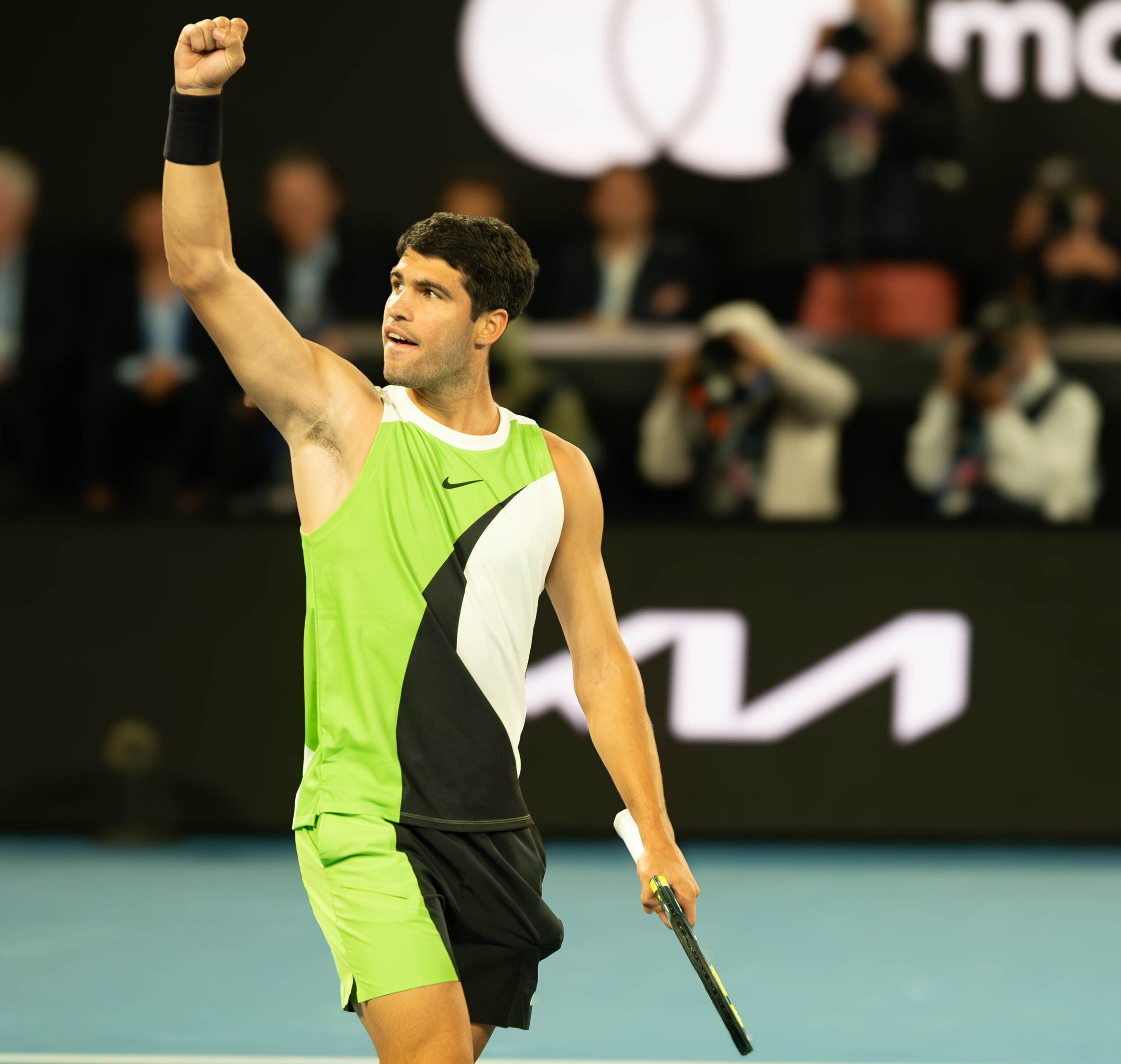
Carlos Alcaraz’s absence from Wimbledon is more than a missing marquee name in the draw. For the Spaniard himself, sitting out the grass-court major carries real and compounding consequences — for his ranking, for the title race, and for a US hard-court swing that now looms as the most precarious stretch of his season.
The ranking squeeze. The most immediate cost is positional. Alcaraz remains world No. 2 behind Jannik Sinner, but Alexander Zverev — freshly crowned at Roland Garros and surging — has closed to roughly 2,700 points and is now in clear pursuit of second place. The timing could hardly be worse. By skipping the grass season, Alcaraz leaves around 1,800 points unprotected from a year ago, when he reached the Wimbledon final and won the warm-up at Queen’s. Zverev, by contrast, has almost nothing to defend on grass after an early Wimbledon exit last year, meaning the German can gain ground while Alcaraz only sheds it.
The title race. Zooming out, the missed major widens the gap at the very top. Sinner has held a commanding lead at No. 1 and, with Alcaraz out, enters Wimbledon as the overwhelming favorite to add another Grand Slam and extend his advantage. Having already forfeited the 2,000 points from his Roland Garros title defense, Alcaraz has now effectively conceded two majors in a single season — a blow that all but ends any realistic hope of chasing Sinner for the year-end No. 1 ranking in 2026.
The bigger danger ahead. The grass losses, though, may not be the steepest. The real exposure waits on the North American hard courts, where Alcaraz must defend an enormous haul as the reigning champion at both the Cincinnati Masters and the US Open — roughly 3,000 points in the span of a few weeks. He will arrive cold, having not played a competitive match since mid-April, and the prospect of returning from a long layoff straight into his two biggest title defenses of the year is daunting. If the wrist or the rust shows, the damage to his ranking could dwarf anything the grass season inflicts.
The competitive cost. There is also momentum and opportunity to weigh. Alcaraz lost last year’s Wimbledon final to Sinner and will not get the chance to settle that score in 2026, while his rivals keep building — Zverev with a maiden Grand Slam in hand, Sinner stacking titles. And the ranking slide could follow him to New York: should he fall behind Zverev before he returns, a drop to No. 3 would likely mean a lower seeding at the very tournament he is defending, raising the risk of a tougher draw and a collision with Sinner or Zverev a round earlier than a top-two seed would face.
None of it is irreversible. Alcaraz has rebuilt from injury layoffs before, and a healthy wrist remains the only metric that truly matters to his team. But the cost of missing Wimbledon is no longer hypothetical. It is measured in points, in position, and in the mounting pressure of a title defense he will walk into without a single match under his belt.