

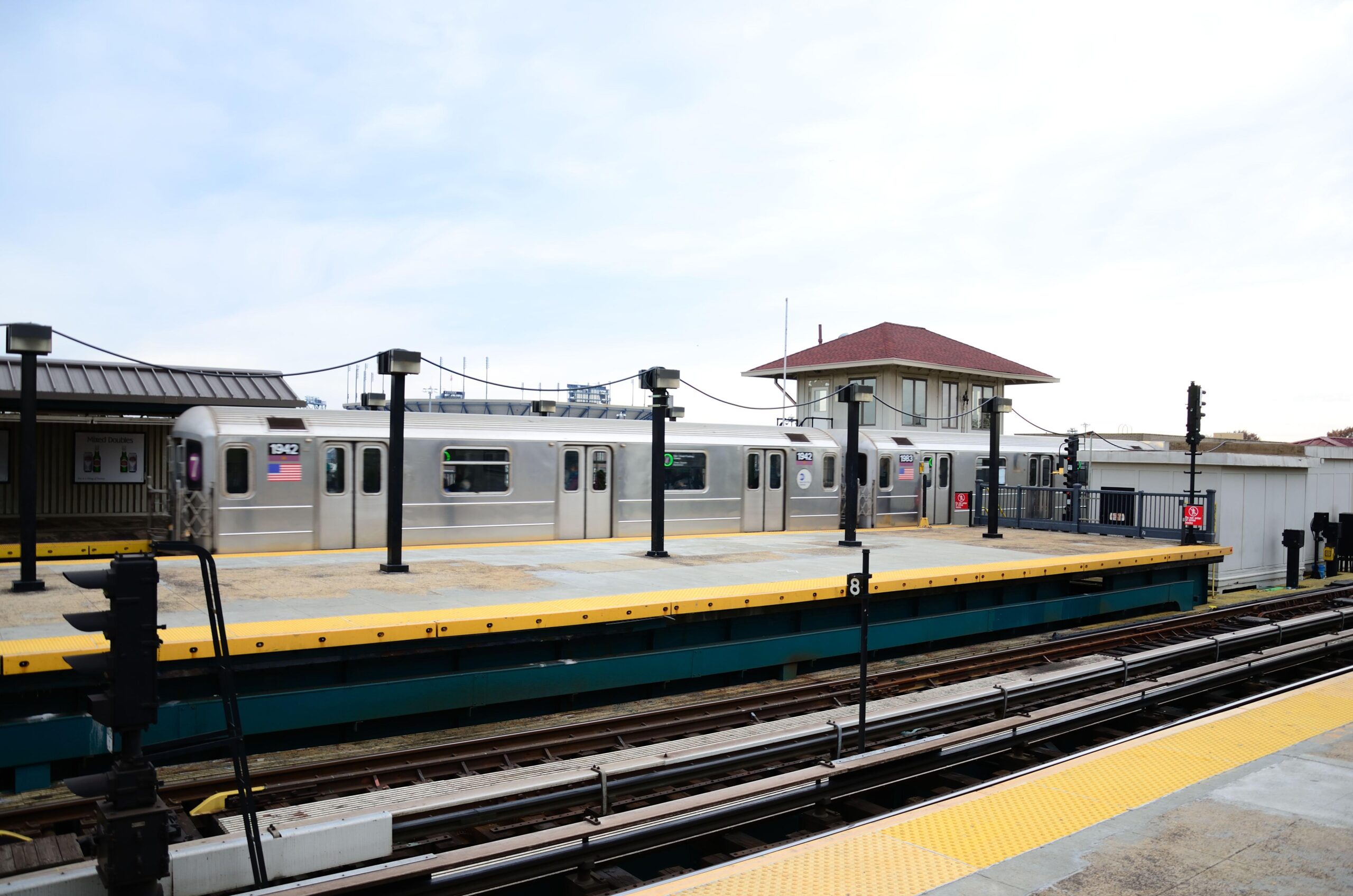
No subway line in the world has a more direct relationship with a Grand Slam tennis tournament than New York’s 7 train and the US Open. For nearly five decades, the 7 — the elevated subway line that runs from Hudson Yards in Manhattan through Queens to Flushing — has been the primary transportation artery for the largest tennis event on earth.
The line runs above the rooftops of Long Island City and Sunnyside, past the demographic patchwork of the most ethnically diverse urban corridor in the United States, and deposits passengers at Mets-Willets Point — a single stop on an elevated wooden platform that, during the final week of August and the first week of September, becomes the busiest tennis-specific subway station in the world.
Here is a complete guide to getting to the US Open: the 7 train, the LIRR, the practical routes from Manhattan, and the things every fan attending Flushing Meadows should know before they go.
The 7 Train: New York’s Tennis Line
The 7 train is the New York City Subway line that connects 34th Street-Hudson Yards in Manhattan to Flushing-Main Street in Queens, with the Mets-Willets Point station — the stop for the USTA Billie Jean King National Tennis Center — sitting one stop before the line’s terminus. The full route passes through Times Square-42nd Street, Grand Central-42nd Street, Queensboro Plaza, and a string of Queens neighborhoods before crossing Flushing Bay and arriving at the tennis grounds.
The 7 is a uniquely New York piece of infrastructure. It is one of only two elevated subway lines connecting Manhattan to Queens, running above street level for most of its Queens route, with the train tracks built atop steel structures along Roosevelt Avenue. The line’s stations function as both transportation infrastructure and unofficial community boundary markers: each stop along the 7 marks a transition between immigrant neighborhoods of different national origins. The 7 has been described, accurately, as the most ethnically diverse subway line in the world.
During the US Open, the 7 train transforms. Trains run more frequently than during normal service. The Manhattan-bound platforms at Mets-Willets Point are extended for crowd flow during peak post-match periods. Express service — denoted by a diamond around the 7 symbol — runs during rush hour and after sporting events. The MTA’s collective experience with managing the post-match Mets crowds at Citi Field, the adjacent baseball stadium, applies to US Open traffic as well — and produces some of the most efficient sporting-event crowd management in American transit.
How Long the Trip Takes
The travel time from various Manhattan starting points to Mets-Willets Point varies significantly depending on the time of day, the day of week, and whether you catch a local or express train. The general estimates:
- 34th Street-Hudson Yards (the 7’s Manhattan terminus): approximately 35–40 minutes on a local train, 25–30 minutes on the express
- Times Square-42nd Street: approximately 30–35 minutes on a local train, 22–28 minutes on the express
- Grand Central-42nd Street: approximately 25–30 minutes on a local train, 20–25 minutes on the express
- Queensboro Plaza (transfer from N/W lines from Astoria or Manhattan): approximately 20–25 minutes on a local train
- 74th Street-Broadway (transfer from E/F/M/R lines from Manhattan and Brooklyn): approximately 12–15 minutes on a local train
For most visitors arriving from Midtown Manhattan hotels, Grand Central or Times Square will be the starting station — and the journey will take between 25 and 40 minutes depending on service level. During peak hours and post-session crowd periods, expect the journey to run on the longer end of those ranges.
The 7 Train Fare and How to Pay
The standard New York City Subway fare in 2026 is $3.00 per ride, with reduced fares of $1.50 available to seniors and qualifying riders with disabilities. The fare applies to a one-way trip with free transfers to local buses within two hours.
The MetroCard, the magnetic-stripe payment system that defined New York subway access for nearly three decades, is no longer sold as of December 31, 2025. The current payment system is OMNY (One Metro New York), the MTA’s contactless tap-and-pay platform. OMNY accepts contactless credit and debit cards directly, payment via smartphone (Apple Pay, Google Pay), wearable devices, and dedicated OMNY cards (available from any subway station vending machine).
A useful feature for US Open visitors who plan to use the subway throughout the tournament: OMNY’s automatic seven-day fare cap. If you tap the same card or device for every ride, you’ll never pay more than $35 in a seven-day period — meaning a fan attending multiple US Open sessions can effectively secure unlimited subway rides for the week at the price of about 12 individual fares.
The Long Island Rail Road Alternative
In addition to the 7 train, the Long Island Rail Road (LIRR) provides direct service to Mets-Willets Point from Manhattan during the US Open. The LIRR Port Washington Branch — which normally runs through to Port Washington on Long Island — operates seasonal service to the Mets-Willets Point station during the tournament, with departures roughly twice an hour from Penn Station and Grand Central Madison.
The journey from Penn Station to Mets-Willets Point on the LIRR takes approximately 20–25 minutes — faster than the 7 train’s local service. Tickets cost between $4 (off-peak CityTicket fare) and $11 (peak fare), depending on when you travel.
For visitors prioritizing speed and comfort, the LIRR is often the better option than the 7 train. The trains are less crowded, the seats are more comfortable, and the journey is shorter. The trade-off is the higher fare (approximately three times the cost of a subway ride) and less frequent service.
For visitors prioritizing the most New York experience — the elevated tracks, the cross-section of Queens neighborhoods, the gritty character of a sporting event subway commute — the 7 train is the better option.
From Manhattan: The Common Routes
For visitors staying in Manhattan, the practical guide to reaching the US Open by public transit varies based on where you are starting from. Some of the most common routes:
From Midtown West (Times Square, Hudson Yards area): Take the 7 train directly from 34th Street-Hudson Yards or Times Square-42nd Street. The 7 stops every few blocks across Midtown and provides direct service to Mets-Willets Point.
From Midtown East (Grand Central, UN area): Take the 7 train from Grand Central-42nd Street. The 7’s platform is below the 4/5/6 platforms at Grand Central Terminal — follow signs for the Flushing-bound train.
From the Upper East Side or Upper West Side: Take the 4, 5, or 6 train (East Side) or the 1, 2, or 3 train (West Side) to Grand Central or Times Square, then transfer to the 7. The total journey from the Upper East Side at 86th Street to Mets-Willets Point takes approximately 45–55 minutes.
From Lower Manhattan (Financial District, Tribeca): Take the 4, 5, or 6 train uptown to Grand Central, or the N, Q, or R train to Times Square. Transfer to the 7. Total journey time is approximately 50–60 minutes.
From Penn Station: Take the LIRR Port Washington Branch directly to Mets-Willets Point. The journey is the fastest direct route from Midtown Manhattan to the US Open.
Driving and Parking
Driving to the US Open is possible but not generally recommended. Traffic on the approach to Flushing Meadows during peak tournament hours can extend journey times substantially. Parking on-site is limited and expensive, with the USTA operating the parking lots adjacent to the National Tennis Center for ticket holders willing to pay premium rates.
For visitors who do drive, the approaches to Flushing Meadows include the Long Island Expressway (I-495), the Grand Central Parkway, and the Whitestone Expressway. Parking at the USTA Billie Jean King National Tennis Center is limited; lot pricing typically ranges from $30 to $50 per day depending on proximity and availability. Some visitors park at Citi Field (the Mets’ stadium adjacent to the tennis center) when Mets home games are not scheduled, with a short walk to the tennis grounds.
Ride-share services (Uber, Lyft) offer pickup and drop-off at the USTA Billie Jean King National Tennis Center. Surge pricing during peak post-match periods can produce fares of $80–$150 from Manhattan, making them substantially more expensive than the subway alternative — though the door-to-door convenience can be worth the cost for fans staying at hotels with difficult subway access.
After the Match: The Late-Night Return
One of the practical realities of US Open attendance is that night sessions frequently run past midnight. Matches that begin at 7:00 p.m. and extend to five sets can finish at 1:00 a.m. or later — and visitors need to plan their return to Manhattan accordingly.
The 7 train runs 24 hours a day, so a late-night return to Manhattan is always possible. After night session matches, the 7’s frequency increases temporarily to accommodate the crowds leaving Mets-Willets Point, with trains running every few minutes during the immediate post-match window. The journey back to Manhattan takes 30–45 minutes depending on the time and service level.
The LIRR’s Port Washington Branch operates a more limited schedule late at night, with only periodic service to Mets-Willets Point. After approximately 1:00 a.m., the LIRR may not be a viable return option — meaning fans staying until the end of late-running matches should plan to use the 7 train rather than the LIRR for the return trip.
Ride-share services are available at the end of every session, with designated pickup zones at the USTA Billie Jean King National Tennis Center. Surge pricing at midnight can be substantial. Some visitors organize ride-share returns in groups to split the fare.
Practical Tips for the Journey
A few practical considerations that experienced US Open visitors recommend:
- Allow extra travel time. The 7 train and the LIRR can be delayed during peak periods, particularly when major matches generate large simultaneous crowd flows.
- Tap with the same OMNY card or device for every ride during a single visit. This activates the seven-day fare cap and ensures you don’t overpay if you make multiple US Open trips during the same week.
- Use the MTA app or Google Maps for real-time service updates. The 7 train can have weekend service changes, particularly for ongoing maintenance work on the line.
- The Mets-Willets Point station has limited accessibility for visitors with disabilities. The Manhattan-bound platform is partially ADA-accessible during sporting events, but visitors with mobility issues may prefer to use the LIRR (which has different but variable accessibility) or to take a ride-share to the venue.
- Bring water for the journey. The Mets-Willets Point station is exposed, and the walk from the platform across the boardwalk to the National Tennis Center can be hot in late summer.
The Bottom Line
The 7 train is the most authentic way to arrive at the US Open. It runs above the rooftops of one of the most ethnically diverse urban corridors in the world. It departs from Manhattan’s transit centers and arrives at Flushing Meadows in 25 to 40 minutes for $3.00. It produces a journey that is as much a part of the US Open experience as the cocktails, the night sessions, and the noise of Arthur Ashe Stadium.
The LIRR provides a faster, more comfortable alternative for visitors prioritizing speed and seat space. Ride-shares are an option for those willing to pay premium fares for door-to-door convenience. Driving is generally inadvisable, given the parking constraints and traffic.
For most visitors, the 7 train is the right choice — not just because it is the cheapest or the most convenient, but because it is the route New York intended for the US Open from the beginning. The tournament’s existence in Flushing Meadows is inseparable from the subway line that runs to it. To arrive at the US Open by 7 train is to arrive at the tournament in the way New York City designed it to be experienced.