

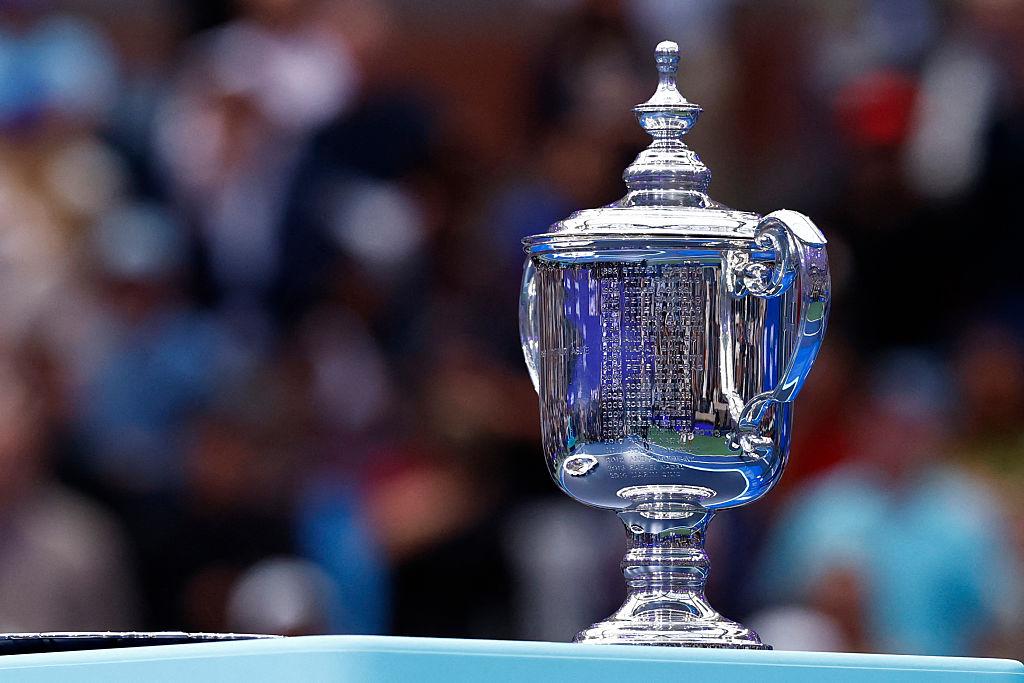
Every player who competes at the US Open — from the qualifier who falls in the first round at Flushing Meadows to the champion who lifts the trophy on Arthur Ashe Stadium — leaves New York with a cheque. The US Open prize purse has grown into the largest in tennis, and the way the USTA distributes that money tells the story of how American tennis has positioned itself commercially and ideologically over more than half a century.
This is a complete guide to what players earn at the US Open, how the figures are structured, and how the tournament’s prize money has evolved into what it is today. The current year’s figures sit in the snapshot below; the sections that follow explain the structure and the history behind them.
Season Snapshot — 2025 US Open Prize Money
- Total purse: $90 million — a 20% increase over 2024 and the largest purse in tennis history
- Singles champions (equal, men’s and women’s): $5,000,000 each — a 39% increase over 2024, the largest singles champion’s cheque at any of the four Grand Slams
- 2025 champions: Carlos Alcaraz (def. Jannik Sinner) and Aryna Sabalenka (def. Amanda Anisimova)
Singles prize money by round (2025):
| Round | Prize money (USD) |
|---|---|
| Champion | $5,000,000 |
| Finalist | $2,500,000 |
| Semi-finalist | $1,260,000 |
| Quarter-finalist | $660,000 |
| Round of 16 | $400,000 |
| Round of 32 (third round) | $237,000 |
| Round of 64 (second round) | $154,000 |
| Round of 128 (first round) | $110,000 |
Doubles prize money by round (2025, per pair):
| Round | Prize money (USD, per pair) |
|---|---|
| Champions | $1,000,000 |
| Finalists | $500,000 |
| Semi-finalists | $250,000 |
| Quarter-finalists | $125,000 |
| Round of 16 | $75,000 |
| Round of 32 | $45,000 |
| Round of 64 | $30,000 |
- Mixed doubles (2025): $1,000,000 to the winning pair, over a revamped 32-team draw played in the tournament’s first week
- Qualifying (2025): $27,500 for a first-round qualifying loss; $57,200 for reaching the final qualifying round
How the four Slams compared in 2025:
- US Open: $90M total / $5M singles champions
- Wimbledon: ~$73M total / £3M (~$4M) singles champions
- Roland Garros: ~€56M total / €2.55M (~$3M) singles champions
- Australian Open: ~A$96.5M total / A$3.5M (~$2.25M) singles champions
How the US Open Distributes Its Money
The US Open’s distribution model is distinctive in two ways. First, it consistently leads the four Grand Slams in headline prize money — both the largest total purse and the largest individual cheques. Second, the USTA has, in recent years, made aggressive double-digit percentage increases across nearly every round, including substantial growth in the earliest rounds and qualifying.
Every player who reaches the main singles draw — including those who lose in the first round — takes home a six-figure sum. The first-round prize is one of the highest at any Grand Slam, reflecting a deliberate USTA strategy to support lower-ranked players who travel to compete on the North American hard-court swing. The distribution is, in shape, top-heavy at the champions’ end and increasingly bottom-heavy at the qualifying and first-round end — a structure the USTA has pushed further in recent years than any other major.
Equal Pay for Men and Women — The 1973 Milestone
The US Open was the first Grand Slam — and the first sporting event of any kind — to offer equal prize money to men and women, adopting the policy in 1973. That year, John Newcombe and Margaret Court each received $25,000 in winners’ prize money. The other Grand Slams would not follow for decades: Roland Garros adopted equal pay in 2006, Wimbledon in 2007, and the Australian Open in 2008.
The 1973 decision was driven by Billie Jean King, who had publicly threatened a boycott by the top women players if the prize money was not equalised. King met with US Open tournament director Bill Talbert in 1972 with three things: data from a fan survey showing women’s matches were nearly as popular as men’s, a list of female stars (including Chris Evert, Rosie Casals, Evonne Goolagong, Margaret Court, and herself) prepared to skip the 1973 tournament, and a $55,000 commitment from sponsor Ban Deodorant to help fund the gap between men’s and women’s prize pools.
The USTA accepted. The policy took effect at the 1973 US Open and has been maintained without exception every year since — the longest-standing equal-pay policy in any major professional sport.
The 2006 renaming of the USTA National Tennis Center as the USTA Billie Jean King National Tennis Center — the first major sports venue in the United States named after a woman — was a direct acknowledgment of King’s role in pushing tennis toward equal pay before any other professional sport had even seriously considered the question.
Qualifying, Wheelchair, and Other Events
The US Open’s qualifying tournament, held on-site at the Billie Jean King National Tennis Center during Fan Week before the main draw begins, distributes a substantial purse of its own — among the highest qualifying payouts at any Grand Slam (current figures in the snapshot). A player who comes through qualifying and then loses in the first round of the main draw combines both cheques into a meaningful total, reflecting the USTA’s deliberate strategy of putting more money into the early rounds, where lower-ranked players need it most.
Beyond the singles and doubles events, the US Open’s prize money also covers gentlemen’s and ladies’ wheelchair singles and doubles, the quad wheelchair events, and junior competitions, with wheelchair purses growing substantially in recent years as the USTA has expanded both draw sizes and total prize money. The tournament additionally provides hotel accommodation, per diem allowances, and travel expenses to a wide range of competitors — direct costs not reflected in the headline figures but materially significant to the financial picture of competing at Flushing Meadows.
How the US Open’s Purse Compares to the Other Grand Slams
The US Open’s purse sits at the top of the four-Slam standings, and has done so consistently in recent years (the current-year comparison is in the snapshot). As the final Grand Slam of the season — and the largest in capacity and attendance — the USTA has positioned the tournament as the commercial leader of the four-major calendar. Wimbledon, Roland Garros, and the Australian Open have each closed part of the gap over the past decade, but the US Open has retained both the highest total purse and the highest singles cheque.
The History of Prize Money at the US Open
The US Open paid no prize money at all for its first 87 years. From 1881 to 1967, the tournament was contested by amateur players only, and the trophy was the only reward. The Open Era arrived in 1968, and that year’s tournament — the first after the tournament’s renaming from the U.S. National Championships — became the first to distribute prize money.
The total purse in 1968 was $100,000. The men’s champion was slated to receive $14,000, the women’s champion $6,000.
But the 1968 men’s champion, Arthur Ashe, never collected his prize money. Ashe was still officially classified as an amateur — he had served as a U.S. Army officer through the tournament and was not yet professionally registered. Under the rules of amateur status, he could not accept the $14,000 cheque. Instead, the winner’s prize was awarded to the runner-up, Tom Okker, who held the status of “registered player” — an amateur permitted to accept prize money at certain events.
Ashe took home a per-diem payment of $20 per day for his appearance at the tournament — a total of roughly $280 for becoming the first Black man to win a Grand Slam singles title. Virginia Wade, who won the women’s title that year, did collect her $6,000 — making her, by an accident of amateur eligibility, the first US Open champion to actually receive a winner’s cheque in the Open Era.
The numbers from that first year now read almost as a different sport. By 1973, equal prize money meant Newcombe and Court each receiving $25,000. The men’s and women’s champions earned six figures for the first time in 1983 ($120,000). They earned seven figures for the first time in 2003 ($1 million each). The decades since have seen continuous growth, broken only briefly by the COVID-19 pandemic in 2020 — when the US Open went ahead behind closed doors and total prize money was reduced from the projected total but still distributed to players who competed in the modified tournament.
What Players Actually Take Home
The prize money headlines do not, of course, reflect what players ultimately keep. US Open prize money is paid in US dollars, and players from outside the United States face tax obligations in both their home countries and the US — though double tax treaties typically prevent the same income from being taxed twice.
After tax, agent fees, coaching costs, travel, and the considerable expenses of competing on tour, the practical take-home for a US Open competitor is meaningfully less than the headline figure. For champions, this is largely academic — a multi-million-dollar cheque remains a transformational sum after every deduction. For first-round losers, the six-figure cheque, while substantial, can be largely absorbed by the costs of a season on the road.
The Honey Deuce and the Economics of the Tournament
The Honey Deuce — the tournament’s signature cocktail, sold at $23 per drink in 2025 — generated roughly $17 million in revenue that year, more than enough on its own to cover the $14.1 million paid to all 128 first-round singles losers combined. The economics of the tournament have, in this respect, become a story of their own, and a useful illustration of why the USTA can keep pushing the purse higher: the event’s commercial engine now dwarfs the prize money it distributes.
The Bottom Line
The US Open’s prize money has grown from $100,000 in 1968 — when Arthur Ashe couldn’t even collect his $14,000 cheque — to the nine-figure purse of today, the largest total and the largest individual singles cheque of the four Grand Slams. Equal pay, settled in 1973, remains the longest-standing equal-pay policy in any major professional sport. And the shape of the distribution — top-heavy at the champions’ end, bottom-heavy at the qualifying and first-round end — continues to shape who can afford to be a professional tennis player at all.
Related reading
- US Open Records — Titles, Matches and Statistics
- US Open Guide — Format, Hard Courts, Draws and Prize Money
- What Makes Arthur Ashe Stadium So Important
- How the Billie Jean King Cup Works
- Grand Slams Explained