

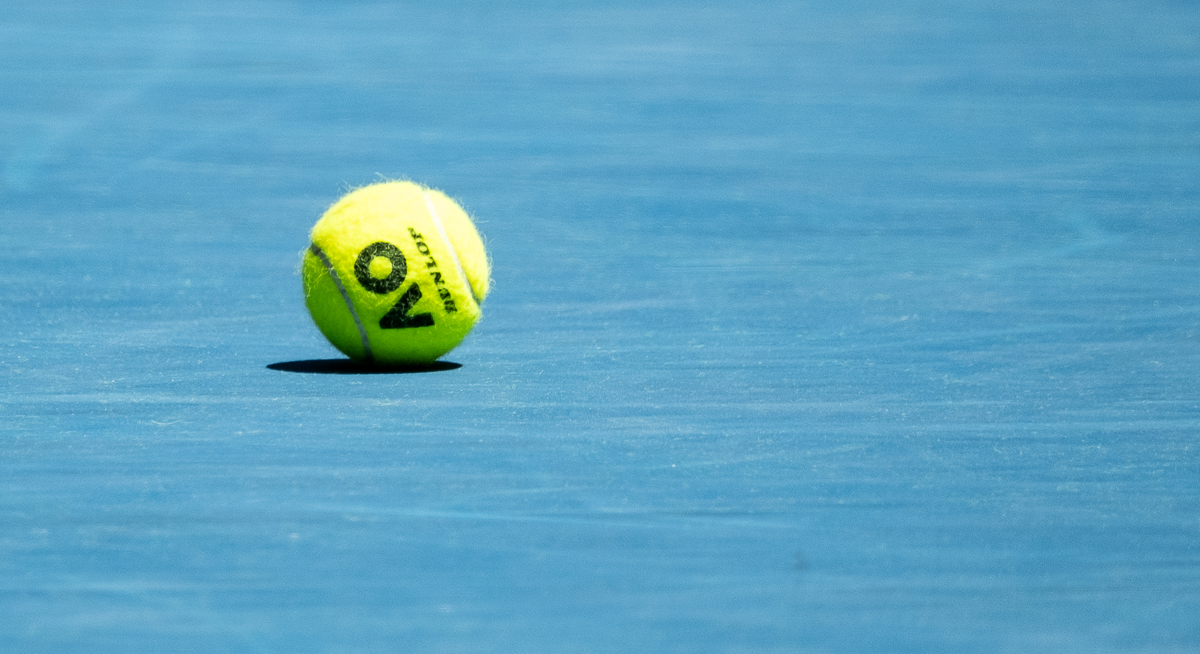
If you’ve ever sat courtside at a tennis match — or watched one on television and noticed a fan sheepishly lobbing a ball back toward a ball kid — you’ve witnessed one of the sport’s quieter traditions.
In almost every other major spectator sport, a ball that ends up in the stands is a souvenir. A foul ball at a baseball game, a home run, a stray puck flicked over the glass — those go home with whoever catches them. Tennis is different. When a ball flies into the crowd, the expectation is that you give it back.
It looks like etiquette. It is etiquette. But underneath the politeness sits a genuinely practical reason rooted in how the sport is played at the highest level.
The ball is not a souvenir, it’s equipment in active rotation
A professional tennis match doesn’t just use one ball, or even one set. The International Tennis Federation rules permit tournaments to set their ball-change policy in advance, and at Grand Slams and tour events the schedule is strict: a fresh set of six balls is introduced after the first seven games of a match, and then again every nine games after that. The first change comes early because the warm-up counts as roughly two games’ worth of wear.
Why so often? Because tennis balls don’t stay new for long. The felt covering fluffs and wears with every strike. The internal pressure — around 14 psi when the can is opened — drops gradually through microscopic cracks in the rubber core.
Hard courts grind the felt; clay clogs it with dust; humidity changes how heavy the ball feels. Researchers studying ball change in Grand Slams have estimated each ball absorbs roughly 105 racket or ground impacts before it’s swapped out. Used balls fly slower, spin less, and bounce lower than fresh ones.
That gap between new and old is the whole reason fans can’t pocket a stray.
Why one missing ball is a problem
At any moment during a match, the six balls in play are all at roughly the same point in their life cycle. They’ve been struck the same number of times, lived through the same rallies, sat in the same conditions. If one of them sails into row four and doesn’t come back, the player suddenly has five aged balls and, potentially, one new replacement — and that replacement plays differently.
Andre Agassi summed it up bluntly years ago: a fresher ball is a faster ball, and not knowing whether the ball coming at you is new or worn would be a serious disadvantage to the returner.
It’s why you’ll see players scrutinise a couple of balls before serving, choose one, and toss the other back to the ball kid. They’re matching wear. They’re picking the ball that behaves the way they expect.
A souvenir-hunting spectator, however well-intentioned, breaks that consistency.
The famous exception: Arthur Ashe Stadium
Tennis isn’t completely rigid about this. In 2005, the USTA announced that fans at the US Open could keep stray balls hit into the stands at Arthur Ashe Stadium — a deliberate fan-friendly gesture, given that the official souvenir ball at the time was selling for $34. The carve-out applied only to Ashe; on the outer courts, the throw-it-back convention remained.
It’s a useful reminder that the rule isn’t about preserving ceremony. It’s about preserving fairness. At a venue large enough to manage immediate ball replacement without disrupting the match, the calculus changes. Elsewhere, it doesn’t.
The unspoken contract
Most fans never think about ball pressure or felt wear when they reach for a stray. They throw it back because that’s what everyone else does, and because the chair umpire occasionally pauses play and asks for it.
But the etiquette has a logic. Tennis is a sport where a millimetre of bounce or a fraction of a second of flight time decides points. The six balls on court are calibrated, in a sense — used together, worn together, replaced together.
When you toss one back, you’re not just being polite. You’re keeping the match honest.