

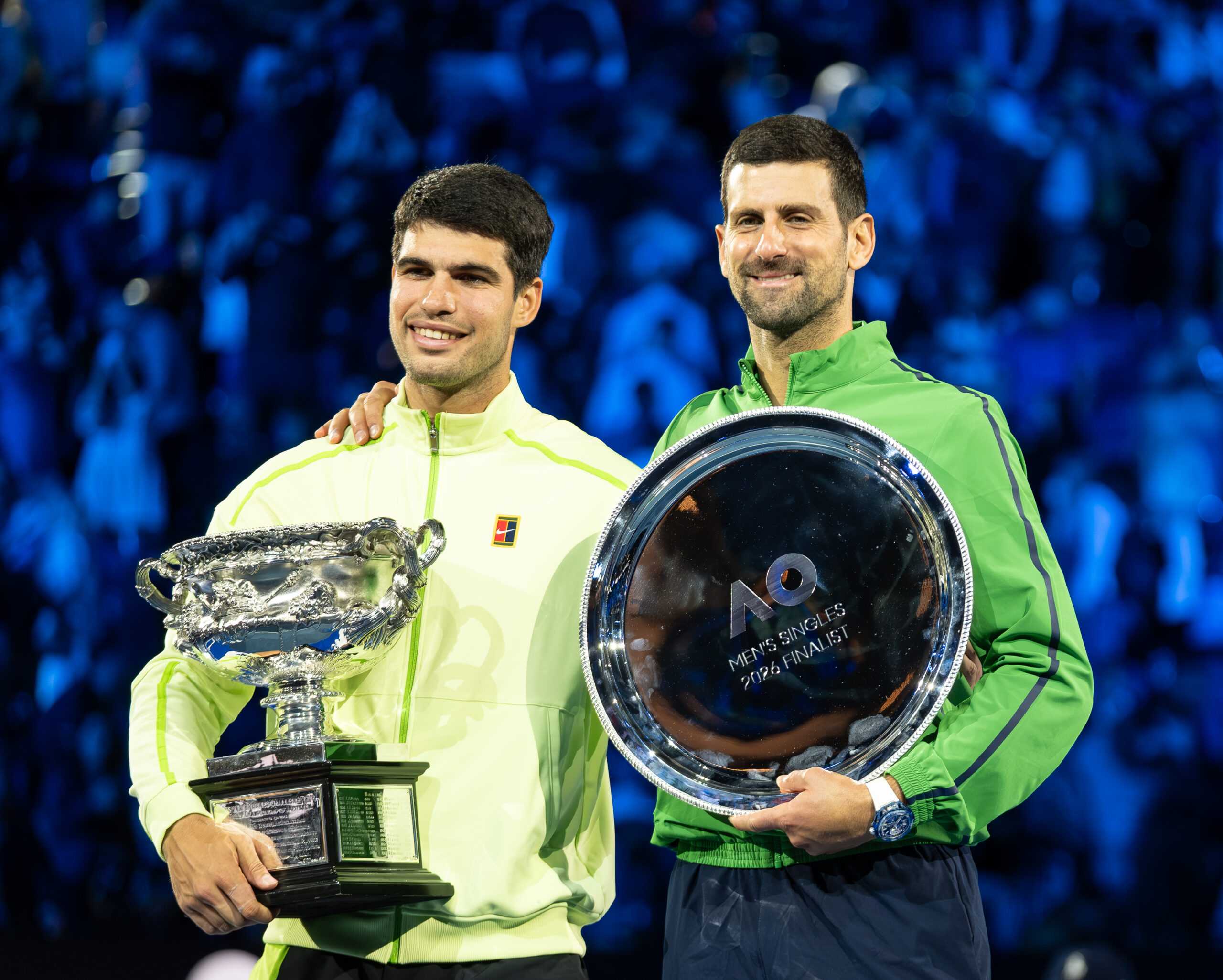
World number one is the most coveted individual distinction in professional tennis. It is not awarded for winning a single tournament, however prestigious. It is not given for a single brilliant season, however dominant.
It is earned through the accumulation of ranking points across the full professional calendar — at Grand Slams, at Masters events, across multiple surfaces on multiple continents — in sufficient quantity to surpass every other professional player on the planet at a specific moment in time.
Understanding what it actually takes to reach world number one — the specific points required, the competitive results those points demand, the surfaces and events that must be navigated, and the competitive environment that any aspiring number one must overcome — is one of the most illuminating ways to understand what professional tennis excellence actually requires.
The Points Threshold: What Number One Actually Requires
The first thing to understand about reaching world number one is that there is no fixed points target. The number of ranking points required to hold the top position fluctuates constantly — it depends on what the current number one is accumulating, what other elite players are earning, and how the 52-week rolling window is distributing points across the field at any given moment.
In practical terms, the points total required to hold the ATP number one ranking in the modern era has typically ranged from approximately 8,000 to 16,000 points, depending on the specific competitive period and the performance of the field.
A player in a relatively open competitive environment — where no single dominant player is accumulating extraordinary Grand Slam and Masters results simultaneously — might reach number one with 8,000 to 10,000 points. In a period of intense competition at the top of the rankings, the threshold can be significantly higher.
The WTA rankings operate on the same structural principle with broadly similar point thresholds, though the specific figures fluctuate differently based on the competitive depth and dominance patterns of the women’s tour in any given period.
What this means practically is that a player cannot simply set a fixed points target and plan their schedule around reaching it. They must earn enough points to be ahead of whoever is currently number one — a moving target that requires tracking not just their own accumulation but the accumulation and point expiration patterns of their primary rivals.
The Grand Slam Requirement
No player has ever reached world number one in the Open Era without performing at a high level at Grand Slams. This is not simply because Grand Slams offer the most ranking points — though they do, at 2,000 for the winner — but because the 52-week rolling system requires sustained excellence across the full calendar, and a player who performs poorly at four of the year’s most important events cannot accumulate the points required for number one regardless of how well they perform elsewhere.
The specific Grand Slam results required to reach and hold number one vary by player and by era, but certain patterns are consistent across the ranking system’s history.
Winning Grand Slams is the most efficient path. A Grand Slam title produces 2,000 points — equivalent to winning eight ATP Masters 1000 events, or winning sixteen ATP 500 events. No other single result in professional tennis produces comparable ranking points in a single week, which is why players who win Grand Slams consistently are almost always near the top of the rankings.
Reaching Grand Slam semifinals and finals consistently is the minimum requirement. A player who reaches the quarterfinals of every Grand Slam earns 400 points per event — 1,600 points from Grand Slams alone across a full season. A player who reaches the semifinals of every Grand Slam earns 800 points per event — 3,200 points from Grand Slams.
These figures represent the floor of Grand Slam performance that sustains a top-10 ranking. Reaching number one typically requires significantly exceeding this floor — winning at least one Grand Slam and reaching the later rounds of the others.
Early Grand Slam exits are catastrophically expensive. A player who loses in the first round of a Grand Slam earns 10 points. A player who loses in the second round earns 50. Against the 2,000 points available to the winner, an early exit leaves a player with a fraction of what the event could have provided. Repeated early Grand Slam exits make reaching number one effectively impossible regardless of performance elsewhere on the calendar.
The Masters 1000 Requirement
Below Grand Slams, the ATP Masters 1000 events — nine events spread across the calendar year — are the most important ranking points source for any player with number one ambitions. The WTA 1000 events play an equivalent role on the women’s tour.
A Masters 1000 title produces 1,000 ranking points. Reaching the final produces 650. The semifinals produce 400. These figures make Masters events the second most efficient ranking points source available, and a player who performs consistently well across the Masters calendar can accumulate a significant ranking base even without Grand Slam titles.
The specific challenge of the Masters 1000 requirement for reaching number one is that eight of the nine events are mandatory for ATP players — meaning a player who skips a mandatory Masters event without an approved exemption receives a zero-point entry for that event in their ranking calculation.
This mandatory structure means that reaching number one requires not just excelling at selected events but performing competitively across the full range of surfaces and competitive contexts that the Masters calendar represents.
A player aspiring to number one must navigate clay court Masters events in Monte Carlo, Madrid, and Rome even if their game is better suited to hard courts. They must compete at the indoor hard court events in Paris and elsewhere even if their preferences run to outdoor conditions.
The mandatory structure of the Masters calendar ensures that number one cannot be reached through selective excellence on preferred surfaces — it requires competitive competence across everything.
The Surface Versatility Requirement
One of the most consistently underappreciated requirements for reaching world number one is surface versatility — the ability to accumulate ranking points on clay, grass, and hard courts simultaneously rather than concentrating excellence on a single surface.
The professional calendar distributes the year’s most important events across all three major surfaces. Hard court Grand Slams — the Australian Open and the US Open — offer 4,000 combined points. The clay court Grand Slam — Roland Garros — offers 2,000. The grass court Grand Slam — Wimbledon — offers 2,000.
A player who cannot compete at a high level on clay loses access to 2,000 Grand Slam points from Roland Garros alone, plus the points from the clay court Masters events — a total potential deficit of 4,000 to 5,000 points per season that no amount of hard court excellence can fully compensate for.
This surface distribution is the reason that true all-court players — those who can compete for Grand Slam titles on all three surfaces — dominate the rankings history of both tours. Federer, Djokovic, Nadal, Graf, Navratilova, Williams — all of them combined at least adequate performance on their least preferred surface with genuine excellence on their strongest surfaces. Pure surface specialists can reach the top 10 and occasionally higher, but sustained number one dominance requires the full portfolio.
The one significant exception in the modern era is Rafael Nadal — whose clay court dominance was so extreme that it compensated for relatively limited hard court and grass court performance at the championship level.
But even Nadal won the Australian Open twice and the US Open four times — demonstrating that his hard court game was genuinely competitive at the highest level even if it was less dominant than his clay court performance.
The Consistency Requirement
Reaching number one for a single week is one achievement. Holding it across an extended period — the kind of number one reign that defines careers — requires something that Grand Slam performance alone cannot provide: consistent results across the full professional calendar, week after week, across the middle-tier events that produce the ranking points base that Grand Slam peaks sit on top of.
A player who wins two Grand Slams but performs poorly at Masters events, loses in early rounds of ATP 500 tournaments, and accumulates modest points across the calendar’s smaller events will reach the rankings based on their Grand Slam peaks but struggle to hold the position against rivals who are more consistent across the full range of events.
The 52-week rolling system is specifically designed to reward this consistency — it counts a player’s best results across multiple events rather than just their best single result, which means that accumulating good results at many events is more efficient in ranking terms than producing a spectacular result at one event and mediocre results everywhere else.
For players aspiring to number one, this means schedule management is a core competency — deciding which events to enter, how many events to play across the season, and how to balance competitive participation with physical recovery in ways that maintain the consistency the ranking system rewards.
Too few events means too few points accumulation opportunities. Too many events means physical wear that eventually degrades the quality of results across the calendar.
The Physical Requirements
The physical requirements for reaching world number one are more demanding than at any previous point in the sport’s history — and the specific physical profile that number one competition requires has evolved significantly with the game itself.
Modern professional tennis at the highest level is played faster, with heavier topspin, from more aggressive court positions, and across longer seasons than at any point in the sport’s history.
The physical profile required to compete consistently at that level — the explosive athleticism for court coverage, the rotational strength for topspin generation, the endurance for five-set Grand Slam matches in extreme conditions, the recovery capacity for back-to-back competition across an eleven-month season — is genuinely extraordinary.
Djokovic’s physical preparation — his extraordinary flexibility, his dietary discipline, his specific training approach to the movement demands of his inside-the-baseline game — is the most discussed example of the physical investment that number one competition requires in the modern era.
His ability to compete at the highest physical level across the full eleven-month calendar, managing the accumulation of a long career without the injury disruptions that have affected his contemporaries, reflects a physical preparation approach that treats the body as a precision instrument rather than simply a vehicle for tennis technique.
The players who have spent the most weeks at number one in the modern era — Djokovic, Graf, Williams — are also among the most athletically exceptional players in the sport’s history. The correlation is not coincidental. Sustained number one competition at the modern game’s physical demands requires physical excellence as a baseline condition.
The Mental Requirements
The mental requirements for reaching and holding world number one are as demanding as the physical and technical requirements — and in some ways more difficult to develop because they are less visible and less easily trained.
Performing under maximum pressure consistently. Number one competition requires producing best-level tennis at the moments when the stakes are highest — Grand Slam semifinals and finals, tiebreaks at 6–6 in deciding sets, break points in the closing games of important matches.
A player who performs well in the early rounds of tournaments but struggles under maximum pressure in the later rounds cannot accumulate the points that number one requires, because the largest point values are concentrated at the stages of tournaments where pressure is highest.
Managing the psychological weight of being the target. Every player on the tour is trying to beat the world number one. The number one faces opponents who are specifically motivated and specifically prepared for the challenge of beating the best player in the world.
Maintaining competitive excellence while being everyone’s most desired scalp — while every opponent raises their game against you — requires a specific psychological resilience that not every technically gifted player possesses.
Recovering from losses without extended disruption. Professional tennis produces losses regularly, even for the best players in the world. Federer lost matches. Djokovic loses matches. Williams lost matches.
The difference between players who sustain number one reigns and those who hold the position briefly is not the absence of losses but the ability to recover from them quickly — to process a defeat, identify what went wrong, and return to competitive excellence in the next event without carrying the psychological weight of the loss forward.
Sustaining motivation across a long season. An eleven-month competitive calendar that requires consistent elite performance across dozens of events, on multiple surfaces, against a full range of opponents — some familiar, some new — demands motivational resources that are genuinely difficult to maintain.
Players who lose motivation mid-season, who struggle to find competitive meaning in smaller events after Grand Slam victories, or who find the sustained demands of number one competition psychologically exhausting will see their ranking reflect the motivational fluctuations in their results.
What Separates Number One Contenders From Number One Holders
The distinction between a player who reaches number one and one who holds it for an extended period illuminates the specific qualities that sustained number one competition requires beyond the initial achievement.
Many players have reached number one briefly — for a week or a few weeks — on the strength of a specific hot streak of results that temporarily elevated their ranking above everyone else’s. Fewer players have held the position for extended consecutive periods. And only a handful have accumulated the total weeks at number one that define the all-time records examined elsewhere in this series.
The qualities that distinguish extended number one holders from brief number one visitors are not primarily technical — the technical excellence required to reach number one is broadly similar to the technical excellence required to hold it. They are primarily the qualities of consistency, physical resilience, mental durability, and schedule management that sustain elite performance across time rather than just at peak moments.
Djokovic’s 428-plus weeks at number one are not simply the product of being technically better than everyone else across those weeks.
They are the product of physical preparation that kept him competitive across nearly two decades of professional tennis, mental resilience that recovered quickly from every defeat, schedule management that balanced competitive participation with recovery, and tactical adaptability that allowed him to adjust his game as the competitive environment evolved around him.
The Competitive Environment: What Aspiring Number Ones Must Overcome
Reaching number one does not happen in a vacuum — it requires surpassing whoever currently holds the position and accumulating more points than every other player in the world simultaneously. The specific competitive environment that any aspiring number one faces therefore shapes what reaching the top position requires in any given era.
A player who might have been number one in a less competitive era may spend their entire career in the top 5 or top 10 in a more competitive period — not because they are less excellent in absolute terms but because the standard of competition at the top of the rankings is higher.
The Big Three era is the clearest example — Andy Murray, who won three Grand Slams and held number one for 41 weeks, would have been the dominant player in men’s tennis in virtually any era other than the specific one in which he competed.
For aspiring number ones in the current era, the competitive environment requires not just abstract excellence but specifically surpassing the current generation of elite players — each of whom has their own specific strengths, surface preferences, and ranking profiles that must be overcome.
The path to number one runs directly through whoever is currently at the top of the rankings, and understanding the specific competitive challenge that represents is part of what any genuine number one contender must navigate.
The Complete Picture
Reaching world number one in professional tennis requires the convergence of multiple demanding requirements simultaneously — Grand Slam results that produce the largest available points blocks, Masters event consistency that builds the ranking base those peaks sit on, surface versatility that prevents large points deficits on any surface, physical resilience that sustains competitive quality across an eleven-month season, mental durability that recovers from defeats without extended disruption, and schedule management that balances competitive participation with recovery.
No single one of these requirements is sufficient alone. A player with exceptional Grand Slam results but inconsistent Masters performance will not accumulate enough points. A player with extraordinary physical resilience but technical limitations will not produce the results that rankings require. A player with perfect schedule management but insufficient motivation will not perform consistently enough to sustain a number one position.
The players who have reached and held world number one are the ones who managed to maintain all of these requirements simultaneously across extended periods of professional competition — finding the specific combination of technical excellence, physical durability, mental resilience, and competitive consistency that the world’s most demanding individual athletic ranking requires.
That combination is genuinely rare. It is supposed to be. World number one is supposed to be hard to reach and harder to hold. The complexity of what it requires is exactly what makes it the distinction it is.
Part of the Rankings series. Related: Who Has Spent the Most Weeks at World Number One in Tennis History · The Youngest Players to Reach World Number One in Tennis History · How ATP Rankings Work — The Complete Guide