

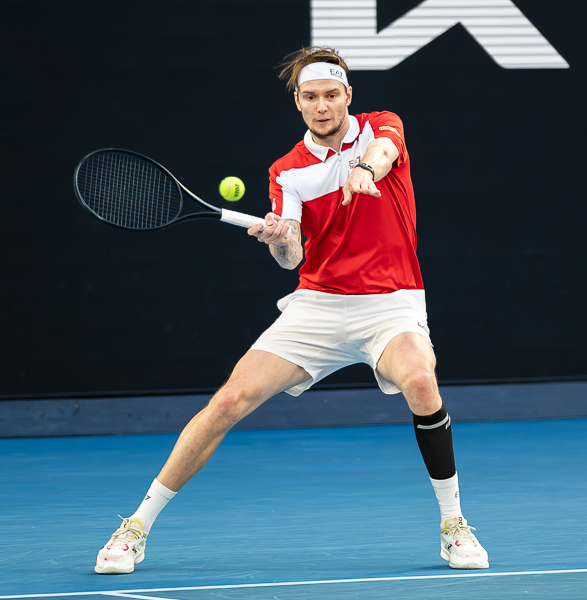
Alexander Bublik plays tennis with an edge of improv. One point looks like a standard serve-plus-one pattern. The next looks like a trick shot. He can be brilliant, baffling, and unplayable within the same set.
His identity starts with a big serve, but what makes him different is the willingness to break normal tennis logic. Underarm serves, sudden net rushes, drop shots from nowhere, and aggressive second-serve choices are not occasional flourishes. They’re part of the system.
The trade-off is volatility. Bublik can beat elite players because he disrupts rhythm. He can also lose early because his style depends on timing, confidence, and a certain level of buy-in from his own mood.
Quick facts
- Tour: ATP
- Plays: Right-handed, two-handed backhand
- Identity: Serve-led shotmaker with high variance and heavy improvisation
- Best-known surfaces: Hard courts and faster conditions
- Signature trait: Unpredictable point patterns and bold serving choices
Snapshot
Bublik is a disruptor. He wins by refusing to play the match his opponent prepared for. The serve gives him constant scoreboard access. The variety creates chaos in rallies. When those two things sync, opponents often look uncomfortable even if they’re “better” on paper.
His matches are rarely normal. That’s his advantage and his risk.
Playing style and strengths
Serve as a weapon and a statement
Bublik’s serve is big enough to carry entire sets. He can pile up free points and force opponents into tiebreak territory quickly.
Variety that breaks rhythm
He uses drop shots, slices, changes of pace, and net attacks to keep opponents from settling into a repeatable pattern. Against baseline grinders, that can be especially effective.
Comfortable playing fast
On quicker courts, his serve and first-strike instincts gain leverage. Short points suit him. He doesn’t want 25-ball rallies. He wants four-shot exchanges where he controls the script.
Fearless shot selection
Sometimes it’s exactly what wins him matches. He’ll go for plays other players won’t attempt, which can flip momentum instantly.
Pressure points and vulnerabilities
- High-variance tennis means quick swings. A few bad games can decide the match.
- When he loses patience, his margin can disappear fast.
- Against disciplined opponents who absorb the chaos and keep returning balls, his risk level can turn against him.
His hardest matchups are often against players who stay calm, defend well, and refuse to be baited into playing his kind of tennis.
Career milestones
Bublik’s career value has often shown up in big, memorable weeks where he catches rhythm and produces results above expectation. His ability to take out elite opponents is real, because his game doesn’t respect ranking hierarchy in the way conventional styles do.
The challenge has been consistency. His best tennis can win titles and major matches. The task is making that level show up more often.
Grand Slam record in context
At Grand Slams, Bublik’s path is usually about draw and rhythm. His serve can carry him through early rounds, especially on faster courts, and his variety can frustrate seeded players who expect routine patterns.
Over best-of-five, the question becomes patience. To go deep, he has to win multiple matches without relying entirely on one “hot set.” When he finds that balance, he becomes a genuine upset threat.
Ranking and season context
Bublik’s ranking profile tends to swing because high-variance players have higher peaks and lower floors. A single strong week at a big event can move him sharply. A few early losses can stall momentum.
What to watch next
With Bublik, watch two things:
- First-serve percentage and how many “free” points he’s getting
- Whether he’s choosing smart aggression instead of constant chaos
When those align, he becomes one of the most dangerous floaters in any draw because opponents can’t get comfortable.