

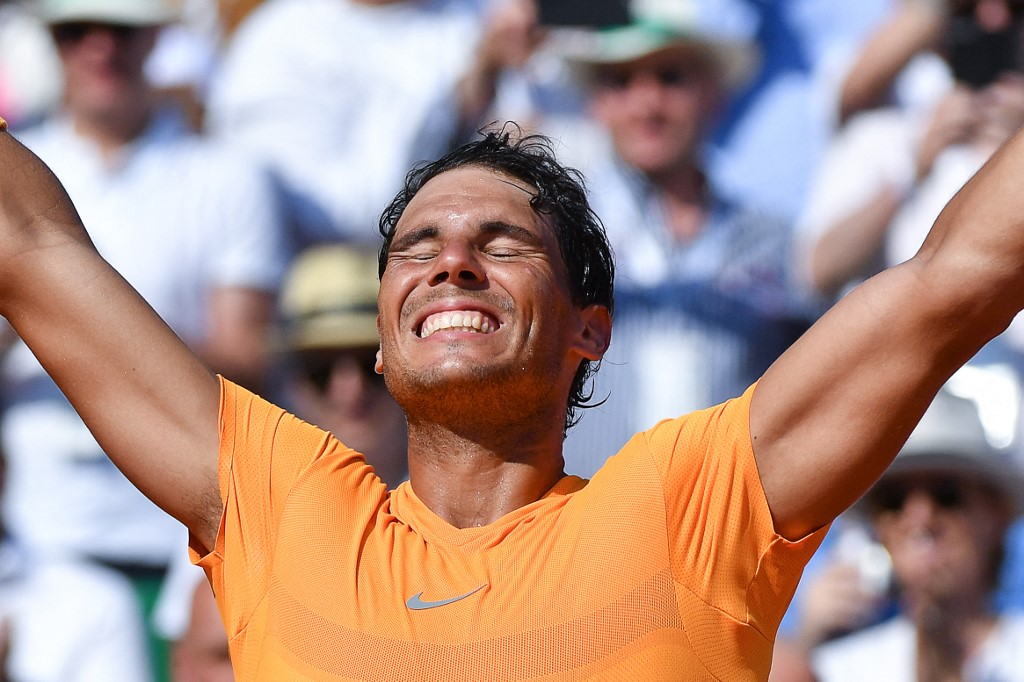
Roland Garros crowned a new champion on Sunday, and for the second straight year the name on the Coupe des Mousquetaires was not Rafael Nadal’s. The symbolism was hard to miss. Days earlier, on May 29, Netflix had released RAFA, a four-part documentary series revisiting the final act of the most decorated clay-court career the sport has known — a reminder, arriving in the middle of the tournament he owned for two decades, of exactly how large a figure has left the stage.
Nadal retired in November 2024 at the Davis Cup Finals in Malaga, losing his last singles match and watching Spain bow out in the quarterfinals. It was an understated end for a player whose career was anything but. He turned 40 on June 3, and the Netflix series — produced by Skydance Sports and directed by Academy Award nominee Zach Heinzerling — uses his injury-shadowed 2024 farewell season as the lens for a fuller story, drawing on personal archive footage and access to the team around him.
The clay. No single statistic captures Nadal, but his Roland Garros record comes closest: 14 titles and a career mark of 112 wins against just 4 losses in Paris. The nickname “King of Clay” undersells it. Across his career he won more than 60 titles on the surface, and for the better part of fifteen years a healthy Nadal at the French Open was treated less as a favorite than as a near-certainty. It is, by most measures, the most dominant run any athlete has produced at a single event in the history of professional sport.
Beyond the dirt. The lazy reading of Nadal as a clay specialist never survived contact with his record. He won 22 Grand Slam titles in total — alongside the 14 in Paris, two Wimbledon crowns (2008, 2010), two Australian Opens (2009, 2022) and four US Opens (2010, 2013, 2017, 2019) — completing the career Grand Slam in 2010. He took Olympic singles gold in Beijing in 2008 and doubles gold in Rio in 2016, led Spain to multiple Davis Cup titles, spent 209 weeks at World No. 1, and finished his career with 92 titles and more than 1,080 match wins.
The rivalries. Nadal’s story cannot be separated from the two men who defined an era with him. His rivalry with Roger Federer, all contrast in style and temperament, produced some of the sport’s most-watched matches, including the 2008 Wimbledon final still cited as the greatest ever played. With Novak Djokovic he contested the most-played rivalry in men’s tennis, a relentless physical and mental duel that ran for nearly two decades. That the three of them pushed one another to 22, 20 and now 24 majors respectively is the central drama of modern tennis — and a measuring stick the current generation is still chasing.
The body. What the documentary foregrounds, and what defined the back third of his career, is the physical cost. Chronic foot trouble, knee tendinitis, abdominal and hip injuries — Nadal played through, and eventually around, a catalogue of problems that would have ended most careers far earlier. The 2022 Australian Open title, won from two sets down in the final after months of doubt over whether he would play again, stands as the purest distillation of the trait that made him: a refusal to concede a point, a match, or a career until there was nothing left to give.
That refusal is also what made the ending feel right to the people closest to it. The series leaves the impression of a champion who stopped not because the will faded but because the body finally set terms he could not renegotiate.
The legacy. Nadal leaves the game as one of its three greatest male players and, on clay, arguably the most dominant figure any surface has ever produced. His influence is already visible in the players who grew up watching him — most directly in compatriot Carlos Alcaraz, who in 2026 completed his own career Grand Slam at 22 and now carries much of the weight Nadal once did for Spanish tennis. RAFA arrives as both a tribute and a full stop, and its timing during Roland Garros only sharpens the point: the tournament goes on, a new generation wins it, and the standard against which clay-court greatness is measured remains, for now, entirely his.