

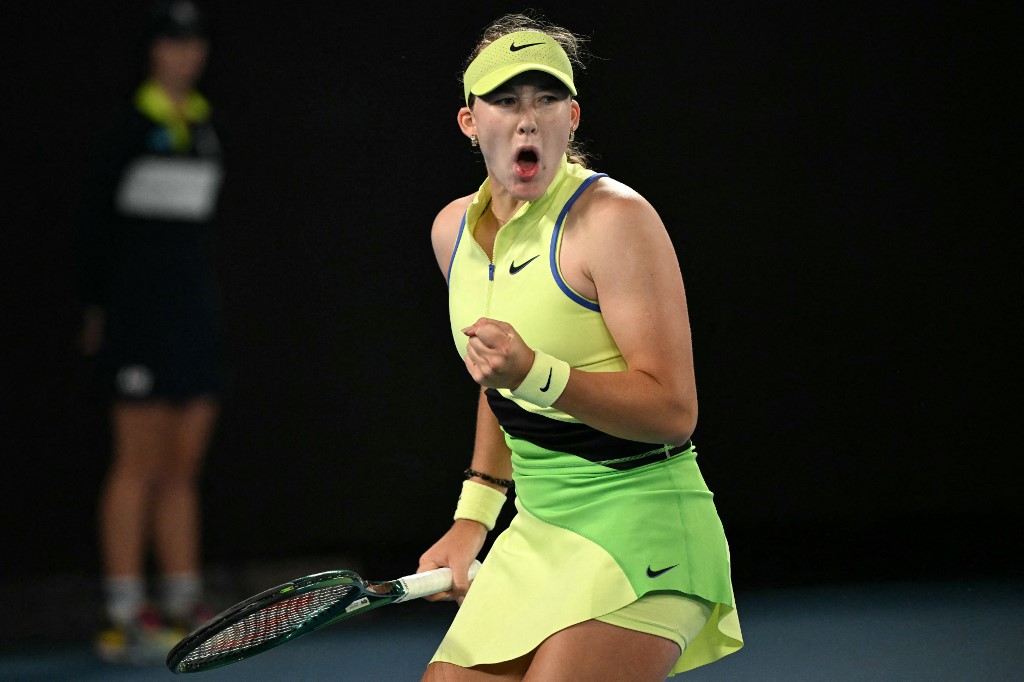
Mirra Andreeva’s game doesn’t look like a temporary surge. It looks built. Even early in her career, she has the traits that usually take years to develop: calm point construction, clean technique under pressure, and an instinct for when to be patient and when to turn the screw.
She isn’t defined by one overwhelming weapon. She’s defined by completeness and decision-making. That profile tends to age well, especially as strength and experience arrive.
Quick facts
- Tour: WTA
- Plays: Right-handed, two-handed backhand
- Identity: All-court baseliner with mature patterns and strong composure
- Best-known surface: Hard courts (with skills that translate across surfaces)
- Signature trait: Playing “older” than her age in match management
Snapshot
Andreeva wins by understanding the point. She doesn’t panic for winners. She builds pressure, changes direction cleanly, and makes opponents hit extra shots without giving them the ball they want.
What stands out is how little she gives away. For a young player, her error profile often looks controlled. That’s why her rise has felt sustainable.
Playing style and strengths
Point construction and patience
She’s comfortable building rallies and waiting for the correct opening rather than forcing it. That makes her hard to bait into mistakes.
Clean redirection
Andreeva can change direction off both wings without a big telegraph. She redirects pace and shifts the rally’s geometry quickly.
Composure in tight games
She tends to look steady in pressure moments. That is rare and valuable, especially as matches move toward tiebreaks and late-set return games.
Defensive competence that supports offense
She moves well and defends intelligently, which allows her to stay in points long enough to turn defense into advantage.
Pressure points and vulnerabilities
- As she faces heavier pace consistently, she’ll need even more first-strike damage to avoid being pinned behind the baseline.
- Against elite power hitters, she may be tested on whether she can take time away rather than simply absorb it.
- Like most young players, physical durability across the full calendar is part of the learning curve.
Her next evolution is usually about adding weight to the ball while keeping the same calm decision-making.
Career milestones
Andreeva’s early career has been defined by rapid progress and the ability to hold her own against established players sooner than most. She has looked like a player arriving not just with talent, but with structure.
The key milestone for her phase is turning “breakthrough runs” into “expected results.”
Grand Slam record in context
At Grand Slams, Andreeva’s style is suited to two-week tennis because it’s based on repeatable patterns and controlled risk. She’s less dependent on a single hot streak than many early-career players.
The next step at majors is building enough first-strike offense to handle opponents who can hit through neutral patterns.
Ranking and season context
Andreeva’s ranking trajectory is shaped by consistency: if she continues to win the matches she should win and occasionally break through in big weeks, the climb can be fast.
What to watch next
Watch how she handles:
- big servers who reduce return rhythm
- opponents who take time away early
- the physical grind of back-to-back tournament weeks
If her calm pattern play holds through those tests, she’ll become a permanent presence at the top of the WTA.