

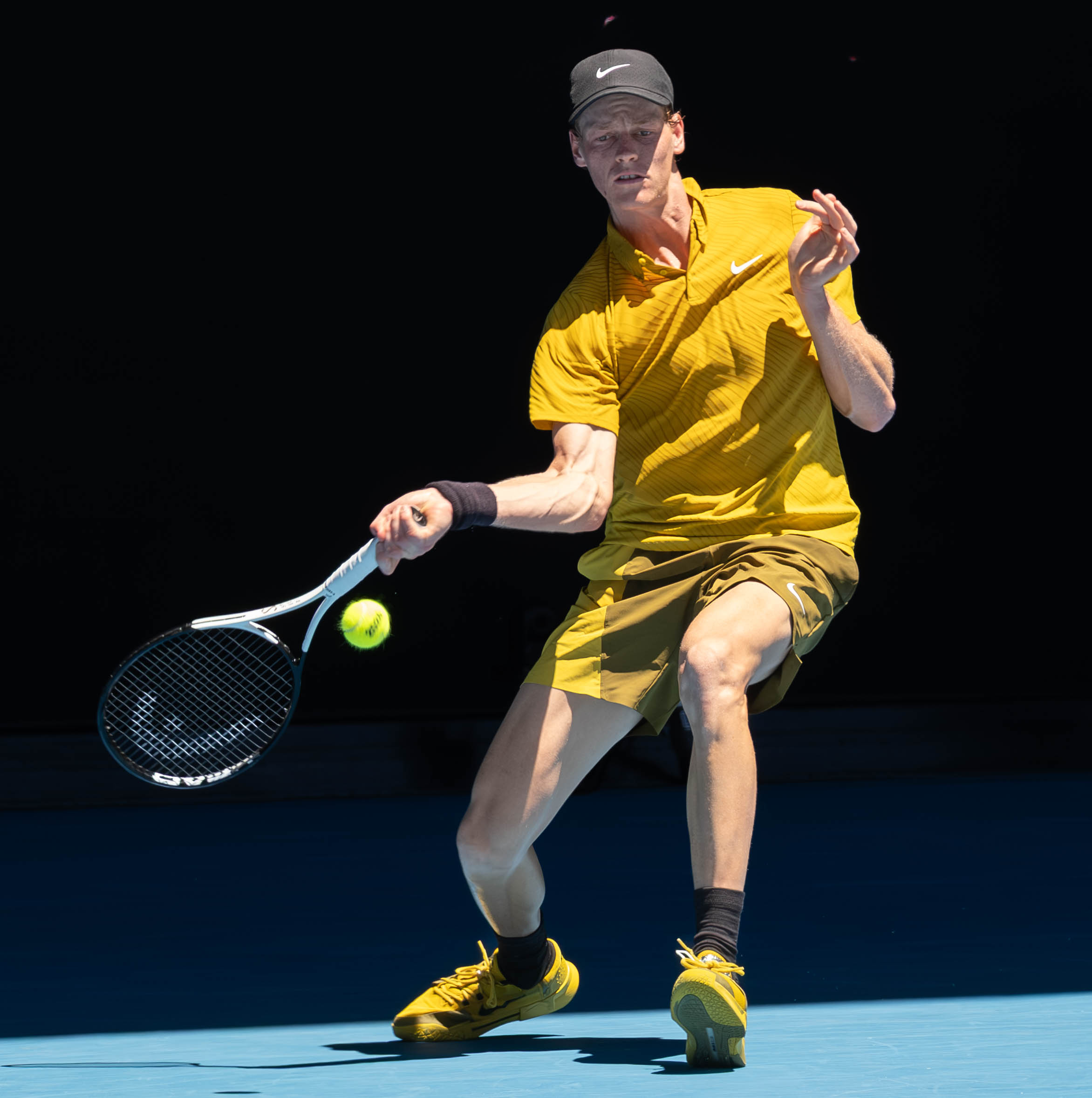
He has barely lost all year, and the one defeat that landed rewrote the story of his season. Jannik Sinner’s 2026 reads, on the surface, like a procession — a return to the top of the world rankings, a near-untouchable march through the season’s biggest non-major events, and a place in the record books few players ever reach. Then came one afternoon in Paris that proved even the most relentless competitor on tour is human.
A flawless run through the Sunshine Double
The foundation of Sinner’s year was laid on hard courts, and laid without a crack. He swept Indian Wells and Miami back to back — the Sunshine Double — without dropping a single set, becoming the first man to complete that double cleanly. Folded into the same run was a still rarer feat: three consecutive Masters 1000 titles without conceding a set, a streak that began at the 2025 Paris Masters and carried through the desert and Florida. Along the way he surpassed Novak Djokovic’s record for most consecutive sets won in Masters 1000 play.
The milestones piled up faster than the opponents could trouble him. With his maiden Indian Wells crown, Sinner became the youngest man in the Open Era to have won every hard-court Big Title — multiple majors, the Masters 1000 events and the ATP Finals. He also notched his 350th tour-level win, the first man born in the 2000s to reach the mark. By the time the clay season arrived, the question was not whether he would win, but whether anyone could take a set.
History on clay and the Career Golden Masters
Clay was supposed to be the surface where the field clawed back ground. Instead Sinner annexed it. At Monte-Carlo he captured his first Big Title on the dirt, beating Carlos Alcaraz in the final — a statement on the Spaniard’s best surface. Madrid followed. Then, on home clay in Rome, he completed the set that had eluded all but one player before him: the Career Golden Masters, victory in all nine Masters 1000 events, a feat previously achieved only by Djokovic.
The Rome title also made Sinner the first man to win six consecutive Masters 1000 events and the first to claim five in a single season. It was, by any reasonable measure, the most dominant stretch of one-tournament-after-another tennis the men’s tour had seen in years. He arrived in Paris on a career-best winning run, the clear favorite for the one prize still missing from his collection.
The afternoon in Paris
Roland Garros was the title Sinner did not have, and the trophy that would have completed the Career Grand Slam — a distinction held by only six men in the Open Era. For two sets and a break, it looked routine. Leading qualifier-ranked Juan Manuel Cerundolo by a set and 5-1 in the third, Sinner was a handful of games from the quarterfinals. Then his body gave out. Cramping badly, he twice failed to serve out the contest, took an off-court medical timeout, and won just two of the final twenty games as Cerundolo surged to a 3-6, 2-6, 7-5, 6-1, 6-1 victory.
It was the biggest upset of the season and a jarring exception to everything around it. Cerundolo, competing as the world No. 56, became the first man to oust the top seed at Roland Garros before the third round since Karol Kucera in 2000. The defeat ended Sinner’s 30-match winning streak and his bid for the career Slam in a single afternoon. It also echoed a near-miss from January, when Sinner cramped during a third-round scare at the Australian Open and survived only because the roof closed under the heat rule. In Paris there was no reprieve, and the limits of even an iron constitution were laid bare.
The Alcaraz axis
No account of Sinner’s season is complete without the rival who defines it. While Sinner was assembling his Masters monopoly, Alcaraz was collecting majors — completing his own Career Grand Slam at the Australian Open to become the youngest man ever to win all four. The contrast frames the era: Sinner the metronomic week-to-week machine, Alcaraz the slam-stage showman. Their 2025 Roland Garros final, in which Sinner held three championship points before losing in five sets, and the Wimbledon final weeks later, which Sinner won, remain the rivalry’s high-water marks. With Alcaraz sidelined by a wrist injury, the next chapter will have to wait.
A Wimbledon defense
That absence sets up the most inviting reset of Sinner’s year. He returns to the All England Club as the reigning champion, having beaten Alcaraz for the 2025 title, and with the Spaniard out injured he stands as the overwhelming favorite when play begins on 29 June. Grass rewards his flat, early-struck ball and first-strike serve, and the nature of the Paris defeat — physical rather than tactical — does little to dent his standing on a faster, lower-bouncing surface.
The season has already delivered records that will outlast the year, punctuated by one loss that will be replayed for just as long. The question heading into the fortnight is not whether Sinner is the man to beat. It is whether the body that failed him in Paris holds up across a best-of-five fortnight — and whether anyone left in the field can find what Cerundolo did.