

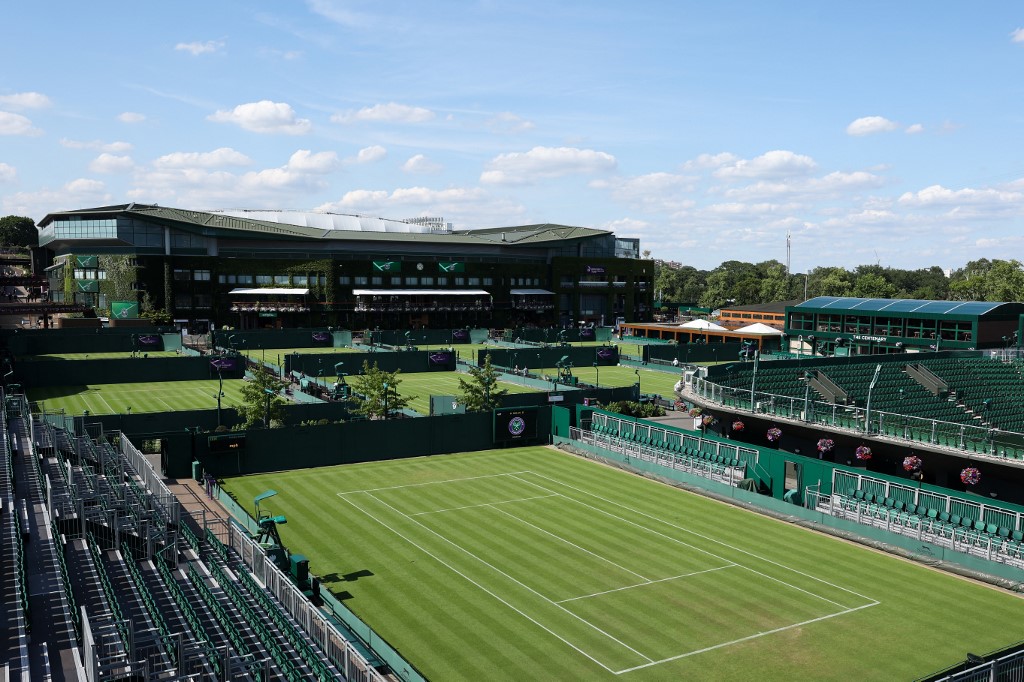
The world’s oldest tennis tournament was founded by accident — or, more precisely, as a fundraising exercise to repair a broken pony roller. From those origins on a few acres of suburban meadowland in 1877, Wimbledon has grown into the most prestigious tennis event in the world, the only Grand Slam still played on grass, and the institution against which every other tennis tournament is measured.
Here is the complete story of how Wimbledon was founded, how it survived two world wars and a pandemic, and how the All England Lawn Tennis and Croquet Club built the most enduring tradition in sport.
A Croquet Club in Suburban London
The story begins not with tennis but with croquet. On 23 July 1868, six gentlemen met at the offices of The Field — a weekly country and sports magazine — and founded the All England Croquet Club.
Croquet was, in mid-Victorian England, enjoying a national craze, and the founders believed there was demand for a dedicated club organising competitions and championships at the highest level.
After a year-long search for suitable grounds, the committee leased four acres of meadowland between the London and South Western Railway and Worple Road in Wimbledon — at the time an outer suburb of London. The first rental year cost £50, rising in subsequent years to £75 and then £100. The club held its first croquet championship in 1870.
The early years were difficult. Public interest in croquet was waning faster than the committee had anticipated, the rent was rising, and the club found itself in financial trouble within five years of its founding. By 1875, something had to change.
The Introduction of Lawn Tennis
In February 1875, the All England Croquet Club voted to introduce a new sport at its grounds. Lawn tennis — an outdoor adaptation of real (royal) tennis, patented in 1874 by Major Walter Clopton Wingfield and originally called Sphairistikè (a Greek word meaning “skill at playing ball”) — had begun to capture British attention as a more vigorous and socially flexible alternative to croquet.
The proposal came from Henry Jones, a sports writer who published in The Field under the pen name “Cavendish” and had joined the club in 1869. Jones argued that adding tennis would attract new members, increase revenue, and save the club from its financial difficulties.
The proposal was accepted. One of the club’s croquet lawns was converted to a tennis court. Within two years, tennis had grown from a sideline activity into the club’s primary attraction.
The First Championship: July 1877
In April 1877, the club renamed itself the All England Croquet and Lawn Tennis Club. On 2 June 1877, at the suggestion of secretary and founding member John H. Walsh, the committee made a fateful decision: to organise a lawn tennis championship for amateurs.
The motivation was practical. The club needed money to repair a broken pony-drawn lawn roller used to maintain the grass courts. A championship, the committee reasoned, would generate enough revenue to cover the repair and demonstrate the new sport’s competitive potential at the same time.
Henry Jones drew up a new code of laws for the event — replacing the rules previously administered by the Marylebone Cricket Club, which had been the governing body of real tennis. The new code defined the court dimensions, the height of the net, the scoring system, and the basic rules of play.
With minor adjustments (the net was lowered the following year; the service line was moved closer to the net), the laws Jones drafted in 1877 are recognisably the rules of modern tennis.
The inaugural Championship began on 9 July 1877. Twenty-two men entered the Gentlemen’s Singles — the only event held. Entry cost one guinea (£1.05); spectators paid one shilling for admission. A temporary stand was erected on the grounds to accommodate around 200 spectators.
The final, originally scheduled for 16 July, was postponed by four days due to rain — a precedent the tournament has maintained, more or less involuntarily, ever since. On 19 July, Spencer Gore, a 27-year-old racket and cricket player from Wandsworth, defeated William Marshall 6–1, 6–2, 6–4 to become the first Wimbledon champion. He received a silver cup worth 25 guineas, donated by the publisher of The Field.
It would be Spencer Gore’s only Grand Slam title. He famously offered the following assessment of the sport’s future shortly afterwards: “Lawn tennis will never rank among our great games.”
The Early Years: 1878–1884
In 1878, the rules were refined. The height of the net was reduced from 4 feet 9 inches at the posts to 3 feet 6 inches — closer to the modern dimensions. Underarm serving, which had been universal at the first Championships, gradually gave way to overarm serving as players discovered its tactical advantages.
The tournament’s structure used what was called the Challenge Round system, which had been adopted from real tennis and would remain in place until 1922. The reigning champion did not play through the draw to defend his title.
Instead, all other competitors played in the “All-Comers’ Singles” to determine a challenger, who then played the previous year’s champion in a single match — the Challenge Round — to determine that year’s overall champion. The defending champion’s entire involvement in the tournament consisted of a single match against whoever had emerged from the rest of the draw.
The Renshaw twins — William and Ernest — dominated the men’s game in the 1880s. William won the men’s title seven times between 1881 and 1889, becoming the first player to popularise the powerful overhead serve and aggressive net play. His brother Ernest won the title in 1888. Their style of play transformed the sport from a slow, gentlemanly pastime into something approaching the technically sophisticated game that exists today.
The Arrival of Women: 1884
In 1884, the All England Club introduced two new competitions: Ladies’ Singles and Gentlemen’s Doubles. The men’s doubles championship was transferred from the Oxford University Lawn Tennis Club, where it had been contested since 1879.
The inaugural Ladies’ Singles drew thirteen competitors. The 19-year-old Maud Watson, a vicar’s daughter from Birmingham who had been competing in tournaments since she was 16, won the inaugural title by defeating her older sister Lilian Watson 6–8, 6–3, 6–3 in the final — playing in a white corset and ankle-length petticoat that was, by modern standards, almost as much a feat of physical endurance as the match itself. Watson received a silver flower basket valued at 20 guineas.
She would win again the following year, becoming the first multiple Wimbledon women’s champion. In 1886, with the Challenge Round system extended to the women’s competition, she was defeated by Blanche Bingley — beginning a women’s tournament tradition of competitive rivalry that has continued, in different forms, for nearly 140 years.
Ladies’ Doubles and Mixed Doubles were added to the Championships in 1913, completing the five-event tournament structure that still exists today.
The Croquet Question
By 1882, lawn tennis had become so dominant that croquet was effectively no longer played at the club, and that year the word “croquet” was dropped from the title. For nearly two decades, the institution was simply the All England Lawn Tennis Club.
In 1899, for sentimental reasons rather than practical ones, “croquet” was restored to the title. The full name — All England Lawn Tennis and Croquet Club — has been used continuously since. The decision to retain croquet in the name long after the sport had effectively disappeared from the club’s activities is characteristic of the institution’s later approach to its own heritage.
The 1908 Olympics
In 1908, the All England Club hosted the tennis events for the Summer Olympic Games, held in London. Both the grass-court and indoor wood-court events were contested at the Worple Road grounds. The Championships that year served as a kind of double event: the regular Wimbledon tournament in early July, followed by the Olympic competition.
The 1908 Games marked the first time Wimbledon’s profile extended significantly beyond Britain. International players competed in both the Championships and the Olympic events, broadening the tournament’s reach and elevating its status in the global sporting calendar.
Suffragette Activity and the First World War
In 1913, as part of the suffragette campaign for women’s votes, attempts were made to set fire to the All England Club’s grounds. The arson attempt failed, but it was part of a broader pattern of politically motivated attacks on prominent British institutions that suffragettes considered emblematic of male establishment power.
The tournament continued the following year without incident, but the episode was a reminder that even Wimbledon, in its leafy southwest London setting, was not immune to the political pressures of its time.
The First World War halted The Championships entirely. From 1915 to 1918, the tournament was cancelled. The All England Club’s grounds were used for various wartime purposes. When the Championships resumed in 1919, the great French player Suzanne Lenglen, just 20 years old, won her first Wimbledon title and almost immediately became the tournament’s first global superstar.
The Move to Church Road: 1922
By 1919, it was clear that the Worple Road grounds — designed in the 1870s for a small private club — could no longer accommodate the size of the audience the Championships now attracted. The 8,000-spectator capacity was regularly exceeded. Suzanne Lenglen’s appearances drew crowds that overwhelmed the venue. Something had to change.
The All England Club purchased land off Church Road, to the north of Wimbledon town centre, and began construction of a new venue. The relocation was, at the time, regarded as a significant financial gamble — the new grounds cost approximately £140,000, an enormous sum for a private members’ club.
The new venue opened on 26 June 1922, with the first Championship at Church Road conducted under the name of the All England Lawn Tennis and Croquet Club. Centre Court — built specifically for the new venue, with a capacity of around 13,000 and a partial roof shielding spectators (but not the court) from rain — was inaugurated that year and has hosted every Wimbledon singles final since.
The Worple Road grounds passed to Wimbledon High School, where they remain today as the school’s playing field. A commemorative plaque was unveiled at the site in 2012, marking the original home of the All England Club and the location of the 1908 Olympic tennis events.
The 1922 Championships also marked the end of the Challenge Round system. From that year forward, the defending champion was required to play through the draw like every other competitor — a change that brought Wimbledon into line with how every modern tournament is organized.
The Inter-War Years and Royal Patronage
The 1920s and 1930s established Wimbledon’s modern character. Royal patronage, which had been informal since King George V began attending the Championships at Worple Road, became more formalised with the opening of the new Centre Court. The Royal Box on Centre Court, accommodating 74 guests including members of the royal family and the Chairman’s personal invitees, became one of the most distinguished hospitality settings in British sport.
The early club colors of blue, yellow, red, and green were found to be almost identical to those of the Royal Marines. In 1909, the All England Club adopted new official colors: the dark green and purple that have been associated with Wimbledon ever since.
The dominant figures of the era included Suzanne Lenglen (six titles between 1919 and 1925), Helen Wills Moody (eight titles between 1927 and 1938), Bill Tilden, and Fred Perry — the last British man to win Wimbledon for 77 years, with three consecutive titles between 1934 and 1936.
The Second World War
The Second World War brought the second extended hiatus in the Championships’ history. From 1940 to 1945, Wimbledon was cancelled. The All England Club’s grounds were repurposed for wartime use — partly as an air raid precautions headquarters, partly for agricultural use to support food production, and partly for military training.
In October 1940, the venue was struck by five 500lb bombs during a Luftwaffe air raid. The bombs destroyed 1,200 seats in Centre Court, and the damage was not fully repaired until 1949 — four years after the Championships had resumed in 1946.
The fact that the building survived the bombing at all, given the scale of destruction across London during the Blitz, has since been cited as evidence of the institution’s structural and symbolic resilience.
The Open Era: 1968
For the first 91 years of its existence, Wimbledon was contested by top-ranked amateur players only. Professional players were prohibited from participating — a restriction that increasingly came to seem absurd as the gap between the public profile of professional players and their exclusion from the most prestigious tournaments widened.
In 1968, after years of debate within the international tennis community, the Open Era began. Wimbledon, the Australian Open, the French Open, and the US Open all opened their draws to professional players.
Wimbledon’s 1968 tournament was the first to pay prize money: £2,000 to the men’s singles champion (Rod Laver) and £750 to the women’s singles champion (Billie Jean King). The total purse was £26,150.
The arrival of the Open Era transformed every aspect of professional tennis. Players who had previously had to choose between amateur tournament eligibility and professional earnings could now do both.
The depth of competition at the major tournaments increased dramatically. And Wimbledon, which had been the last bastion of strict amateurism, became the centrepiece of the new commercial era.
Modern Evolution
The decades since 1968 have seen Wimbledon evolve continually while maintaining its essential character. Some of the most significant changes:
- No. 1 Court in its current form was built in 1997, replacing an older Court 1 that had stood since 1924.
- The 2001 grass change, in which the All England Club switched from a 70/30 ryegrass/fescue mix to 100 percent perennial ryegrass, transformed the playing characteristics of the tournament and reshaped competitive tennis at Wimbledon for the first time in decades.
- The retractable roof on Centre Court was unveiled in 2009, ending more than a century of weather-driven scheduling chaos.
- Equal prize money for men and women arrived in 2007, with Venus Williams as one of its most prominent advocates.
- No. 1 Court’s roof followed in 2019.
- The middle Sunday rest day — a tradition observed since the 1920s — was permanently abolished in 2022, with Wimbledon now contested across 14 consecutive days of play.
- COVID-19 forced the cancellation of the 2020 Championships, the first cancellation outside wartime in the tournament’s history. A long-standing pandemic insurance policy held by the All England Club, taken out years before the pandemic, allowed the club to pay players a portion of the prize money they would have earned.
In 2023, the All England Club announced plans to expand the Wimbledon grounds onto adjacent land acquired from the former Wimbledon Park Golf Club in 2018. The plans include 39 new grass courts and an 8,000-seat stadium — preparing the venue to host qualifying matches on-site for the first time, ending the tradition of holding qualifying at Roehampton.
The Bottom Line
The history of Wimbledon is, in a literal sense, the history of tennis. From a four-acre meadow leased to support a struggling Victorian croquet club, the All England Lawn Tennis and Croquet Club has built the most enduring institution in international sport — through two world wars, a pandemic, the transformation of the amateur game into the professional era, and the technological, social, and competitive revolutions that have reshaped tennis across nearly 150 years.
The pony roller has long since been retired. The Worple Road meadow has become a school playing field. The Renshaw twins, Maud Watson, Spencer Gore, and the founders who met at the offices of The Field one summer afternoon in 1868 would scarcely recognise the global sporting event their decisions made possible.
But the institution they established has, with a continuity matched by no other professional sport, preserved the essential character of what they began. Wimbledon, as it exists now, is recognisably the tournament they invented — only more so.