

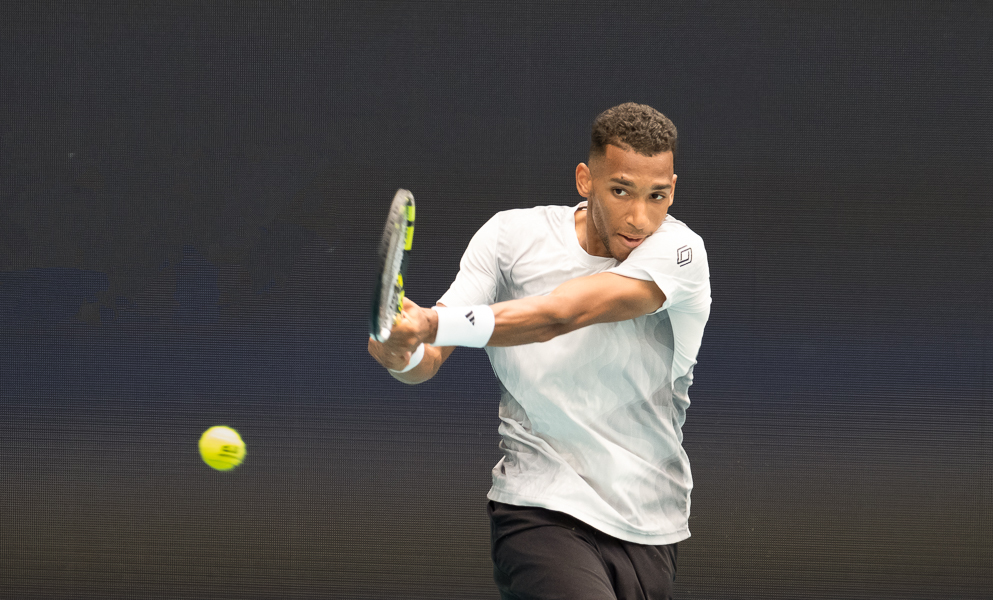
Felix Auger-Aliassime has long looked like the modern prototype: tall, explosive, fast enough to defend, and equipped with the two weapons that travel everywhere in men’s tennis, a big serve and a heavy forehand.
When he’s confident, he plays with clean aggression. Service games move quickly. Forehands open the court. Points end on his terms. When confidence slips, the same game can tighten, and matches start to hinge on whether he can protect second serves and sustain decision-making under pressure.
His story has often been about turning obvious tools into week-to-week stability.
Quick facts
- Tour: ATP
- Plays: Right-handed, two-handed backhand
- Identity: Athletic first-strike player built around serve and forehand
- Best-known surfaces: Hard courts and indoor conditions
- Signature trait: Serve + forehand power paired with high-end movement
Snapshot
Auger-Aliassime is at his best when he’s taking initiative early. He wants short points, forehand-first patterns, and a match rhythm where he isn’t forced to hit extra balls in every rally. His athleticism gives him a defensive floor, but his best tennis is proactive.
When he’s serving well, he’s hard to break. When he’s returning aggressively, he becomes dangerous against the very top.
Playing style and strengths
Serve as the platform
His serve is the foundation. It earns free points, sets up forehand looks, and keeps him out of long defensive games.
Forehand as the primary weapon
The forehand is the strike shot. He uses it to finish points, especially when he can step inside the baseline and drive through the court.
Athletic court coverage
He moves well for his size. That allows him to defend when needed and turn defense into offense quickly. It also helps him play on multiple surfaces without needing perfect conditions.
Comfort in fast environments
Indoor hard courts and quicker hard-court swings tend to amplify his strengths. Those are the weeks where his first strike becomes harder to blunt.
Pressure points and vulnerabilities
- When his timing is off, he can spray errors because his game is built on aggressive strikes.
- The backhand can become a target in extended rallies against heavy, consistent opponents.
- Second-serve stress can swing matches, especially against elite returners.
His hardest matchups are often against players who defend well, extend rallies, and force him to hit one extra aggressive ball per point.
Career milestones
Auger-Aliassime reached the top tier early and has been a consistent presence in the conversation because the tools are obvious and the ceiling is real. His best stretches have shown he can perform at a championship level against elite fields.
The long-term question has been about sustaining that level and navigating form swings that can appear over a season.
Grand Slam record in context
At Grand Slams, Auger-Aliassime’s profile fits the blueprint for deep runs: big serve, forehand power, and athletic movement. Over best-of-five, the challenge is keeping the aggressive game clean through multiple matchups and conditions.
When he’s serving with confidence and returning assertively, he becomes a legitimate threat. When he isn’t, Slam matches can become tight because the margins are thin for first-strike players.
Ranking and season context
His ranking trajectory is often tied to whether he can stack results during fast-court seasons, where his serve and forehand create the biggest advantage.
What to watch next
The biggest indicator for Auger-Aliassime is whether he’s winning return games with intent, not just surviving them.
If he’s creating break chances regularly, his ceiling rises dramatically because his serve already gives him stability. If he isn’t, matches can drift into tiebreak margins where one dip in execution decides outcomes.