

Every player who walks back onto a professional tennis court after a long absence faces a version of the same problem. The sport has not stood still. Opponents have improved, physical conditioning across the tour has raised the baseline, and the mental habits built over years of competing at the highest level have been left to erode during months away from match play.
Coming back is not simply a matter of recovering the body. It is a matter of rebuilding the competitive self, and for some players that process takes longer than the injury itself.
The Physical Challenge
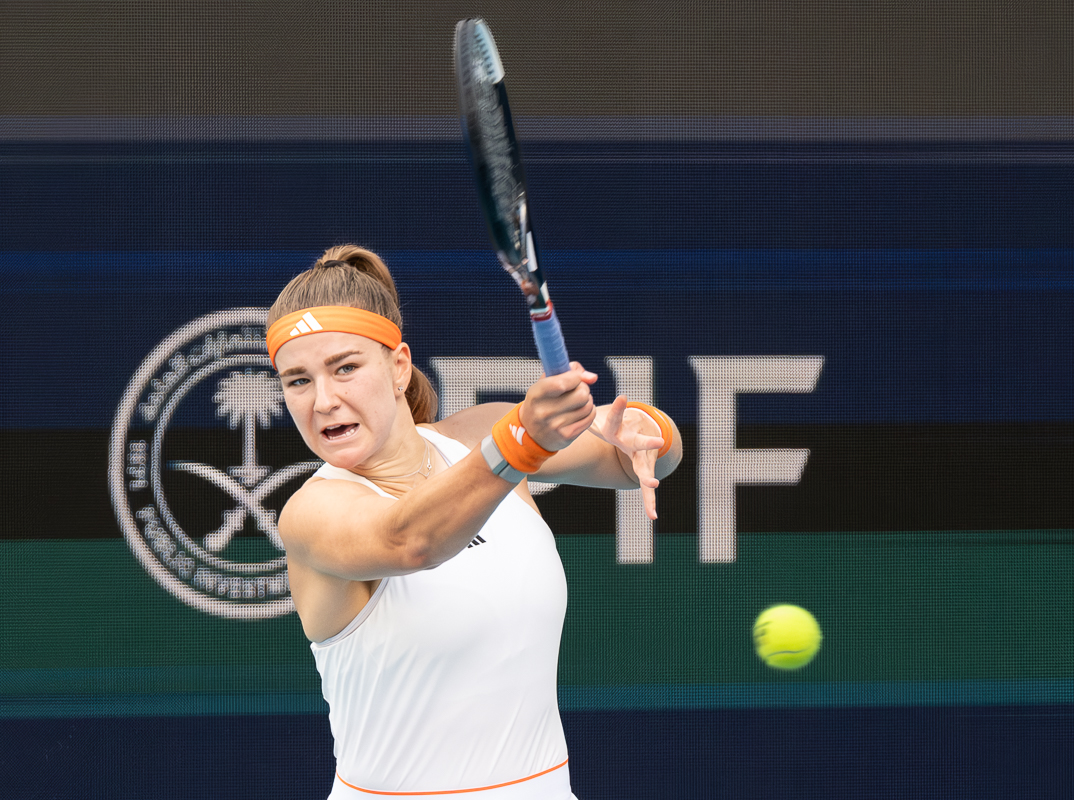
The body rarely returns to form on a straight line. Karolina Muchova has become the most instructive example on the current tour of how injury can disrupt even the most compelling careers.
After reaching the French Open final in 2023 and the US Open semifinals in the same year, Muchova did not compete again after New York, withdrawing from the WTA Finals and ending her season early due to a wrist injury.
She later withdrew from the Australian Open and announced in February 2024 that she had undergone surgery. The recovery from the procedure was not clean. At one point during her rehabilitation, Muchova said she had been unable to move her wrist at all.
“Once I was able to put my hand out of the wrap, I was still not moving with it,” she said. “At that moment, I’m like, I don’t think I’ll ever hold a racquet.”
She returned to the tour at Eastbourne in June 2024, ten months after her US Open semifinal run, and immediately posted strong results — reaching the Beijing final and the US Open semifinals again in her comeback season.
But the physical thread continued to pull. Further injury setbacks followed through 2025, illustrating a pattern familiar to any player returning from significant time away: the first comeback is rarely the last one.
The Mental Reset
The physical recovery is at least measurable. The mental dimension of returning from absence is harder to track, and players who have navigated it most successfully tend to describe a reframing rather than a restoration — arriving back on tour as a different person, not necessarily the same one who left.
Belinda Bencic offered the clearest recent example of this reframing. Bencic stepped away from tennis at the end of 2023 and gave birth to daughter Bella in April 2024. After playing her last match in September 2023, she stepped onto the court 13 months later for an ITF W75 event in Hamburg.
The return began with a 6-1, 6-1 defeat to Jasmine Paolini at the United Cup — a result she described not as a setback, but as a useful reality check. The perspective shift was central to what followed.
Bencic was named the WTA’s 2025 Comeback Player of the Year, and said the experience of becoming a mother had changed how she spoke to herself. “All my career, I didn’t say it a lot to myself, but after having Bella I really say it to myself every day, and I think that changes a lot,” she said.
She finished 2025 ranked world number 11, her best year-end position since 2019, despite having ended 2024 ranked 913th in the world. The Wimbledon semifinal run that anchored her season came in just her second Grand Slam back. By January 2026, she returned to the top ten — becoming the first mother to enter the top ten since 2019.
The Ranking Problem
One dimension of long absences that does not receive enough attention is the ranking system itself. A player who has spent six months or a year away from the tour does not simply return where they left off.
Points expire, seedings disappear, and suddenly a former top-ten player is navigating early rounds against opponents who have spent the same period accumulating ranking points on the circuit. The WTA’s protected ranking provision helps, allowing players to use their pre-injury ranking for a limited period, but it does not remove the pressure of having to rebuild through a draw rather than as a seeded player.
Muchova experienced this directly — during her 2024 comeback at the China Open, she was ranked 49th in the world, the lowest-ranked finalist in the tournament’s history to that point. The quality was still there; the ranking position simply did not reflect it yet.
For Amanda Anisimova, the return from her 2023 mental health break required similar rebuilding. After stepping away from the sport and returning, she posted career-best results in 2025 including reaching the Wimbledon and US Open finals, and achieved a career-high ranking of world number three in January 2026.
What Determines a Successful Return
The players who come back most effectively tend to share a few characteristics. They manage expectations in the early weeks, resist the temptation to compress the rebuilding process, and find a way to draw something from the absence itself rather than simply trying to erase it. For Bencic it was a fresh perspective.
For Svitolina, who returned after childbirth to reach a Wimbledon semifinal and multiple Grand Slam quarterfinals, it was purpose. For Muchova, it has been the persistence to keep returning despite a body that has not always cooperated.
The WTA Tour in 2026 contains several players who are at various stages of exactly this process, and the history of the last two years suggests that the arc from absence to contention is not only possible — in the right conditions, it can happen faster than anyone expects.