

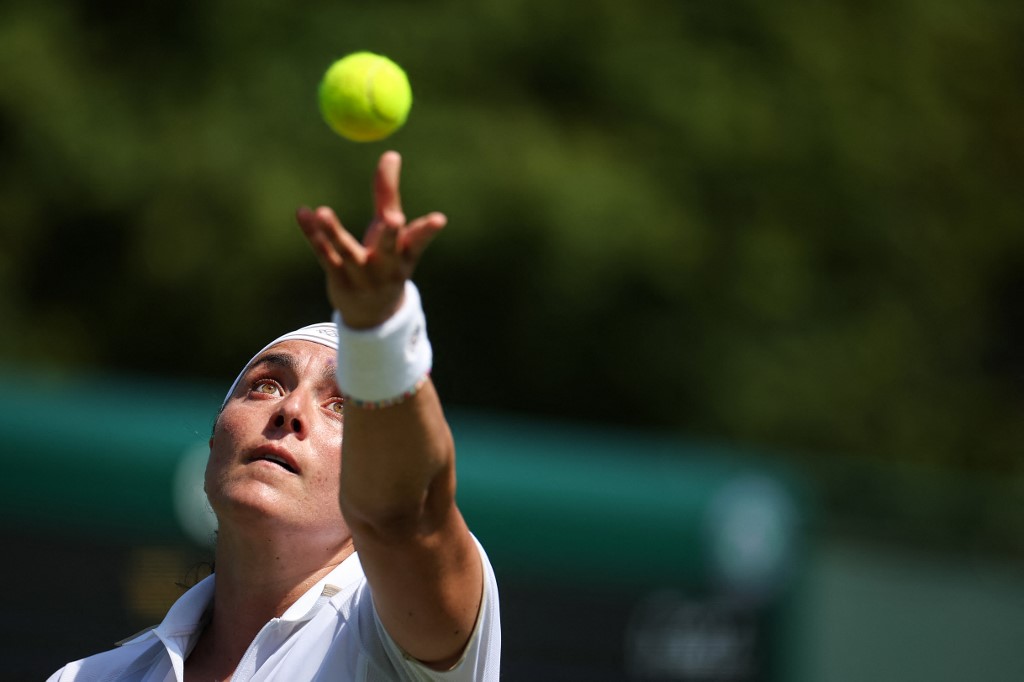
Ons Jabeur is one of the most significant and beloved figures in modern tennis. The Tunisian reached a career high of world No. 2 in 2022, the highest ranking by an Arab player in WTA history, and became the first African and Arab woman to contest a Grand Slam singles final. She did it with one of the most creative, variety-rich games on tour, earning the nickname “Minister of Happiness” for her flair and warmth.
She has not played since retiring from her first-round match at Wimbledon in July 2025, after nearly two years of playing through injuries. In November she announced she was pregnant, and on April 20, 2026, she gave birth to her son, Elyan, according to the WTA. She has said she will come back to the tour, but on her own schedule. “I want to give myself the time to see how my body will react,” she told Vogue Arabia. “I don’t want to rush into it. But I definitely would want to go back on tour and compete for a couple of more years.”
Quick facts
- Full name: Ons Jabeur
- Nationality: Tunisia (born Ksar Hellal)
- Born: August 28, 1994
- Height: 5 ft 6 in (1.67 m)
- Turned pro: 2010
- Plays: Right-handed, two-handed backhand
- Career high: World No. 2 (June 27, 2022)
- Olympics: Three-time Olympian for Tunisia
- Identity: Creative all-courter with drop shots, slice and exceptional variety
Game overview
Jabeur plays a game built on variety rather than power: drop shots, slices, sharp angles, deft net play and a feel for changing pace that few can match. On grass and clay especially, that craft carried her to three major finals and a WTA 1000 title. The creativity that made her so dangerous also made her one of the sport’s most-watched and best-loved players.
Playing style and strengths
Variety and touch. Drop shots, slice and angles that disrupt rhythm and open the court.
Net skills. Comfortable finishing forward, a rarity in the modern baseline game.
Grass and clay craft. Her feel and variety travel best on the surfaces of her biggest results.
Pressure points and vulnerabilities
- Converting the biggest matches, with three major finals lost
- Fitness: the injuries of 2024 and 2025, and a return after childbirth
- Rebuilding a ranking from inactivity, likely relying on a protected ranking and wild cards
- Sustaining the physical level of the tour at 32
Career milestones
- 2022: Won the Madrid Open (WTA 1000); reached the Wimbledon and US Open finals; rose to a career-high world No. 2
- 2022: First African and Arab woman to reach a Grand Slam singles final
- 2023: A second straight Wimbledon final
- 2025: Stepped away from the tour after Wimbledon
- 2026: Birth of her son, Elyan, in April
Grand Slam record in context
Jabeur’s major record is defined by three finals, Wimbledon in 2022 and 2023 and the US Open in 2022, without a title, plus quarterfinals at the Australian Open and Roland Garros. The pattern is a player who reached the sport’s biggest stages repeatedly and fell just short. Her last major match was a first-round retirement against Viktoriya Tomova at Wimbledon in 2025, according to Olympics.com. Whether she can contend again after maternity leave is the open question of her next chapter; her place as a pioneer is already secure.
Grand Slam best results
- Australian Open: Quarterfinal (2020)
- Roland Garros: Quarterfinal (2023, 2024)
- Wimbledon: Runner-up (2022, 2023)
- US Open: Runner-up (2022)
What to watch next
- The comeback: no return date has been announced.
- Entry route: whether she uses a protected ranking to enter the majors on her return.
- Legacy: her continuing influence as a trailblazer for African and Arab tennis.
Related reading
- Elina Svitolina Profile
- Belinda Bencic Profile
- Naomi Osaka Profile
- Tennis Rankings Explained
- Grand Slams Explained
Season Snapshot — September 27, 2026
- Status: Inactive since July 2025; son Elyan born April 20, 2026
- Return: Has said she plans to return to the tour; no date announced
- Last match: Wimbledon 2025 first round, retired against Viktoriya Tomova
This snapshot is dated and will change. The career record above does not.