

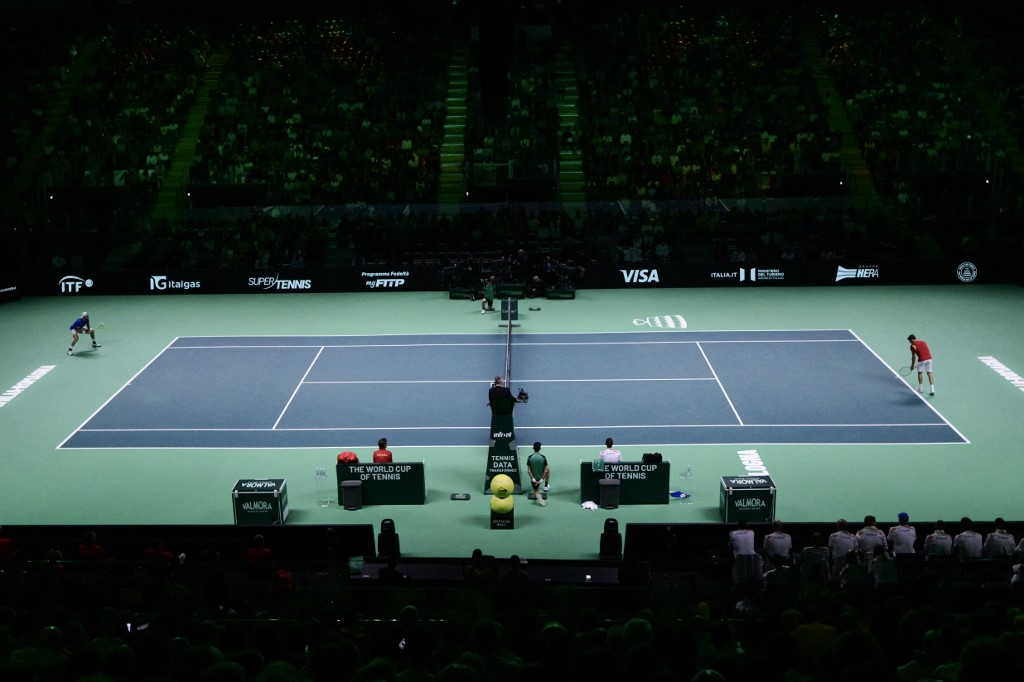
The Davis Cup stands as the premier international team competition in men’s tennis, drawing nations from across the globe in a quest for the coveted trophy, according to the International Tennis Federation (ITF), which organizes the event.
Known as the World Cup of tennis, it features a multi-tiered format that combines home-and-away ties with a climactic finals event, involving promotion and relegation to ensure competitive balance.
In essence, the Davis Cup operates on a pyramid structure where lower-ranked nations battle through regional events to ascend to higher levels, culminating in an elite eight-team finals. The competition spans the calendar year, with key stages aligned around the Grand Slam schedule, and emphasizes national pride over individual rankings.
Details such as the number of participating nations—157 in 2025, per ITF records—can vary annually, as can specific qualification criteria like wild cards. The ITF oversees all aspects, from rankings to anti-doping, making it one of the largest annual team events in any sport.
Key points include the competition’s division into four main tiers: the Davis Cup Finals, Qualifiers, World Groups I and II, and regional groups (III, IV and V). Nations are seeded based on the ITF’s Nations Ranking system, which accounts for recent performances and adjusts for format changes to distribute points fairly.
Ties, the term for matchups between nations, are typically best-of-five rubbers (individual matches), though some levels use best-of-three. Each rubber is best-of-three tiebreak sets, with teams nominating players and captains strategizing lineups.
The mechanism begins with regional events in the summer months (June to August), where lower-tier nations compete in round-robin formats at centralized venues. Top performers promote to World Group II Play-offs, held in February alongside other early-season ties.
World Group II features 26 nations in 13 home-or-away ties in September, with winners advancing to World Group I Play-offs and losers potentially dropping to regional levels. World Group I follows a similar pattern, with its 26 nations vying for spots in the next year’s Qualifiers.
The Qualifiers represent the gateway to the trophy, starting with a first round in February involving 26 nations in 13 ties—drawn from prior finals participants, World Group I winners and occasional wild cards, such as the defending champion.
Winners proceed to a second round in September, joined by another wild card, totaling 14 nations in seven ties. The seven victors from this round, plus one host nation (which must meet criteria like a top-50 ranking or a top-10 ATP singles player), form the Final 8 in November. This finals event, held in a single host city over six days, uses a knockout format to crown the champion.
A reality check: While the Davis Cup promotes global participation, not all ties draw massive crowds, and home advantage—decided by draws or prior results—can influence outcomes significantly.
Misconceptions often arise around its scale; unlike individual tournaments, it prioritizes team strategy, with captains able to substitute players mid-tie under specific rules. Dead rubbers, played after a tie is decided, allow for experimentation but don’t affect the result.
Example Box: Italy’s Path in Recent Years
Italy, as three-time defending champions entering 2025, received a wild card directly to the Final 8 as hosts, bypassing qualifiers—a perk tied to their success and meeting host criteria.
In a hypothetical tie, such as a Qualifiers first-round matchup, Italy might host a lower-seeded nation, playing two singles on day one (e.g., No. 1 vs. opponent’s No. 2), followed by doubles and reverse singles on day two if needed. This illustrates how top nations leverage rankings for easier paths, while underdogs must grind through multiple levels.
What changes over time: The Davis Cup format has evolved significantly, with a major overhaul in 2019 introducing a centralized finals week to boost appeal. Further adjustments approved in 2024 reincorporated more home-or-away ties, replacing some group stages to enhance national engagement, per ITF announcements.
Scheduling aligns with the ATP calendar, but specifics like wild card allocations or host requirements can shift based on governance decisions. Nations’ rankings, updated after each tie, influence seeding and progression for future seasons.
Here is a table detailing the stages of the Davis Cup, from regional groups to the Final 8, including timing, participants, formats and progression outcomes:
| Stage | Timing | Nations/Ties | Format | Outcome |
|---|---|---|---|---|
| Regional Groups (III-V) | June-August | Varies by region (round-robin) | Best-of-three rubbers (2 singles, 1 doubles) at one venue | Top teams promote to World Group II Play-offs; bottom relegate |
| World Group II Play-offs | February | 26 nations/13 ties | Home/away, best-of-five rubbers over 2 days | Winners to World Group II; losers to regional groups |
| World Group II | September | 26 nations/13 ties | Home/away, best-of-five | Winners to World Group I Play-offs; losers to WG II Play-offs |
| World Group I Play-offs | February | 26 nations/13 ties | Home/away, best-of-five | Winners to World Group I; losers to World Group II |
| World Group I | September | 26 nations/13 ties | Home/away, best-of-five | Winners to next year’s Qualifiers 1st Round; losers to WG I Play-offs |
| Qualifiers 1st Round | February | 26 nations/13 ties | Home/away, best-of-five | Winners to 2nd Round; losers to World Group I |
| Qualifiers 2nd Round | September | 14 nations/7 ties | Home/away, best-of-five | Winners to Finals; losers to next year’s 1st Round |
| Final 8 | November | 8 nations | Knockout in one city | Champion crowned |
This structure highlights the Davis Cup’s progressive ladder, where nations must win successive ties to reach the elite Final 8