

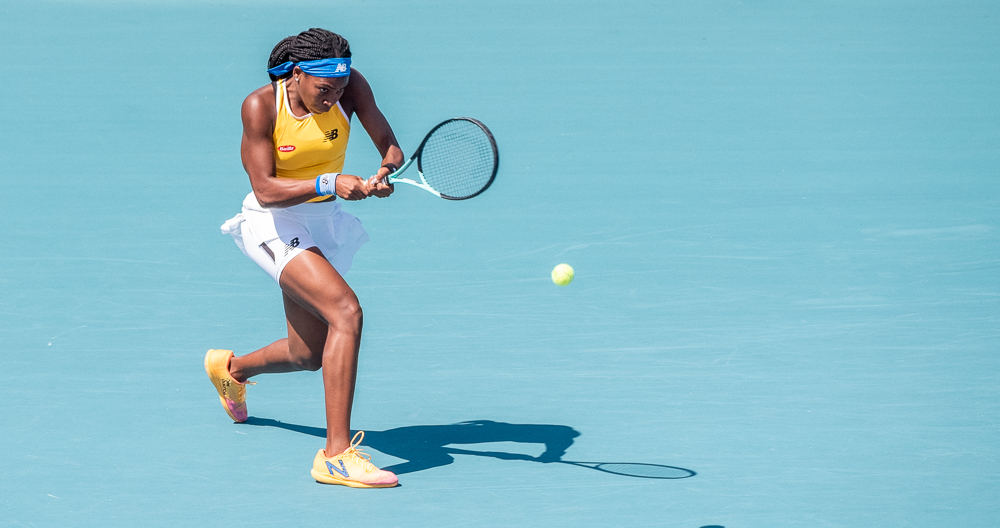
As the tennis world turns its eyes to Melbourne Park for the 2026 Australian Open, set to begin this Sunday, a familiar debate has resurfaced among the sport’s top stars.
Coco Gauff, the world number three and a two-time Grand Slam champion, has described the tournament’s record-breaking prize pool as a step in the right direction, but she insists it’s far from sufficient. Her comments highlight an ongoing push by players for a fairer share of the revenues generated by the majors.
The Australian Open organizers announced earlier this month that the total prize money for the event would rise to 111.5 million Australian dollars, equivalent to about 75 million US dollars. This marks a 16 percent increase from last year’s figure.
The champions in both the men’s and women’s singles will each pocket 4.15 million Australian dollars, a 19 percent bump from 2025. These figures represent the highest payouts in the tournament’s history, underscoring the event’s growing financial clout.
Yet, for Gauff, the raw numbers tell only part of the story. Speaking to reporters on Friday ahead of her campaign, the 21-year-old American emphasized that the proportion of overall tournament revenue allocated to players remains inadequate.
“The percentage is still, of revenue comparison, not where we would like it,” Gauff said. “I think there’s still further conversations that have to be had, not just with the Australian Open, but with all the slams.”
Gauff’s stance reflects a broader movement that gained momentum last year when leading figures from both the men’s and women’s tours banded together. They formed a united front to demand a larger slice of the pie from the four Grand Slams – the Australian Open, French Open, Wimbledon, and US Open.
Beyond higher prize money, their agenda includes contributions to player welfare initiatives, such as pension funds, and greater involvement in decisions that impact their careers.
The players argue that these changes would strengthen the entire tennis structure, from elite competitors to those grinding on the lower rungs of the professional circuit. “The collective feeling is that, yes, there’s been progress, but I still think it’s not where we would like to see it,” Gauff added.
She suggested that discussions could intensify in the coming year, potentially with more involvement from top-ranked players. “I think no one wants this conversation to be continuing for years and years. So I would imagine that we would continue to have those conversations and maybe more pressure being applied with especially the top 10.”
Gauff’s push comes at a time when she is poised for another strong showing in Melbourne. As the third seed, she opens against a qualifier and could face tough tests later in the draw. Her best result here was a semifinal appearance in 2024, and with two majors already under her belt – the 2023 US Open and the 2025 French Open – she remains a formidable contender on hard courts.
Not all players share Gauff’s measured optimism. Alexander Zverev, the world number three on the men’s side and last year’s runner-up in Melbourne, expressed frustration with the pace of change. “Don’t really feel like there’s any progress, to be honest,” the German told the media.
“I feel like it’s just a lot of talk, a lot of time invested into it, and not really any changes.” Zverev’s comments underscore the impatience felt by some in the locker room, where the disparity between tournament profits and player compensation has long been a sore point.
Aryna Sabalenka, the women’s world number one and a four-time Grand Slam winner, including back-to-back Australian Open titles in 2023 and 2024, offered a diplomatic take. Having represented players in negotiations with the majors, she acknowledged efforts to bridge the gap.
“I think we always can do better,” Sabalenka said. “But I think all of the slams, they are trying to work together with us and come to a conclusion. I hope one day we’ll get to a happy place for everyone.”
The Australian Open’s prize money evolution provides context for the current discourse. Over the past decade, the tournament has steadily increased its payouts, driven by booming attendance, television deals, and sponsorships.
In 2016, the total purse was 44 million Australian dollars; by 2025, it had more than doubled. This year’s hike continues that trend, with significant boosts across all rounds. First-round losers in the main draw will receive 150,000 Australian dollars, up 14 percent, while qualifying rounds also see double-digit increases.
Comparisons to other Grand Slams reveal varying approaches. The US Open, the richest major, offered over 75 million US dollars in 2025, with champions earning 3.6 million each. Wimbledon and the French Open lagged slightly behind but have also ramped up prizes in recent years.
Players, however, point out that Grand Slams operate as non-profits or with unique structures that allow them to retain substantial revenues for reinvestment in facilities and grassroots programs. The argument is that a higher percentage – some suggest aiming for over 20 percent of revenues – could go directly to athletes without undermining those efforts.
This push aligns with the formation of groups like the Professional Tennis Players Association (PTPA), co-founded by Novak Djokovic and Vasek Pospisil, which advocates for player rights. Gauff and Sabalenka have been active in these discussions, representing the women’s side. The unity between ATP and WTA players is a relatively new development, amplifying their voice in negotiations traditionally dominated by tournament officials.
Beyond finances, the demands touch on governance. Players seek consultation on rule changes, scheduling, and other matters that affect their livelihoods. For instance, recent debates over extended match formats or health protocols have highlighted the need for athlete input.
As the 2026 season kicks off, the prize money issue could influence dynamics on and off the court. With stars like Gauff, Zverev, and Sabalenka voicing concerns, the pressure on Grand Slam organizers may mount. Tournament director Craig Tiley has defended the Australian Open’s increases, noting they prioritize early-round players to support the broader tour. “We’re committed to making sure the benefits flow through the entire sport,” Tiley said in a statement accompanying the prize money announcement.
For fans, the debate adds another layer to the excitement of the Australian Open, where over 900,000 spectators are expected across the two weeks. The event’s global appeal, boosted by stars like Gauff, continues to drive its economic success. Yet, as players like her remind us, sustaining that success requires addressing the needs of those who make it possible.
Gauff’s campaign begins amid this backdrop, but her focus remains on the tennis. With a strong 2025 behind her, including a title defense at the French Open and a WTA 1000 win in Wuhan, she enters Melbourne with confidence.
Whether the prize money talks yield further concessions remains to be seen, but one thing is clear: the conversation is far from over.