

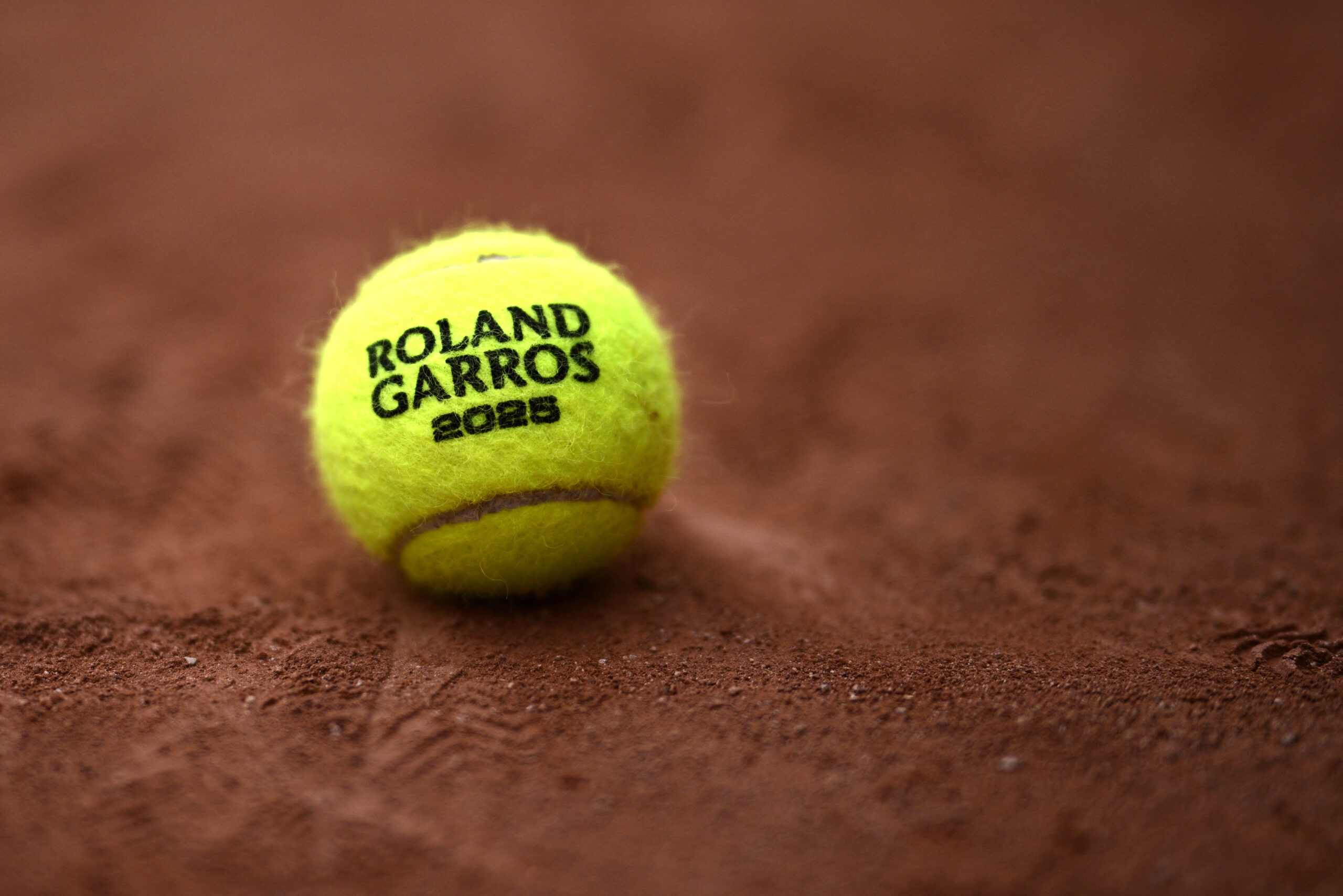
Roland Garros is the only Grand Slam played on clay, and that single fact changes almost everything about the tournament — the way the ball moves, the way players move, the tactics that work, the players who win, and the physical toll the fortnight takes. Here is a complete guide to what red clay actually does to the game of tennis.
What Red Clay Actually Is
Despite the name, the red clay at Roland Garros is not clay in the geological sense. The surface is made primarily from finely crushed brick — specifically terracotta brick — which gives it the distinctive ochre-red colour that makes the French Open one of the most visually striking events in sport.
The courts at Roland Garros are built in five layers totalling around 80 centimetres in depth. The deepest layer is compacted stones, followed by gravel, clinker (volcanic residue), and a thick layer of crushed limestone that provides the structural foundation.
The red layer visible on the surface is just 2 millimetres of crushed brick on top — a remarkably thin film that is responsible for most of what makes the surface so distinctive to play on.
The origins of red clay in tennis trace back to the 1880s, when two English brothers named Renshaw were playing at their court in Cannes. The Mediterranean heat was drying out and killing their grass surface, so they sourced powdered terracotta from a nearby ceramics factory to cover it.
The experiment worked so well that clay courts spread rapidly across the south of France and into Spain, Italy, and South America — regions that remain the heartland of clay-court tennis today.
How Clay Changes the Ball
The most fundamental difference between clay and every other surface at the Grand Slams is what happens to the ball when it lands.
On grass, the ball skids through with minimal friction, staying low and fast. On hard courts, the bounce is medium-paced and relatively predictable. On clay, the high coefficient of friction grips the ball as it lands, dramatically slowing its horizontal momentum and redirecting more of that energy upward.
The result is a bounce that is both higher and slower than on any other Grand Slam surface — and any spin on the ball is significantly exaggerated.
To put this in concrete terms: when a ball collides with a clay surface at a 16-degree angle, it will rebound at 20 degrees or more. On grass, the rebound angle is roughly equivalent to the entry angle, meaning the ball stays low and skids. Clay fundamentally redirects the ball upward in a way that no other surface does.
The practical effect for players is significant. Big serves that would be unreturnable on grass are suddenly much more manageable on clay because the bounce slows the ball and pushes it high, giving the receiver more time to react and a more comfortable contact point. A 230 km/h serve on clay arrives at the receiver very differently than the same serve on a hard court.
Why Topspin Dominates on Clay
Topspin — the forward rotation applied to a ball by brushing up through it at contact — is effective on all surfaces, but it reaches its peak usefulness on clay. The reason is physical: the high friction of the surface amplifies the effect of spin on the bounce.
A heavily topspin forehand that bounces at chest height on a hard court will, on clay, bounce even higher — sometimes to shoulder height or above. This pushes the opponent further behind the baseline and forces them to hit from a less advantageous position.
This is why Rafael Nadal’s dominance at Roland Garros was so total and so specific. His forehand generated among the highest topspin rates ever recorded — typically over 3,000 revolutions per minute — producing a bounce on clay that was almost physically punishing for opponents to deal with.
The surface brings out spin and favors those with more variety in their game, whether that is topspin, slice, or the drop shot. The same weapons are comparatively less devastating on hard courts, where the ball simply does not bounce as high off heavy spin.
The Sliding Movement
One of the most visually distinctive elements of clay-court tennis is how players move. On hard courts and grass, players plant their feet and push off to change direction. On clay, the loose surface allows — and in fact requires — a completely different technique: sliding.
When a player moves wide to reach a ball on clay, they will begin sliding before their racket makes contact, using the loose surface almost like a braking system.
The best clay-court players have perfected this movement, popping up after each swing ready to change direction without having given up much ground. It allows players to cover wide balls while maintaining balance and recovering quickly to a central position.
For players who have grown up on clay — particularly those from Spain, France, Italy, and South America — this movement is second nature. For players primarily trained on hard courts, arriving at Roland Garros and trying to slide naturally is genuinely difficult. It is a skill that can be practised, but it cannot be fully replicated on any other surface.
What It Does to the Physical Demands of a Match
Clay is the most physically demanding surface in tennis, and it is not particularly close. The slower the surface, the longer the points tend to be — and on clay, points that would end in two or three shots on grass can last ten, fifteen, or twenty shots.
A match that might take 90 minutes on a hard court can take three and a half hours on clay. The energy expenditure is vastly greater, and the cumulative toll across a fortnight at Roland Garros is unlike anything players face at the other three Slams.
Paradoxically, however, clay is the easiest surface on the joints. The softer, more cushioned surface absorbs impact more gently than hard courts, which are unforgiving on knees, hips, and ankles over time.
Players who struggle with chronic hard-court injuries sometimes find they feel physically better on clay despite the longer matches — the fatigue is muscular rather than structural.
How It Neutralises Big Servers
At Wimbledon, the serve is a weapon capable of winning points outright at a remarkably high rate. Grass rewards the big serve because the low, fast bounce gives the receiver almost no time to react.
Clay strips away much of that advantage. The high, slow bounce gives the receiver time to set up properly, and even a very powerful serve can be returned comfortably. This is why players with serve-first games — who might reach a Wimbledon final on the strength of their delivery alone — are often exposed at Roland Garros. The serve becomes an opener to a rally rather than a point-ending weapon in its own right.
The flip side is that returning serve is correspondingly more important at Roland Garros than at any other Grand Slam. Getting the return in play, neutralising the serve, and beginning a baseline rally is a viable and often winning strategy on clay in a way that it simply is not on grass.
The Ball Itself Is Different
The Wilson ball used at Roland Garros is specifically engineered for clay. Clay court balls use a felt that resists the crushed brick material becoming embedded in the outer layer — a significant practical concern, since a clay-clogged ball behaves unpredictably and wears out faster.
The core is also slightly harder than the one used in hard court balls, designed to maintain consistency across the long rallies clay produces. Approximately 65,000 balls are used across the entire Roland Garros tournament each year.
As the felt on a ball accumulates clay particles during a match, it gradually becomes heavier and fluffier — slowing it further and changing its aerodynamic properties. This is one of the reasons clay-court matches feel so different in the later stages: the ball itself has physically changed compared to the first few games.
Why Certain Countries Produce Clay-Court Champions
The distribution of Roland Garros champions is strikingly geographic. Spain, France, Argentina, Brazil, and Italy have produced a disproportionate share of the tournament’s winners over the decades.
The reason is straightforward: in those countries, clay is the dominant surface at club level. Players grow up sliding, building topspin groundstrokes, and developing the defensive patience the surface rewards — skills that players from hard-court-dominant countries must consciously learn later in their development.
This pattern has softened somewhat in the modern era as the global professionalisation of player development has made clay-court training more accessible worldwide, but it remains visible in the draw results. The clay-court season still belongs disproportionately to players from nations where red dirt is the default surface from childhood.
Rain, Moisture, and the Unpredictable Paris Spring
Roland Garros is held in late May and early June, when Paris weather is notoriously unreliable. Rain interruptions are a feature of almost every French Open, and clay’s relationship with moisture adds another layer of complexity.
A damp clay court plays slower than a dry one: the moisture weighs down the surface particles, producing heavier, lower bounces and even longer rallies than usual. It also makes the sliding movement more unpredictable.
Notably, clay courts remain playable in light rain in a way that grass and hard courts do not — the surface is designed to absorb moisture, and play is only halted when conditions become genuinely dangerous. This means rain delays at Roland Garros tend to be shorter than at Wimbledon, where even a light shower immediately halts play on unroofed courts.
The Bottom Line
Red clay does not simply slow tennis down. It rewrites the physical and tactical rules of the game almost completely. It amplifies spin, neutralises big serves, demands a different movement language, extends points and matches to their physical limits, and rewards a style of patient, constructive baseline tennis that the other three Grand Slams rarely require.
It is the reason Roland Garros has its own culture, its own champions, and its own identity within the sport — and it all comes down to two millimetres of crushed terracotta brick on the surface of a court in Paris.