

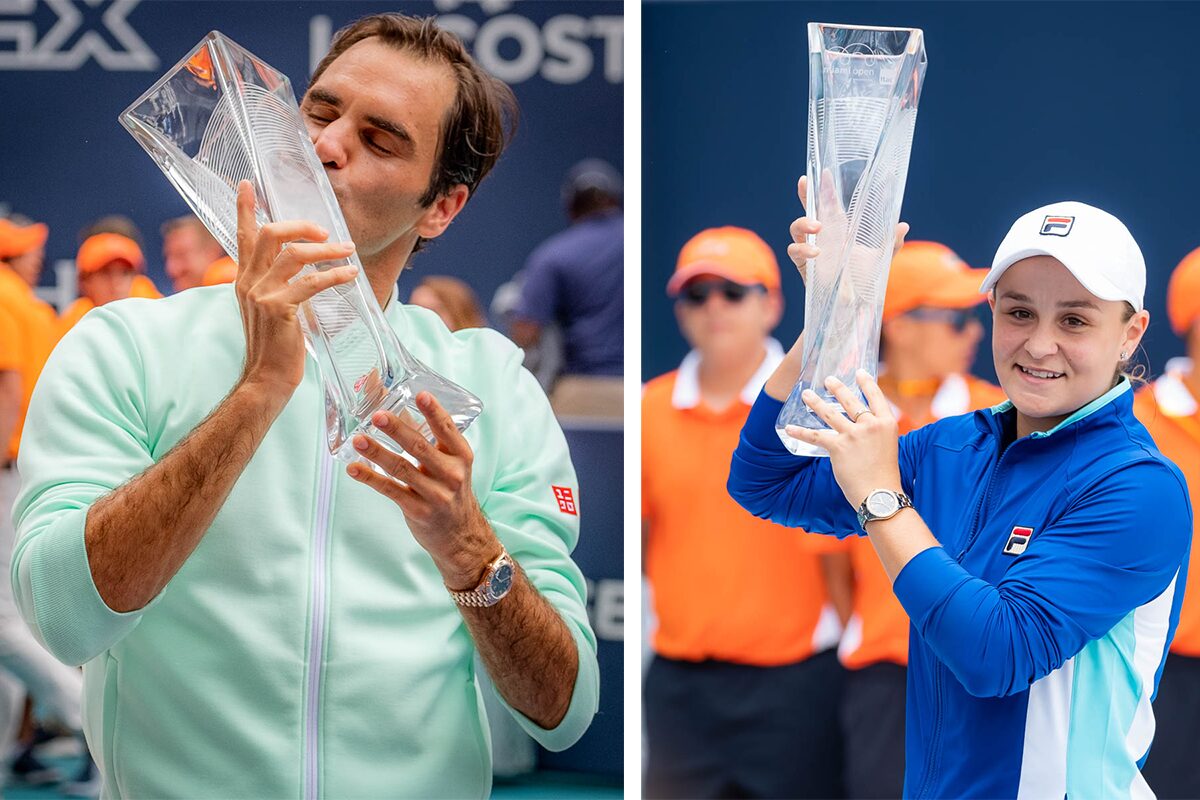
Professional tennis players earn prize money based on their performance in tournaments, with payouts increasing as they advance through rounds. This system rewards progression but provides compensation even for early exits, supporting a broad range of competitors on the global circuit.
Tennis prize money is funded primarily through tournament revenues, including ticket sales, broadcasting rights, and sponsorships, according to the Association of Tennis Professionals (ATP) and Women’s Tennis Association (WTA).
The four Grand Slam events—Australian Open, French Open, Wimbledon, and U.S. Open—offer the largest purses, overseen by the International Tennis Federation (ITF) but operated independently. These majors, along with ATP and WTA tour events, distribute funds across singles, doubles, and mixed doubles draws, with singles typically commanding the highest shares.
Key points include tiered tournament categories that dictate prize pools. On the men’s ATP Tour, events range from Masters 1000s (highest non-Slam level) to 500s, 250s, and Challengers. The women’s WTA Tour mirrors this with WTA 1000s, 500s, and 250s, while lower-level ITF World Tennis Tour events provide entry points for emerging players.
Grand Slams award equal prize money to men and women, a standard achieved progressively since the 1970s, per ITF records. Combined ATP-WTA events are moving toward parity, with the WTA targeting equal pay at 1000- and 500-level tournaments by 2027 and all 500s by 2033.
The mechanism is straightforward: Organizers set a total prize fund before the event, allocating portions by round. A first-round loser receives the base amount for that stage, while the champion claims the largest share.
Distributions escalate exponentially; for instance, advancing from early rounds to finals can multiply earnings several times over. Doubles payouts are generally lower than singles, and players may compete in both to boost income. Payments occur at tournament’s end via bank transfer, as explained by former players in ATP discussions. Prize money does not include appearance fees, which are rare on the main tours but sometimes offered at exhibitions.
A reality check tempers the glamour: Taxes significantly reduce net earnings. Prize money is taxed in the host country, with withholding rates varying—up to 30% in the U.S. and Italy, or 45% in France for high earners, according to tax analyses from Reuters. Players may claim credits in their home countries to avoid double taxation, but global travel complicates filings.
Endorsements, often a larger income source for top players, are taxed based on residence, prompting many to base in low-tax locales like Monaco. Expenses for travel, coaching, and agents (typically 10-15% commissions) further cut into profits, leaving lower-ranked players struggling to break even.
| Example: Australian Open 2026 Prize Money Breakdown (in AUD) |
|---|
| Total Prize Fund: $111,500,000 (per Tennis Australia fact sheet for 2026 edition) |
| Singles Champion: Typically around 3-4% of total, varying by year |
| Singles Runner-Up: About half the champion’s share |
| First-Round Singles Loser: Entry-level payout, often 0.1-0.2% of total |
| Note: Exact per-round figures vary annually; doubles and qualifiers receive smaller allocations. Details fluctuate by Slam and season. |
What changes over time: Prize funds have risen steadily, with Grand Slams increasing 10-16% year-over-year in recent editions, driven by revenue growth. Players, via the Professional Tennis Players Association, push for higher revenue shares—currently 12.5-20% at majors—aiming for figures closer to 22% seen in some tour events. ATP’s profit-sharing formula at Masters 1000s splits excess profits 50-50 with players, adding millions annually.
Gender equity advances, but disparities persist in non-combined events. Economic factors like inflation and media deals influence adjustments, with totals tied to specific years or editions.